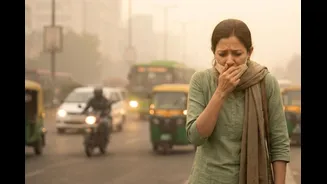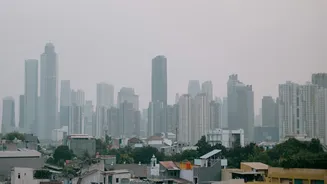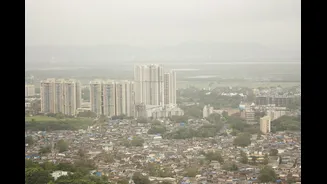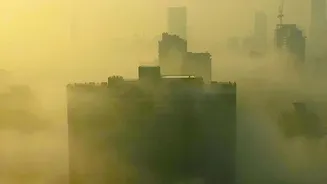


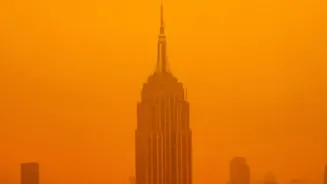
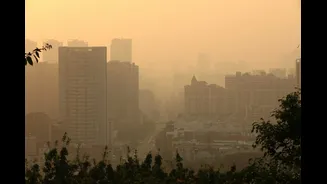
Every winter, a familiar grey haze settles over Delhi, bringing with it a predictable cycle of health warnings and policy debates. But beyond the alarming AQI numbers, the city's toxic air is waging a quiet, sustained war on urban quality of life.
An Annual Health Emergency
As November
unfolds, Delhi's air quality has once again plummeted into the 'very poor' and 'severe' categories, with the Air Quality Index (AQI) frequently soaring above 400. These aren't just numbers; they represent a tangible threat. Fine particulate matter, known as PM2.5, penetrates deep into the lungs and can enter the bloodstream, causing immediate symptoms like coughing, headaches, and eye irritation. Hospitals are reporting a familiar surge in patients with respiratory distress. Doctors warn that even young, healthy individuals are now seeking medical help for persistent throat irritation and breathing discomfort, highlighting that no one is immune. The most vulnerable—children and the elderly—face exacerbated asthma, chronic obstructive pulmonary disease (COPD), and an increased risk of severe respiratory infections.
Beyond The Lungs: A Full-Body Assault
The pervasive impact of pollution extends far beyond immediate respiratory issues. Long-term exposure is linked to a terrifying roster of chronic conditions. Studies have demonstrated connections between Delhi's air and an increased risk of heart disease, strokes, and even cancer. The constant inflammation and oxidative stress caused by inhaling toxins can harden arteries and elevate blood pressure. For children, the stakes are even higher. With their developing organs and higher respiratory rate, children are exceptionally susceptible. Research has linked air pollution to irreversible lung damage in millions of Delhi's kids and even suggests it can impair cognitive development, affecting memory, attention, and IQ.
The Invisible Economic Slowdown
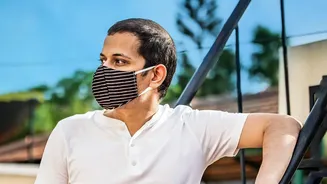
The economic toll of the pollution crisis is staggering, creating a consistent drag on the city's financial health. The cost is measured in lost productivity from sick workers, reduced consumer footfall in markets and restaurants, and a decline in tourism. One study estimated that air pollution costs Indian businesses around $95 billion annually, equivalent to about 3% of the country's GDP. In Delhi, the per-capita economic loss is the highest in the country. Emergency measures, like the Graded Response Action Plan (GRAP), often involve halting construction and restricting vehicle entry, which directly impacts the livelihoods of nearly a million daily wage workers and disrupts supply chains. The money spent on air purifiers, masks, and mounting medical bills represents a significant, recurring tax on every household budget.
A Social Life Under Curfew
Perhaps the most profound impact is on the very fabric of social life. The simple joys of city living are systematically eroded. Morning walks are cancelled, children are forbidden from playing outdoors, and social plans are shelved as people choose to stay inside their purified bubbles. This 'air-quality curfew' fosters social isolation and contributes to significant psychological stress. The loss of public spaces as vibrant community hubs is an unquantifiable but deeply felt consequence. Schools are frequently forced to close or shift to online classes, disrupting education and placing a burden on working parents. For those who must work outdoors—such as street vendors, delivery drivers, and construction labourers—there is no escape. They bear a disproportionate health burden, illustrating how air pollution also deepens social inequalities.
The Cycle of Policy and Paralysis
Every year, authorities implement the Graded Response Action Plan (GRAP), a series of emergency measures that includes banning certain vehicles, halting construction, and even considering 'odd-even' traffic schemes. These actions, while necessary, are temporary fixes to a systemic problem. The primary sources of pollution—vehicular and industrial emissions, road dust, and seasonal crop stubble burning in neighbouring states—remain persistent challenges. Despite court orders and government initiatives, the cycle repeats annually. This recurring crisis suggests that shortterm emergency responses are insufficient to tackle a problem rooted in complex economic and agricultural patterns, leaving citizens to wonder if breathing clean air in the capital will ever be a yearround reality.