



Why Saturn is the Perfect Starter Planet
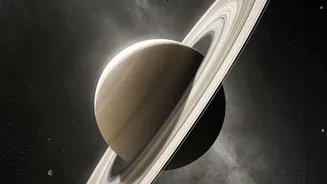
For those new to stargazing, Saturn is an ideal subject. To the naked eye, it appears as a bright, steady, yellowish point of light, making it relatively easy to distinguish from twinkling stars. But its true reward is for those with a telescope. Even
a small, basic model can reveal its iconic rings, a sight that never fails to impress. This immediate visual payoff is incredibly motivating for beginners. Beyond its beauty, Saturn is a patient teacher. Its journey across the sky is slow enough to track over weeks and months, providing a tangible lesson in the mechanics of our solar system. It’s a dynamic, observable example of how planets, including our own, move through space.
When and Where to Look in October 2026
October 2026 presents an excellent opportunity for Saturn viewing. The planet reaches 'opposition' on October 4, which means Earth will be directly between Saturn and the Sun. Around this time, Saturn will be at its closest and brightest for the year, rising in the east around sunset and remaining visible all night long. You don't need to observe on the exact date of opposition; any clear night in late September and throughout October will provide a fantastic view. To locate it, look for a bright, creamy-white point of light in the constellation Cetus, below the large asterism known as the Great Square of Pegasus in the eastern evening sky. Stargazing apps can also point you directly to it.
Your First Look: Gearing Up
While you can spot Saturn without aid, seeing its famous rings requires some magnification. Binoculars might show it as a slightly oval-shaped object, but a telescope is necessary to resolve the rings distinctly. You don't need an expensive, professional setup. A small beginner telescope with at least a 50mm aperture and 25x magnification is enough to reveal the rings and its largest moon, Titan. For a clearer view that might show the gap between the rings, known as the Cassini Division, a telescope with a 3-inch or larger aperture and magnification around 100x will deliver a more detailed image on a night with steady air. Remember to let your telescope cool down to the outside temperature for about 20-30 minutes to get the sharpest possible view.
A Live Lesson in a Clockwork Cosmos
Watching Saturn is more than a static observation; it’s a study in motion. As Earth orbits the Sun faster than Saturn, our line of sight changes. If you sketch Saturn's position relative to the background stars every week or so, you'll notice it slowly drifts. For part of the year, it will appear to move backward—a phenomenon called retrograde motion. This isn't Saturn changing direction, but an optical illusion created as Earth 'overtakes' it on the inside track of the solar system. Observing this apparent loop is a profound, first-hand demonstration of the heliocentric model, proving that all planets are in constant motion around the Sun. You are, in effect, witnessing the grand mechanics of the solar system from your own backyard.
What You Are Actually Seeing
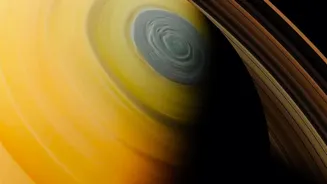
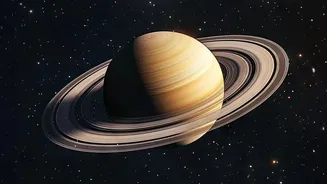
Those majestic rings are not solid; they are made of countless particles of ice and rock, ranging from tiny grains to large chunks. With a decent amateur telescope, you can often distinguish the brighter 'B' ring from the outer 'A' ring, separated by the dark Cassini Division. The planet itself may show subtle cloud bands, though they are much fainter than Jupiter's. You can also look for Saturn's moons. The largest, Titan, is easily visible even in small telescopes as a bright point of light nearby. Spotting Titan and watching its position change from night to night is another rewarding project that highlights the fact that you're viewing a complex system, not just a single object.