




From Function to Focal Point
The evolution of lighting in Indian homes has been dramatic. For decades, the primary concern was purely functional illumination. A single bulb or tube light was deemed sufficient to light a room after sunset. Now, however, lighting has become a primary tool
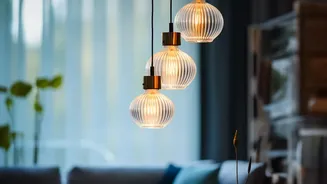
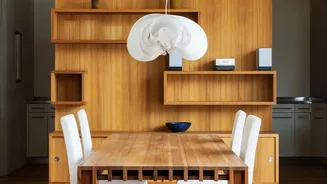
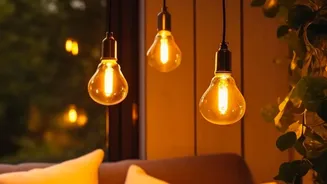
in the interior designer’s arsenal and a key consideration for homeowners from the very beginning of the design process. Instead of being a final, utilitarian touch, architects and designers now plan lighting alongside accent walls, furniture placement, and even architectural changes. The conversation has shifted from merely 'lighting a room' to 'creating an atmosphere'. Fixtures are no longer just sources of light; they are sculptural, artistic statements that serve as focal points, much like a piece of art or statement furniture.
The Power of Layered Lighting
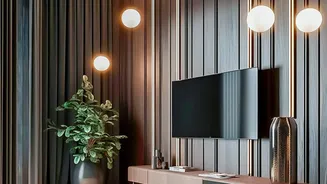
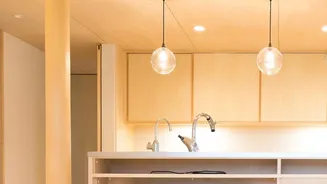
A key driver of this change is the widespread adoption of a layered lighting strategy, a concept well-known to professional designers that has now entered the mainstream. This approach involves using three distinct types of lighting to create depth, flexibility, and mood. Ambient lighting provides the overall, general illumination for a room, often from recessed lights or ceiling fixtures. Task lighting is more focused, designed for specific activities like reading, cooking, or working, and is provided by fixtures like pendant lamps over a dining table or under-cabinet lights in a kitchen. Finally, accent lighting is used to highlight specific features—a piece of art, a textured wall, or an architectural detail—creating visual interest and drama. This layered approach allows a single space to be transformed for multiple uses, a crucial feature in many Indian homes.
The Social Media Influence
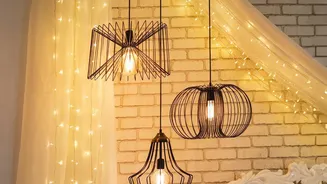
The rise of social media platforms like Instagram and Pinterest has played a monumental role in this design evolution. These platforms have exposed a generation of Indian homeowners to global design trends, creating a new level of design awareness and aspiration. A recent report highlighted that nearly 80% of Indian home shoppers discover products through social media. Homeowners see beautifully designed and lit spaces online and are inspired to replicate that aesthetic in their own homes. This has fuelled demand for a wider variety of stylish fixtures, from minimalist Scandinavian designs to bold, geometric chandeliers and pendants made from materials like rattan and brass. The fixture itself is now seen as a decorative object that adds character, even when turned off.
Technology Makes it Accessible
This trend has been accelerated by huge advancements in lighting technology. The widespread availability of affordable LED lighting, spurred in part by government initiatives, has been a game-changer. LEDs are not only energy-efficient but also incredibly versatile, allowing for minimalist and integrated designs like recessed magnetic tracks and hidden strip lights that were previously difficult to achieve. Furthermore, the rise of smart home technology allows for unprecedented control. Homeowners can now adjust brightness and even colour temperature with a tap on their phone, shifting a room from a bright, cool light for daytime focus to a warm, cosy glow for evening relaxation. This concept, known as human-centric lighting, acknowledges the powerful impact of light on our mood and well-being, cementing its role as a fundamental aspect of a modern home.