
Europa: An Ocean World in Disguise
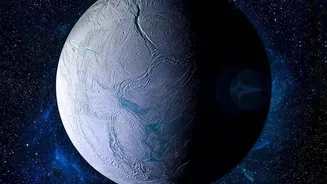
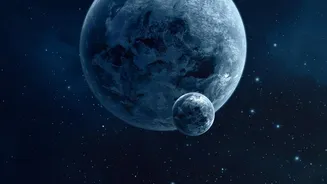
Jupiter’s moon Europa is a tantalizing enigma. Discovered by Galileo Galilei in 1610, it wasn't until spacecraft flew past in the late 20th century that its true potential emerged. Smaller than Earth's moon, Europa is covered in a shell of water ice,
estimated to be 15 to 25 kilometers thick. This shell is marked by long, brownish cracks and strange, jumbled regions called "chaos terrain," hinting at a dynamic world below. The most exciting discovery, first suggested by NASA's Galileo mission, is the strong evidence for a global, liquid saltwater ocean sloshing beneath this ice. Scientists now believe this hidden ocean may contain more than twice the amount of water as all of Earth’s oceans combined. This simple fact—the presence of abundant, stable liquid water—makes Europa one of the most compelling places in our solar system to search for life beyond Earth.
The Clipper's Journey and Objective
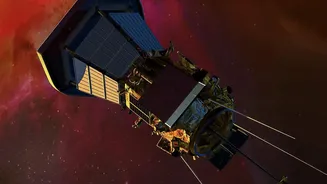
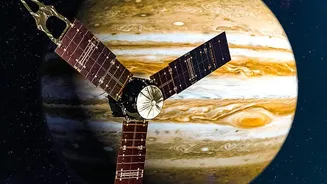
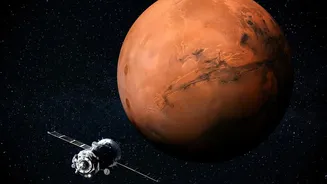
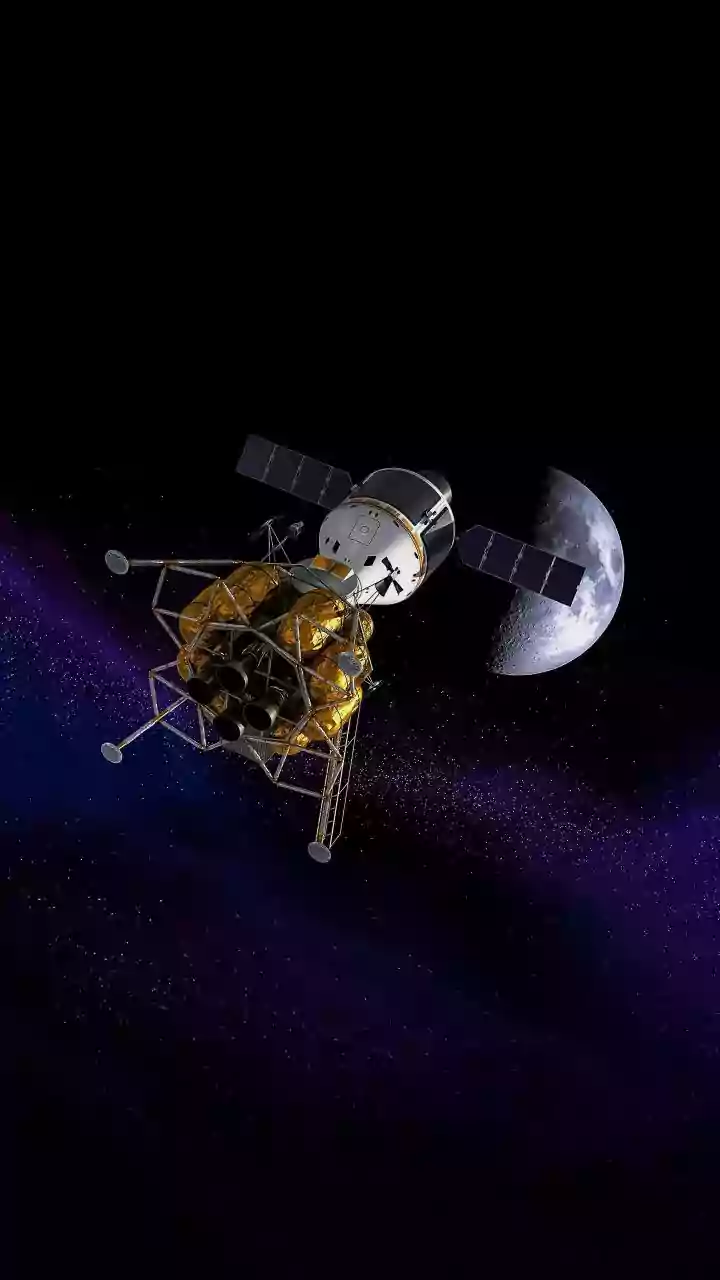
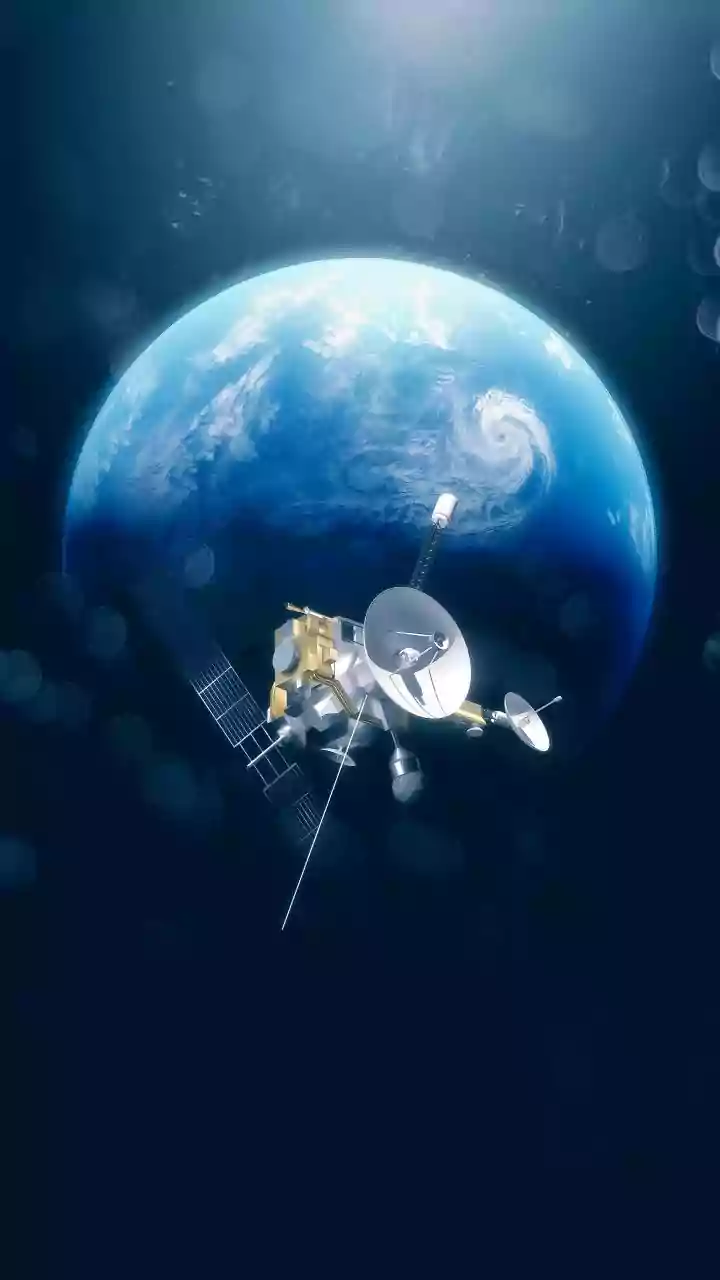
Launched on October 14, 2024, the Europa Clipper spacecraft is undertaking a long and complex journey to the Jupiter system. It’s not a direct flight; the mission is using a clever Mars-Earth gravity assist trajectory, essentially borrowing momentum from the planets to slingshot itself toward the outer solar system. Arrival at Jupiter is scheduled for April 2030. It's crucial to understand that Clipper's primary goal isn't to find life itself. Instead, its core objective is to determine if Europa is habitable. It will investigate whether the moon has the three key ingredients for life as we know it: liquid water, essential chemical elements (organics), and a source of energy. To do this, Clipper won't land but will perform approximately 49 close flybys of Europa from a long, looping orbit around Jupiter, with some passes as low as 25 kilometers from the surface.
A Toolkit for Habitability
To probe Europa's secrets, Clipper is outfitted with a sophisticated suite of nine scientific instruments. The REASON instrument, an ice-penetrating radar, will act like a planetary-scale X-ray, mapping the thickness of the ice shell and searching for pockets of water or even the ocean itself. Spectrometers will analyze the surface composition, trying to identify salts and organic molecules. A thermal camera will hunt for hotspots, which could indicate recent eruptions of warmer water from below. And two key instruments, a mass spectrometer (MASPEX) and a dust analyzer (SUDA), will 'taste' the moon's environment. They will analyze any gas or dust particles ejected from the surface, searching for the chemical building blocks of life.
Clues from Earth's Toughest Life
The idea of life surviving in a dark, cold ocean far from the sun might seem far-fetched, but Earth provides incredible examples. Scientists study extremophiles—organisms that thrive in conditions lethal to most life—in places that serve as analogues for Europa. Research on microbes from the highly salty and seasonally frigid Basque Lakes in Canada, for instance, has shown they can survive and grow under pressures similar to those expected at Europa's ice-ocean interface. Other studies have compared the infrared signatures of bacteria from Yellowstone hot springs to the mysterious reddish streaks on Europa's surface, finding intriguing similarities. While no Earth organism could survive Europa's radiation-blasted surface, these studies show that life is tenacious and can flourish in environments without sunlight, using chemical reactions for energy, much like life might at hydrothermal vents on Europa's seafloor.
The Search for Water Plumes
The most direct way for Clipper to sample the ocean would be to fly through a plume of water vapor erupting from the surface. Evidence from the Hubble Space Telescope and re-analyzed data from the old Galileo mission have suggested that such plumes may exist, though they appear to be intermittent. If Clipper is lucky enough to fly through one, its instruments could directly analyze material from the ocean below without needing to drill through kilometers of ice. This would be a game-changer, potentially offering clear chemical signatures of the ocean's composition and whether it contains the complex organic molecules associated with biological processes. However, even without plumes, the constant bombardment of micrometeorites on Europa's surface kicks up a faint cloud of ice and dust grains, which the SUDA instrument is designed to collect and analyze, providing another pathway to sample the surface.