




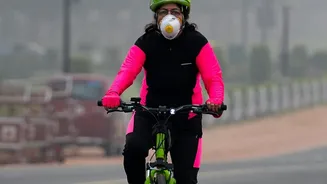
As winter settles across India, the desire to maintain a fitness routine clashes with the hazardous reality of smog. Deciding whether to run, walk, or play sports outdoors becomes a daily gamble. Here’s how to make an informed choice.
Understanding Winter Smog
Winter smog is more
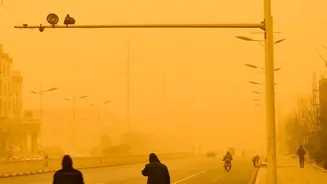
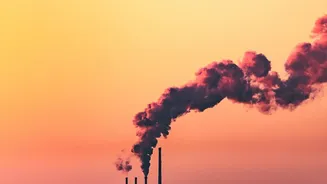
than just a hazy sky; it's a dangerous mix of pollutants trapped near the ground by a weather phenomenon called thermal inversion. Cooler surface air gets stuck below a layer of warmer air, preventing pollutants from dispersing. The most dangerous of these are fine particulate matter known as PM2.5 and PM10. These microscopic particles are small enough to bypass your body’s natural defences, penetrating deep into the lungs and even entering the bloodstream. This can lead to immediate effects like coughing and shortness of breath, and worsen conditions like asthma and heart disease.
Decoding the Air Quality Index (AQI)
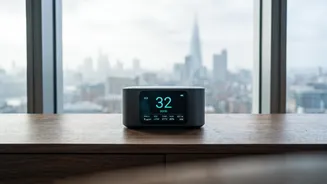
The National Air Quality Index (AQI) is a colour-coded system that simplifies complex pollution data into a single number, helping the public understand the health risk. Developed by the Central Pollution Control Board (CPCB), it measures eight key pollutants, including PM2.5 and PM10. The categories are: - 0–50 (Good): Minimal health impact. - 51–100 (Satisfactory): May cause minor breathing discomfort to sensitive people. - 101–200 (Moderate): Can cause breathing discomfort to people with existing lung or heart conditions, children, and older adults. - 201–300 (Poor): May cause breathing discomfort on prolonged exposure, even in healthy individuals. - 301–400 (Very Poor): Increases the risk of respiratory illness on prolonged exposure. - 401–500 (Severe): Affects healthy people and seriously impacts those with existing diseases.
What is a Safe AQI for Exercise?
There is no single AQI number that is 'safe' for everyone, as risk depends on your health, the activity's intensity, and duration. When you exercise, you breathe more deeply and often through your mouth, inhaling a greater volume of pollutants. However, general guidelines exist. Most experts agree that an AQI below 100 is generally acceptable for most people to exercise outdoors. For more strenuous activities like running or cycling, caution is advised when the AQI is between 101 and 150. In this range, consider reducing the intensity and duration of your workout. When the AQI climbs above 151 into the 'Unhealthy' or 'Poor' range, it is strongly recommended to avoid outdoor exercise altogether and move your workout indoors.
Strategic Timing: The Cleanest Window to Exercise
The common belief that early morning air is the freshest is a dangerous myth in smog-affected Indian cities during winter. Due to overnight temperature inversion, pollution levels are often at their highest between 5 a.m. and 9 a.m. The best window for outdoor exercise is typically between 10 a.m. and 3 p.m. During these hours, the sun has warmed the ground, breaking the inversion layer and allowing some of the trapped pollutants to disperse. Shifting your walk or run to the middle of the day can significantly reduce your exposure to harmful particles.
Protection and Alternatives
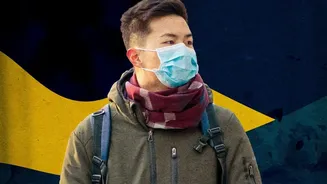
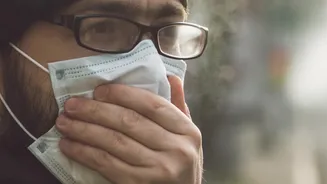
If you must exercise outdoors when the AQI is in the 'Moderate' range, a well-fitted N95 or N99 mask is your best defence. These masks are designed to filter at least $95%$ of fine particulate matter, though they don't block harmful gases. Their effectiveness depends entirely on a snug fit with no gaps. Cloth or surgical masks offer very little protection against PM$2$.$5$. On days with 'Poor' or 'Severe' air quality, the safest option is to stay indoors. This doesn't mean skipping your workout. Consider alternatives like treadmill running, home workouts like yoga or HIIT, or visiting a gym with air purifiers. Remember that indoor air quality can also be poor without filtration, so using an air purifier at home is a wise investment during smog season.