



For millions of people, handling contact lenses is a daily routine. But a simple, often-overlooked detail in that routine—water on your hands—can introduce serious risks to your eye health, turning a helpful medical device into a potential hazard.
The Hidden Dangers in Your Tap Water
While
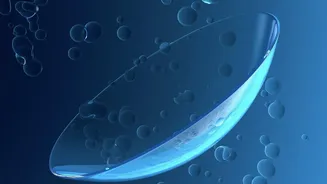
the water from your tap is safe to drink, it is not sterile. It contains a variety of common microorganisms that, while harmless to your digestive system, can be dangerous to your eyes. The most significant of these is an amoeba called Acanthamoeba. This single-celled organism is widespread in the environment, found in tap water, lakes, swimming pools, and soil. When it comes into contact with a contact lens, it can cling to the surface and be trapped against your cornea—the clear, protective outer layer of your eye—creating an ideal environment for a severe infection. This risk is the fundamental reason why water and contact lenses should never mix, starting with the water on your hands.
Understanding Acanthamoeba Keratitis
When Acanthamoeba infects the cornea, it causes a condition called Acanthamoeba keratitis. It is a rare but extremely painful infection that is notoriously difficult to treat and can have devastating consequences. Symptoms often include severe eye pain, redness, blurred vision, a persistent feeling that something is in your eye, and extreme sensitivity to light. Treatment can be a long and arduous process, sometimes lasting for a year or more. In serious cases, the infection can lead to permanent vision loss or even require a corneal transplant to save a person's sight. The vast majority of Acanthamoeba keratitis cases occur in people who wear contact lenses, with poor hygiene being a primary risk factor.
The Correct Way to Wash Your Hands
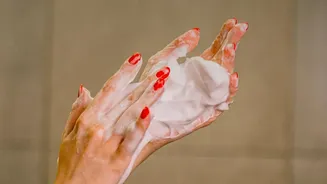
Proper hand hygiene is your first and best line of defence. The goal is to remove germs without leaving behind any residue or moisture that could contaminate your lenses. According to the U.S. Centers for Disease Control and Prevention (CDC), there is a right way to do it. First, wash your hands thoroughly with soap and water for at least 20 seconds. It is best to use a basic, non-oily soap, as creamy or lotion-based soaps can leave a film on your fingers that transfers to your lenses, clouding them. After rinsing well, the next step is just as crucial: dry your hands completely with a clean, lint-free towel. Any remaining water droplets can harbour the very microorganisms you are trying to avoid.
What About Hand Sanitiser?
In a pinch, you might wonder if hand sanitiser is a good substitute for soap and water. The general advice from eye care professionals is to avoid it if possible. The high alcohol content in most sanitisers can cause significant stinging and irritation if it transfers from your fingers to your eyes. However, if soap and water are absolutely not available, you can use an alcohol-based hand sanitiser, but you must wait for it to evaporate completely from your hands before touching your lenses. Even so, washing with soap and water remains the safest and most recommended method.
Extending Water Safety Beyond Your Hands
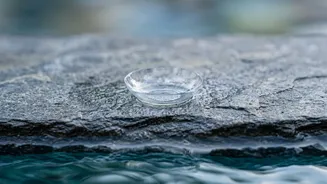
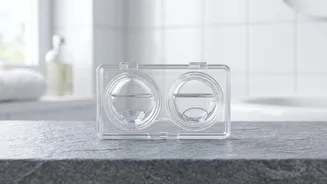
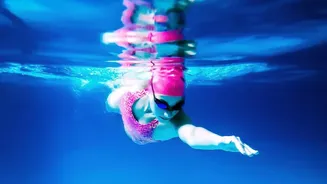
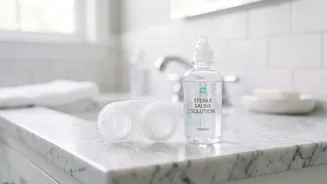
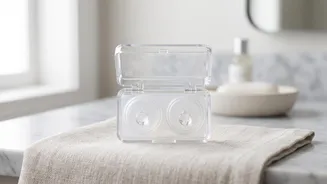
The rule of keeping water away from your contact lenses extends far beyond just handwashing. You should never use tap water, bottled water, or any other nonsterrile water to rinse your lenses or your lens case. Always use fresh, commercially prepared disinfecting solution for cleaning, rinsing, and storing your lenses. Furthermore, you should remove your contact lenses before showering, swimming, or using a hot tub. Water can cause soft lenses to swell and change shape, making them stick to the eye, which can be uncomfortable and may even scratch the cornea, making it easier for germs to cause an infection.