



What Happened in Spain?
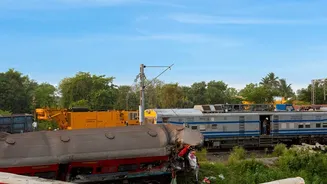
On October 28, a high-speed train operated by state-owned Renfe crashed into a stationary train near Urda, about 130 kilometres south of Madrid. The collision, which killed 69 people and injured dozens, occurred on the busy Madrid-Seville line. Investigations
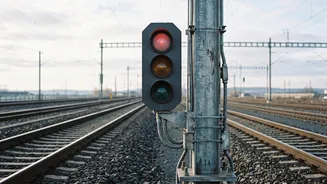
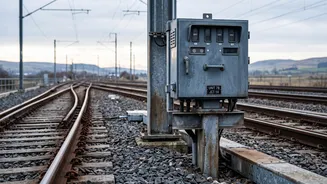
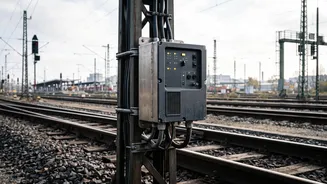
suggest a catastrophic failure where the automatic safety system on a stretch of track malfunctioned, halting all trains. However, a control centre reportedly gave the moving train clearance to proceed despite the stationary train being ahead. This incident was Spain's second fatal high-speed rail accident in 2026, severely shaking public confidence and leading to the transport minister's resignation. It underscores a crucial vulnerability: the complex interplay between automated safety systems and human oversight.
India's Bullet Train: A National Ambition
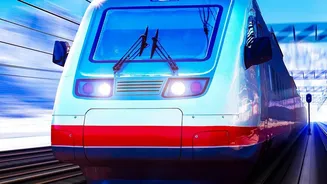
India's first high-speed rail corridor, a 508-kilometre line connecting Mumbai and Ahmedabad, is one of the nation's most prestigious infrastructure projects. Managed by the National High Speed Rail Corporation Limited (NHSRCL), the project aims to slash travel time between the two economic hubs to just over two hours, with trains operating at speeds up to 320 km/h. With significant portions of the civil works and track laying already complete in Gujarat, the first section is anticipated to open in 2027. The project relies heavily on Japan's famed Shinkansen technology, a system renowned for its unparalleled safety record.
The Shinkansen Safety Philosophy
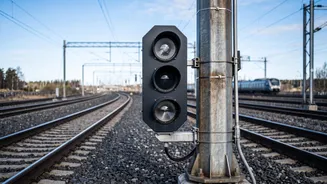
The Japanese Shinkansen system, which has not had a single passenger fatality from accidents since it began operating in 1964, is built on a principle of 'crash avoidance'. This philosophy is fundamentally different from systems where high-speed trains share tracks with conventional or freight trains. Shinkansen technology insists on a completely dedicated and grade-separated track, meaning there are no level crossings where collisions with road vehicles could occur. Furthermore, it employs a sophisticated Automatic Train Control (ATC) system that constantly monitors speed and maintains a safe distance between trains, automatically applying brakes if a train exceeds speed limits or gets too close to another. This stands in contrast to the scenario in Spain, where a combination of system failure and human decision-making led to tragedy.
How India Is Adapting the Technology
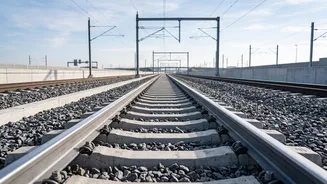
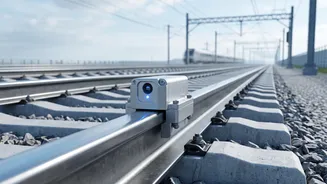
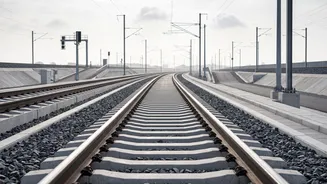
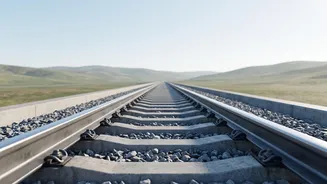
NHSRCL is implementing the core tenets of the Shinkansen system for the Mumbai–Ahmedabad corridor. This includes dedicated tracks, the absence of level crossings, and advanced ATC systems. The technology is also being adapted for Indian conditions. For instance, an early warning system for earthquakes, a critical feature in seismically active Japan, is being integrated. The project also features advanced track technology like 'J–Slab' ballastless tracks and 'swing–nose' crossings, designed to provide a continuous, stable rail surface that minimises vibration and mechanical wear at extreme speeds. This 'total system' approach integrates everything from rolling stock and power supply to track design and operational protocols to ensure safety is built–in at every level.
Ensuring Independent Oversight
Learning from global best practices, Indian authorities are not solely relying on the technology itself. In early 2026, NHSRCL appointed an independent agency to conduct a comprehensive safety assessment of the entire project. This third–party audit will cover all phases, from design and construction to testing and commissioning. The goal is to identify potential risks early, ensure compliance with international standards, and bolster public trust in the system's safety. This move signals an understanding that even the most proven technology requires rigorous, continuous, and independent validation to prevent the kind of systemic failures seen in the recent Spanish crash.