




The Plastic Problem We Can't Ignore
India’s food delivery and takeaway market has boomed, but it has left a significant environmental footprint. Every day, millions of plastic boxes, lids, and cutlery are used for a few minutes and then discarded, contributing to the nation's plastic waste
crisis, which sees tonnes of plastic choking landfills and waterways. Government regulations, including bans on certain single-use plastics, have pushed businesses to find viable alternatives. While paper and cardboard are options, they often struggle with hot or greasy Indian dishes and are frequently lined with a thin layer of plastic, complicating recycling. This has created a massive market opportunity for a material that is both functional and genuinely sustainable.
A Sustainable Solution from the Sea
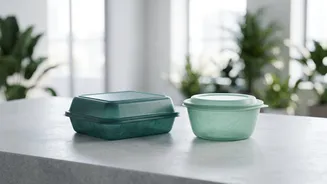
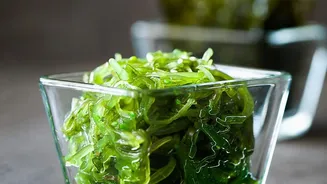
Enter seaweed, an unlikely hero in the fight against plastic. Algae, the group of aquatic organisms that includes seaweed, is emerging as a powerful raw material for packaging. Unlike land-based crops used for some bioplastics, seaweed cultivation requires no fresh water, no fertilizers, and no deforestation. It grows rapidly in coastal waters, absorbing significant amounts of carbon dioxide from the atmosphere in the process. The key lies in the natural polymers found within seaweed, which can be extracted and molded into various forms, from flexible films to sturdy, box-like containers that are grease-proof and water-resistant. Best of all, once its job is done, this packaging can biodegrade naturally in a matter of weeks, breaking down in a home compost environment without leaving harmful microplastics behind.
Meet India's Green Packaging Pioneers
This isn't just a theoretical concept; Indian entrepreneurs are already turning it into a commercial reality. Leading the charge is Zerocircle, a startup that has gained international attention for creating home-compostable and even marine-degradable packaging from locally sourced seaweed. Founded by Neha Jain, the company works with farming communities in states like Gujarat and Tamil Nadu to cultivate seaweed, providing a new source of income for coastal populations. Zerocircle produces films and coatings that can replace plastic linings in boxes and pouches. Another key player is the Bangalore-based Sea6 Energy, which is leveraging its expertise in ocean farming technology to develop seaweed-based bioplastics for straws, films, and other packaging applications. These companies aren't just selling a product; they are building a new, circular supply chain.
From Algae to Container: How It Works
The process of turning seaweed into a takeaway box is a blend of nature and science. It begins with harvesting the cultivated seaweed. The plants are then processed to extract specific polysaccharides—natural polymers like alginate or agar. These extracts are purified and mixed with natural plasticisers to create a mouldable bioplastic material. This material can then be used in existing manufacturing machinery to produce everything from thin, transparent films for wrapping to rigid containers designed to hold hot curries without leaking. Some innovators, like the Pune-based startup Go Do Good, are even blending seaweed with agricultural waste to create unique composite materials, further enhancing the sustainability credentials.
Challenges on the Path to Mainstream Adoption
Despite its immense potential, algae-based packaging still faces hurdles. The most significant challenge is cost. Currently, producing packaging from seaweed is more expensive than manufacturing conventional plastic, although costs are expected to fall as technology improves and production scales up. Ensuring durability across all food types—from hot liquids to oily dishes—is another area of focus for research and development. Furthermore, scaling production to meet the colossal demand of the Indian market will require significant investment in both seaweed cultivation and processing infrastructure. Building widespread consumer awareness and efficient collection systems for composting are also crucial for the success of this green alternative.