







The Brain-Gut Connection
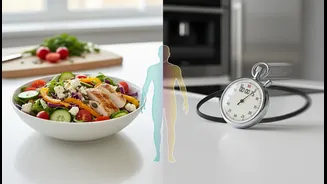
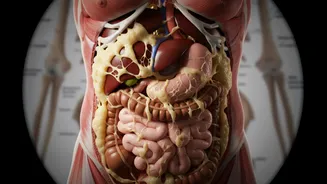
The core of the issue lies in the communication between your stomach and your brain. It takes approximately 20 minutes for your brain to receive and process satiety signals from your gut. These signals are carried by hormones like leptin and ghrelin,
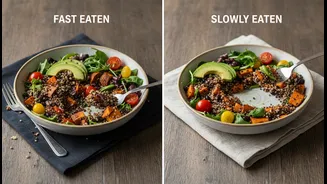
which regulate hunger and fullness. When you eat quickly, you can easily consume more food than your body needs before your brain gets the message that you're satisfied. This 'overshoot' is a key reason why faster eating is consistently linked with higher calorie intake and, over time, weight gain.
What the Research Says
Numerous studies confirm the association between eating speed and body metrics. A review of 23 studies found that fast eaters were about twice as likely to be obese compared to their slower-eating counterparts. A 2026 study conducted in Gujarat, India, on 465 adults found that fast eaters had significantly higher Body Mass Index (BMI) and visceral fat levels. Similarly, a large-scale study in Japan following nearly 60,000 people showed that slow eaters were 42% less likely to be obese. The evidence is clear: slowing down is associated with a healthier body composition and a smaller waist circumference.
More Than Just Weight Management
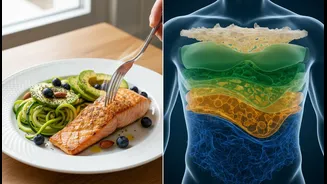
The benefits of un-rushing your meals extend beyond body weight. Eating slowly significantly improves digestion. Thoroughly chewing your food breaks it down into smaller, more manageable particles, allowing digestive enzymes in your saliva to begin their work. This can lead to less indigestion, bloating, and discomfort after meals. Furthermore, mindful eating enhances the sensory experience, allowing you to derive more pleasure and satisfaction from your food. When you pay attention to the tastes, textures, and aromas, you feel more content with your meal, which can also help curb the desire to overeat.
Practical Tips to Slow Your Pace
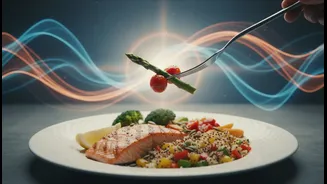
Adopting a slower pace doesn't require drastic changes. Start by implementing a few simple habits. First, create a distraction-free eating environment. Turn off the television, put your phone away, and focus solely on your meal. Try putting your utensils down between bites; this simple pause gives your body time to process. Taking sips of water throughout your meal can also help slow you down and aid in hydration. Choose foods that naturally require more chewing, such as high-fibre vegetables and whole grains. Finally, consider timing your next meal. Aim for it to last at least 20 minutes and notice how you feel.