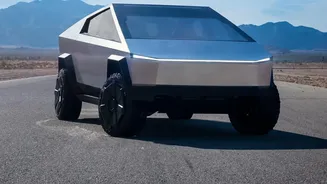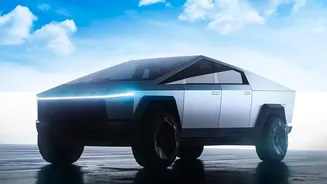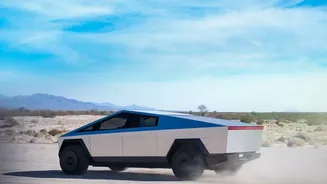








Elon Musk has announced a new timeline for the Tesla Cybertruck, extending its production through the end of summer 2027. But this isn't a ramp-up; it's a slight delay of a planned shutdown, adding another twist to the vehicle's complex story.
What the New Timeline Really Means
In a post
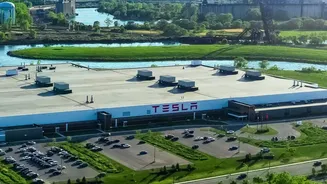
on the social media platform X, Elon Musk confirmed that Cybertruck production will continue for a few months longer than previously stated. Just days earlier, on November 6, 2026, Musk had announced that Tesla would be winding down the Cybertruck line around the middle of 2027. The new schedule pushes that end date back by approximately two to three months, from June or July to late summer 2027. The reason given for this brief extension is to work through more of the vehicle's substantial order backlog before the production line at Gigafactory Texas is permanently repurposed.
A Sudden Reversal Amid Backlash
The decision to slightly prolong production appears to be a direct response to the reaction from customers and fans. After announcing the initial wind-down, Musk acknowledged the order rate 'far exceeds' the production rate and that Tesla would have to refund deposits to many people who would never receive their truck. This sparked significant disappointment among the vast number of reservation holders, many of whom have been waiting since the truck's 2019 unveiling. Musk framed the extension as a decision based on feeling rather than finance, stating, 'This is not the smartest move from a profit-maximizing standpoint btw, but there must be some room in this world for sentimentality'.
Pivoting from Cybertruck to Cybercab
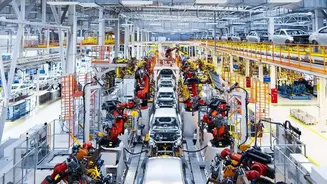
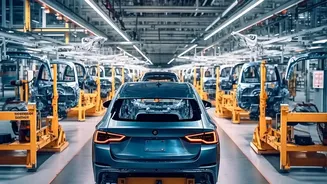
The primary driver behind the Cybertruck's discontinuation remains unchanged: Tesla's strategic shift toward the Cybercab. The company plans to retool the Cybertruck's assembly space to scale up manufacturing of its new, two-seater autonomous robotaxi. Musk has cited the 'opportunity cost' and 'complexity' of building the Cybertruck as reasons for the pivot, suggesting that the resources are better spent on the Cybercab, which is central to Tesla's future as an autonomy and mobility company. Despite Musk's claim that the Cybertruck is profitable, the move signals a clear prioritization of what Tesla believes will be a more scalable and lucrative venture.
A History of Missed Targets
The Cybertruck's short production life has been fraught with challenges. Originally slated for a 2021 launch, the first deliveries did not happen until late 2023 due to significant manufacturing hurdles related to its stainless steel exoskeleton and other unique design elements. The launch price was also considerably higher than the $39,900 initially advertised, with the first models costing well over $60,000. Furthermore, sales have fallen dramatically short of Musk's ambitious projections of selling 250,000 units annually. Sales data from 2025 showed a steep decline from the previous year, and the production rate never approached the factory's installed capacity. The vehicle has also been subject to numerous recalls for issues ranging from faulty accelerator pedals to exterior trim problems.
What Happens to Order Holders?
Even with the extension, many who placed a reservation will not get a Cybertruck. Musk has been clear that a significant number of deposits will be returned. To manage the final production run, Tesla has already simplified the lineup, discontinuing lower priced all wheel drive trims and only offering the top tier 'Cyberbeast' model, which saw a recent price increase. For the thousands of hopeful buyers, this extension offers a slim, but not guaranteed, chance to receive their vehicle before the line shuts down for good. For everyone else, it marks the beginning of the end for one of most talked about vehicles of any modern era.