



The Living Root Bridges of Meghalaya, India
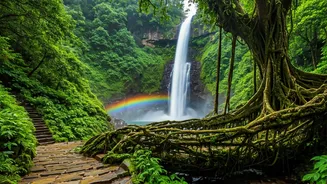
Forget concrete and steel; these bridges are alive. For centuries, the Khasi and Jaintia peoples of Meghalaya have guided the aerial roots of the Ficus elastica tree across rivers and ravines, weaving them into sturdy, functional, and breathtakingly beautiful
bridges. The most famous, the Umshiang Double-Decker Root Bridge near Cherrapunji, is a marvel of bio-engineering. Walking across these structures isn't a passive experience. You can feel the slight give of the living wood beneath your feet, hear the rush of the river below, and see the intricate network of roots that have grown stronger over decades. It's a profound connection to nature and a testament to indigenous wisdom, offering a humbling look at how humanity and the environment can coexist in perfect harmony.
Capilano Suspension Bridge, Canada
For those who crave a bit of a thrill with their forest views, the Capilano Suspension Bridge in North Vancouver is an iconic destination. Stretching 137 metres across and hanging 70 metres above the Capilano River, this is not a bridge for the faint of heart. The gentle sway as you walk across is part of the experience, giving you a bird's-eye view of the lush temperate rainforest below. But the experience doesn't end with the main bridge. The park also features the Cliffwalk, a series of walkways jutting out from a granite cliff face, and the Treetops Adventure, which consists of seven smaller suspension bridges connecting majestic old-growth Douglas fir trees. It's a polished, well-managed adventure park built around the central theme of experiencing the forest from above.
Monteverde Cloud Forest Sky Walk, Costa Rica
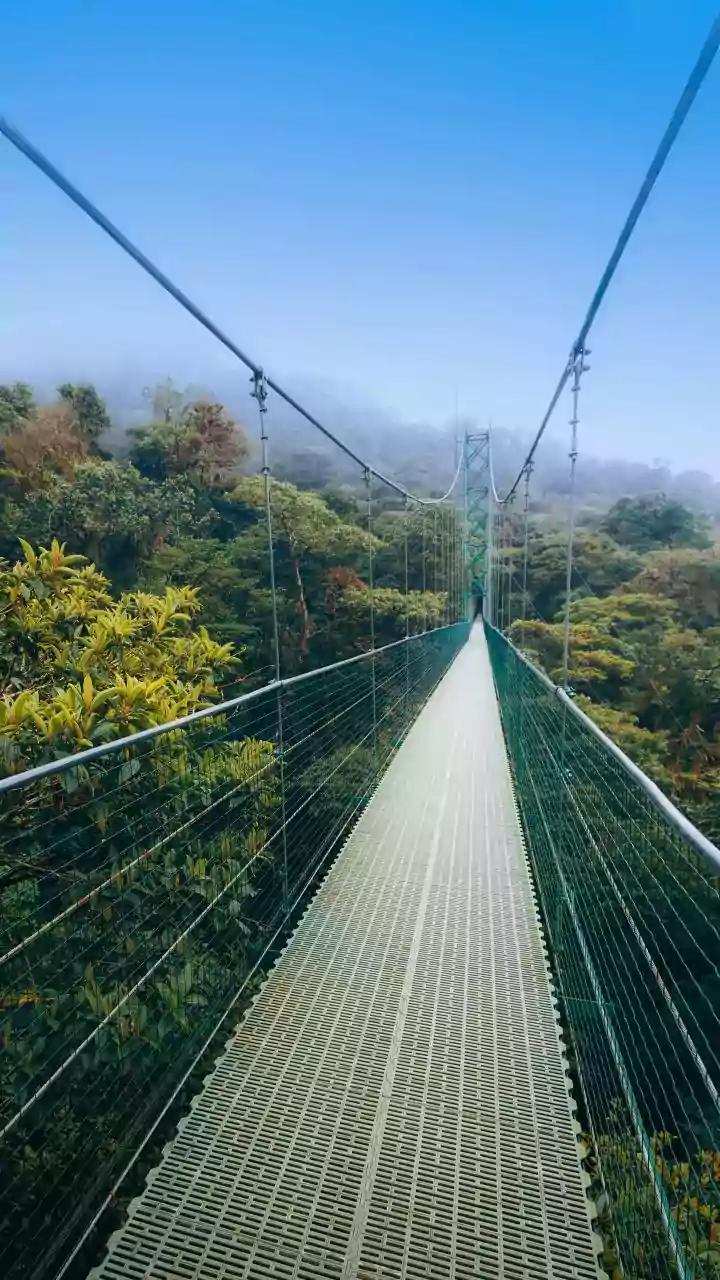
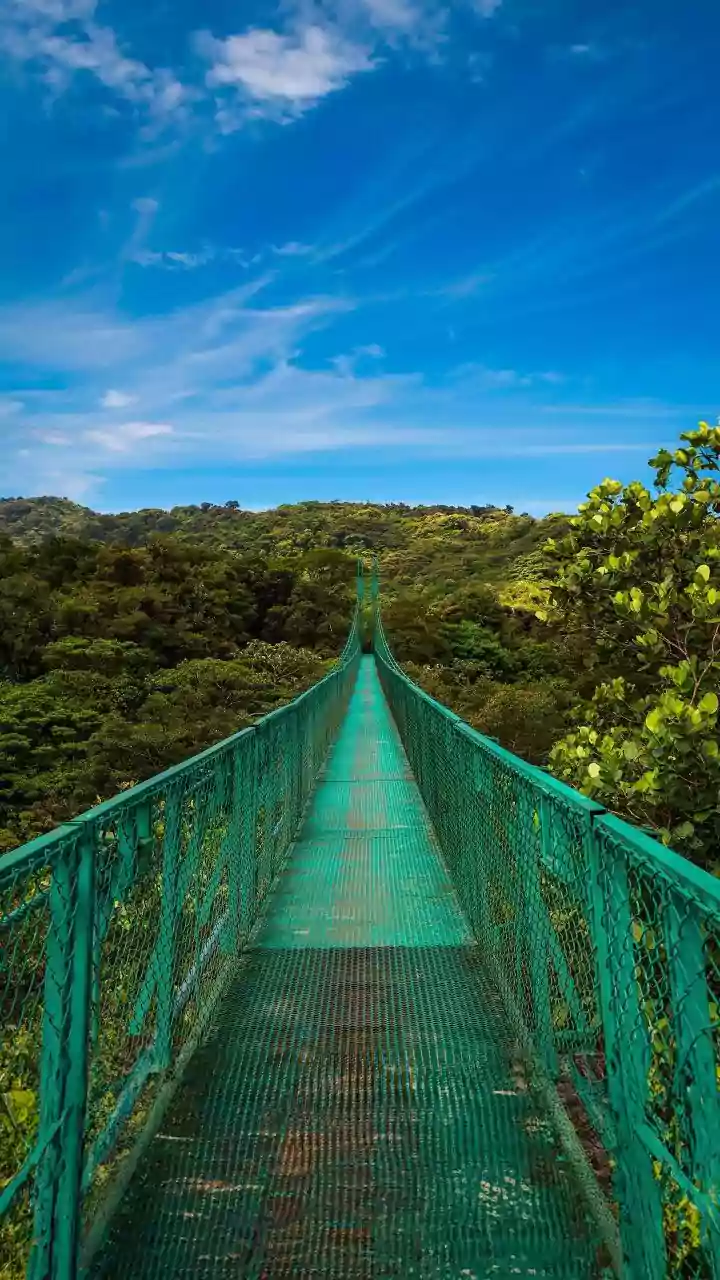
Imagine walking literally through the clouds. That’s the promise of the Sky Walk in Costa Rica's Monteverde Cloud Forest Biological Preserve. This region is famous for its unique ecosystem, where a persistent, low-level cloud cover creates an environment dripping with moisture and life. The Sky Walk is a network of trails and suspension bridges that allows visitors to explore the forest canopy at their own pace. Unlike a single, dramatic bridge, this is a full-on treetop tour. As you wander from bridge to bridge, you are completely immersed in the 'epiphyte-laden' world of the cloud forest. Orchids, bromeliads, ferns, and mosses cover every available surface, and the mist that rolls in and out creates a mystical, almost ethereal atmosphere. It's a quiet, reflective experience that highlights the incredible biodiversity of this rare environment.
Taman Negara Canopy Walkway, Malaysia
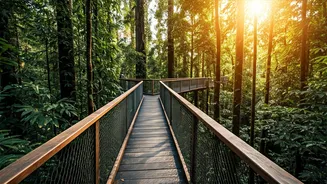
Deep within one of the world's oldest deciduous rainforests lies one of its longest and highest canopy walks. The walkway in Taman Negara National Park, Malaysia, is an engineering feat designed to give visitors an unparalleled view of the jungle without disturbing the delicate ecosystem on the ground. At over 500 metres long and reaching heights of 40 metres, the journey across its narrow planks is a genuine adventure. The path is a series of suspended bridges and platforms built around massive trees. From this vantage point, you're on the same level as monkeys and exotic birds. The sheer density of the green canopy around, below, and above you is awe-inspiring. It’s a powerful reminder of the planet's ancient wilderness and a thrilling way to witness the vibrant life that thrives in the upper reaches of the jungle.
Kakum Canopy Walk, Ghana
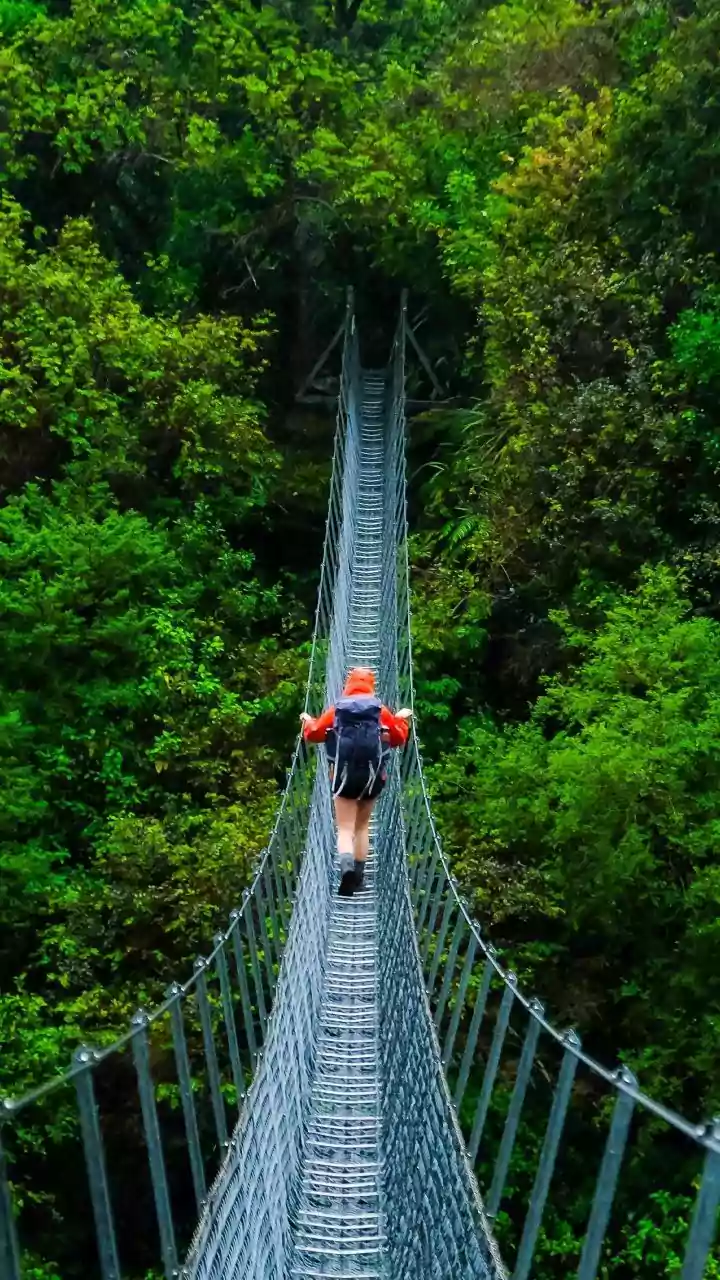
Africa's most famous canopy walk is located in Kakum National Park, Ghana, and it offers a unique perspective on the continent's rich tropical rainforest. What sets the Kakum Canopy Walk apart is its construction; it’s one of only a handful of canopy walkways in Africa. Comprising seven bridges that stretch over 330 metres, it connects several giant trees and provides access to the forest canopy that would otherwise be impossible. The bridges are made of wire rope, aluminium ladders, and wooden planks, and are secured with netting for safety. Walking across them gives you an incredible view of the diverse flora and fauna, including the potential to spot forest elephants and rare monkeys from a safe, elevated distance. It's an experience that supports conservation efforts while providing a thrilling and educational journey into the heart of a vital ecosystem.