






The Old Orbit: A Government-Led Galaxy
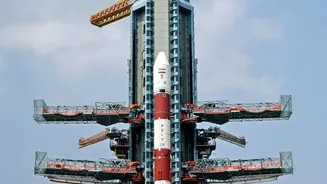
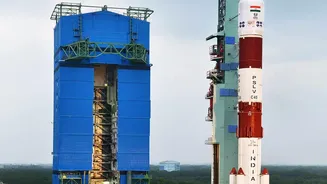
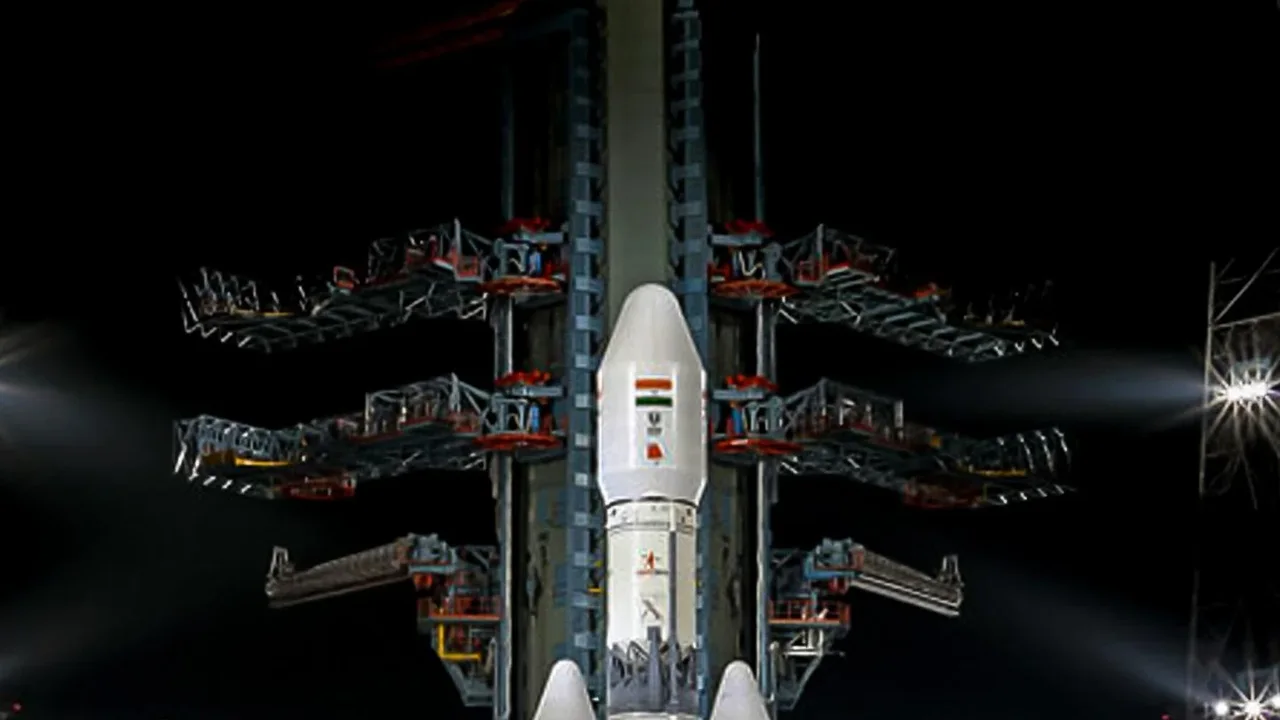
For over fifty years, the Indian Space Research Organisation (ISRO) was the beginning and end of India's space ambitions. It built the nation's space capabilities from the ground up, achieving remarkable feats from cost-effective satellite launches to
the historic Chandrayaan-3 lunar landing. This government-led approach established India as a serious global space power, but career paths were largely confined to ISRO's highly competitive recruitment process, which draws over a million applicants for a few hundred posts annually. The roles were prestigious and mission-driven, but the ecosystem was, by design, a closed loop. If you wanted to work in space in India, you worked for the government.
A Policy 'Big Bang': Opening the Sector
The major shift began in 2020, when the government opened the space sector to private participation, a move formalized by the landmark Indian Space Policy in 2023. This policy was designed to do one primary thing: transform India's space capabilities from a sovereign-run program into a commercial powerhouse. It clarified the roles of different bodies, designating ISRO to focus on advanced research and development while empowering private companies—termed Non-Governmental Entities (NGEs)—to handle end-to-end commercial activities. A new single-window agency, IN-SPACe, was created to authorize and supervise private space activities, making it easier for startups to build, launch, and operate everything from rockets to satellites.
The New Constellation: Startups Take Flight
The policy changes have ignited a startup boom. India is now home to over 400 space-tech startups, a dramatic increase from just a handful a few years ago. Companies like Skyroot Aerospace, which became the first Indian private company to launch a rocket, and Agnikul Cosmos are building their own launch vehicles. Others like Pixxel are focused on creating hyperspectral imaging satellite constellations, while Dhruva Space builds satellite platforms for clients. This new ecosystem is attracting serious investment, with the sector raising hundreds of millions of dollars and producing India's first space-tech unicorn. The goal is ambitious: to grow India's share of the global space economy from around 2% to over 10%.
Beyond Rocket Science: The New Career Frontiers
The most significant outcome of this private-sector boom is the explosion of new career paths. The popular image of a space career is no longer limited to an aerospace engineer or an astronaut. The demand now extends across a wide spectrum of roles. Downstream applications, which use satellite data, are a major growth area. This has created a need for geospatial data analysts, remote sensing specialists, and GIS experts who can translate raw data into business solutions for agriculture, insurance, and urban planning. Software is another critical domain. Aerospace software engineers are needed to develop flight software, mission planning algorithms, and autonomous navigation systems using languages like C++ and Python. The ecosystem also requires professionals in less obvious fields, including space law, policy analysis, business development, and marketing to navigate regulations and secure commercial contracts.
Skills for the Final Frontier
For students and professionals looking to enter this dynamic field, the required skill set has broadened significantly. While a strong foundation in STEM—particularly physics, mathematics, and engineering (aerospace, mechanical, electronics)—remains crucial for technical roles, it's no longer the only pathway. Expertise in computer science, especially in areas like AI/ML, embedded systems, and data analytics, is now highly sought after. Companies are looking for individuals with practical, hands-on experience. Participating in CubeSat projects, internships at startups, and gaining proficiency in tools like GIS software can dramatically improve a candidate's prospects. This new, faster-paced environment values steep learning curves and the ability to work in agile, multidisciplinary teams, a cultural shift from the more structured processes at government institutions.