


Whispers from Ancient India
The story of yoga begins over 5,000 years ago in northern India. While its exact origins are shrouded in antiquity, the earliest mentions appear in the Rig Veda, one of Hinduism's most sacred texts. This early yoga was not about physical postures. Instead,
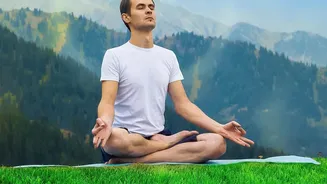
it was a deeply spiritual and meditative practice used by priests and sages to unite the mind, body, and spirit. The word 'yoga' itself comes from the Sanskrit root 'yuj', which means 'to unite' or 'to yoke'. These early practitioners used rituals, chants, and disciplined meditation to connect with the divine and understand the nature of consciousness.
Patanjali Systematises the Path
A pivotal moment in yoga's history came around 400 CE with the sage Patanjali and his Yoga Sutras. These 196 short verses created a philosophical foundation for yoga, outlining a structured framework known as the 'Eight Limbs of Yoga'. This path provided a comprehensive guide to achieving self-realisation. The limbs include ethical principles (Yamas), personal observances (Niyamas), breath control (Pranayama), concentration (Dharana), and meditation (Dhyana). Interestingly, physical postures, or 'asanas', were just one of the eight limbs, intended primarily to prepare the body to sit comfortably for long periods of meditation. The ultimate goal was Samadhi, a state of enlightenment or blissful unity.
The Rise of Physical Practice
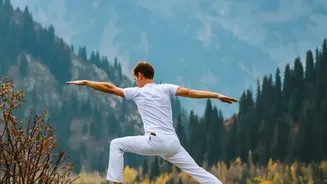
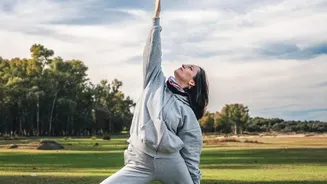
Over subsequent centuries, a new form of yoga emerged that placed greater emphasis on the physical body. Texts like the Hatha Yoga Pradipika, compiled in the 15th century, detailed physical postures (asanas) and breathing techniques (pranayama) as a means to purify the body and control vital energy, or 'prana'. Hatha yoga taught that preparing the physical body was a crucial step toward achieving higher states of consciousness and was seen as a foundation for Raja Yoga, the path of meditation. This shift laid the groundwork for many of the posture-based yoga styles that are popular across the world today.
Journey to the Western World
Yoga's journey to the West began in earnest in the late 19th century. A key figure was Swami Vivekananda, an Indian monk who captivated audiences at the 1893 Parliament of Religions in Chicago. He introduced the philosophical concepts of yoga and Vedanta to America, framing it as a 'science of the mind'. Vivekananda focused on the spiritual paths of yoga, such as Raja Yoga (meditation) and Karma Yoga (selfless action), rather than the physical postures. His teachings opened the door for other Indian gurus to share their knowledge, sparking a growing interest in Eastern spirituality.
The Modern Yoga Explosion
The 20th century saw the popularisation of the physical practice of yoga, largely thanks to a few influential teachers. B.K.S. Iyengar, a student of the legendary yogi Tirumalai Krishnamacharya, played a monumental role. Iyengar developed a method that emphasized precise physical alignment in each pose. He also pioneered the use of props like blocks and straps to make yoga accessible to people of all ages and abilities, a revolutionary concept at the time. His 1966 book 'Light on Yoga' became an international bestseller, effectively serving as a guide for modern yoga worldwide. This new, accessible, and physically-focused approach resonated deeply, helping yoga spread rapidly across the globe.
From Wellness to a Global Industry
Today, yoga is a global wellness movement and a multi-billion dollar industry. It has evolved into countless styles, from the heat of Bikram to the flowing movements of Vinyasa and the gentle poses of Restorative yoga. This massive growth has made the practice accessible to millions, with an estimated 300 million practitioners worldwide. However, this commercialization has also sparked debate. Critics point to the high cost of classes and apparel, a lack of diversity, and the risk of 'whitewashing', where the practice is stripped of its cultural and spiritual roots in favour of a purely physical workout.