





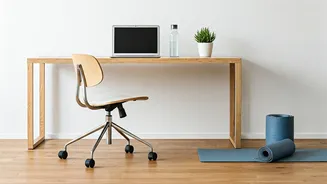



Step 1: Optimise Your Workspace Ergonomics
Your first line of defence is your desk setup. An ergonomic workspace is designed to fit your body, not force your body to fit it. Start with your chair. Adjust its height so your feet rest flat on the floor with your knees at a 90-degree angle. Your chair should
have good lumbar support to maintain the natural curve of your lower spine; if it doesn't, a rolled-up towel or a small cushion can work wonders. Next, position your monitor. It should be about an arm's length away, with the top of the screen at or just below eye level to prevent neck strain. Your keyboard and mouse should be close enough that your elbows form a 90-degree angle, keeping your wrists straight and shoulders relaxed.
Step 2: Make Movement Your Mantra
The human body is designed for movement, not for remaining in a static position for hours. Prolonged sitting weakens the muscles that support your spine and reduces blood flow, leading to stiffness and pain. The simplest solution is to break up your sitting time. Set a reminder to stand up, stretch, and walk around for a few minutes every 30 to 60 minutes. This simple act improves circulation, reduces muscle fatigue, and can even boost your focus. Consider a standing desk to alternate between sitting and standing, or try taking phone calls while walking around the office. Consistency is more important than intensity; small, frequent movement breaks are incredibly effective.
Step 3: Incorporate Simple Desk Stretches
You don't need a yoga mat to release tension. Several effective stretches can be done right from your chair. For your lower back, try a seated spinal twist: sit tall, and gently twist your torso, using the armrest to deepen the stretch. To counteract hunching, perform a chest opener by clasping your hands behind your back, straightening your arms, and lifting your chest. A seated cat-cow stretch, where you alternate between arching and rounding your spine, helps improve flexibility. For your neck, gently tilt your head from side to side. Shoulder shrugs and blade squeezes can also relieve upper back tension. Performing these for just a few minutes a day can prevent stiffness from setting in.
Step 4: Strengthen Your Core and Back
A strong core is crucial for supporting your spine and maintaining good posture. When your core muscles are weak, your back has to work overtime, leading to strain and pain. You don't need to hit the gym for an hour to build strength. Simple exercises like planks and bridges, performed for a few minutes each day, can make a significant difference. Even an exercise as simple as abdominal bracing—pulling your navel toward your spine and holding—can be done while sitting at your desk to engage your core muscles. Outside of work, activities like yoga, swimming, or regular walking strengthen the muscles that support your back and improve overall resilience against the effects of sitting.
Step 5: Cultivate Posture Awareness
Good posture isn't about maintaining a rigid, perfectly upright position all day. In fact, experts now suggest that regularly changing your posture is more beneficial than holding one 'perfect' pose. The goal is to avoid slouching or leaning forward, which puts immense strain on your spinal discs. Be mindful of how you are sitting. Your back should be aligned against your chair, with your shoulders relaxed and down, not hunched up towards your ears. Avoid crossing your legs, which can misalign your hips and spine. Simply being aware of your posture and making small corrections throughout the day can prevent muscle imbalances from developing.