



A Planet-Wide Watch
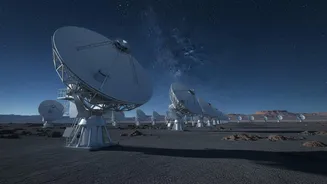
The effort to track near-Earth objects (NEOs) is not the work of one country or a single secret agency. It’s a massive international collaboration. Key players include NASA's Planetary Defense Coordination Office (PDCO) and the United Nations-endorsed
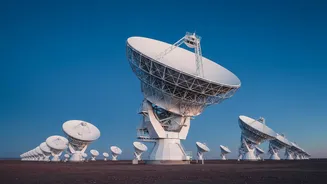
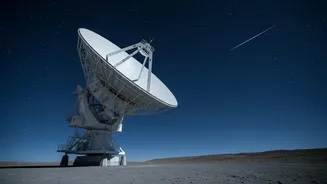
International Asteroid Warning Network (IAWN). These organisations don't own all the telescopes themselves; instead, they coordinate data from observatories, space agencies, and astronomers all over the world, including India's ISRO. Think of them as the central command centres for planetary defense, ensuring that every observation contributes to a single, shared picture of what’s happening in our cosmic backyard. Their goal is to discover, monitor, and physically characterise these space rocks to determine if any pose a future threat.
Finding Needles in a Cosmic Haystack
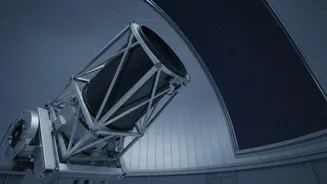
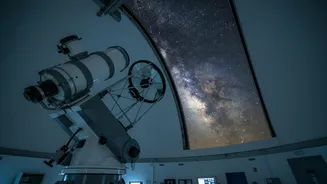
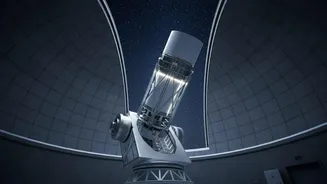
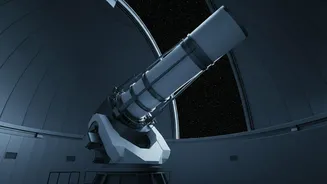
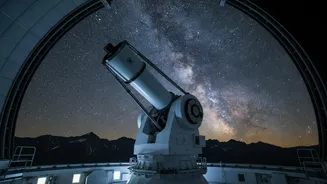
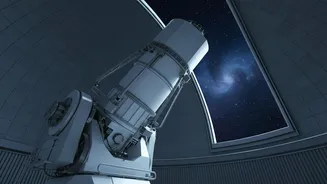
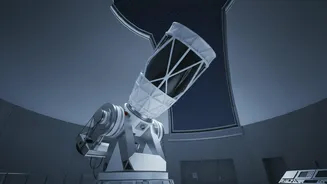
The search begins with powerful survey telescopes. Projects like the Catalina Sky Survey in Arizona and the Pan-STARRS observatory in Hawaii systematically scan the night sky. These telescopes take a series of pictures of the same patch of sky several minutes apart. Sophisticated software then compares these images, looking for tiny points of light that have moved against the fixed background of distant stars and galaxies. A moving dot is the first sign of a potential near-Earth asteroid. These survey programs are incredibly effective, responsible for discovering the vast majority of new NEOs each year. With automated systems, they can sift through immense amounts of data every single night, flagging dozens of candidates for further review.
From a Single Dot to a Calculated Path
Finding a moving dot is just the beginning. To understand its journey, astronomers need more data. The initial detection is sent to the Minor Planet Center, an international clearinghouse for all observations of small bodies in the solar system. This centre posts the object's position on a public page, calling for other astronomers around the globe to help track it. A worldwide community, including professional and skilled amateur observers, points their telescopes at the new object to gather more observations. Each new data point helps refine its trajectory. This follow-up stage is critical. A handful of observations might suggest an asteroid is heading our way, but dozens more, collected over days and weeks, can provide the precision needed to confirm it will miss Earth by millions of kilometres.
Predicting the Future
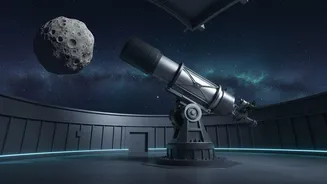
With enough observations, the real analysis can begin. Experts at centres like NASA’s Center for Near-Earth Object Studies (CNEOS) use all the collected data points to calculate a precise orbit for the asteroid. They then run sophisticated computer models to project this orbit far into the future—often 100 years or more—to see if it will ever cross Earth's path. This is where the "safe" part of the headline comes in. For the more than 40,000 near-Earth asteroids discovered, scientists can confidently predict their paths and confirm that none pose a significant threat for the foreseeable future. Objects that are large enough and whose orbits come close to Earth's are classified as Potentially Hazardous Asteroids (PHAs), not because they are a danger, but so they can be monitored with extra care.
Why This Vigilance Keeps Us Safe
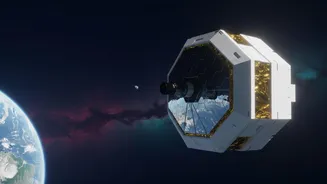
The entire system is designed for early warning. The goal is not to cause alarm, but to build a comprehensive catalogue of our cosmic neighbours. By finding asteroids decades or even centuries before a potential impact, humanity would have time to act. This isn't science fiction; NASA's Double Asteroid Redirection Test (DART) mission in 2022 successfully demonstrated that we can alter an asteroid's path. The global tracking network has already been incredibly successful, having found and catalogued over 95% of the large, civilization-altering asteroids (over 1 kilometre in diameter), and none are on a collision course. The work now focuses on finding smaller, city-threatening objects, ensuring that the sky remains a source of wonder, not worry.