

Why Dry Air Is a Plant's Enemy
Most common houseplants, especially popular tropical varieties like ferns, calatheas, and monsteras, evolved in humid jungle environments. When you turn on a heater, furnace, or air conditioner, you're doing the opposite of recreating that climate. These
systems circulate air, but they also strip it of its natural moisture, causing the relative humidity in a room to plummet. For a plant, this dry air acts like a constant drain, pulling moisture from their leaves faster than their roots can absorb water from the soil. The most common signs of this struggle are crispy brown leaf tips, curling edges, yellowing, and stunted growth. While you stay comfortable, your green companions are fighting dehydration.
The Classic Fix: The Humidity Tray
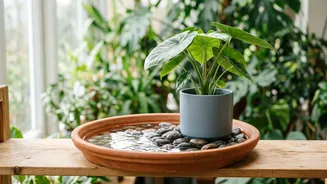
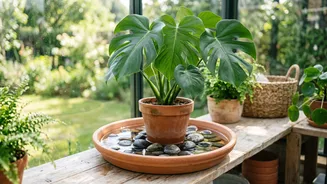
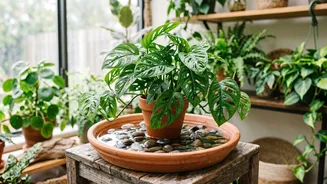
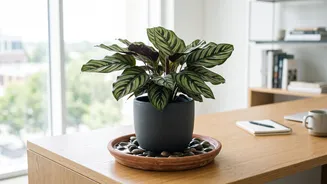
For decades, the go-to, low-tech solution for this problem has been the humidity tray, also known as a pebble tray. The concept is simple: you create a small, localized pocket of humid air right where the plant needs it most. It works through the basic principle of evaporation. By placing a tray of water beneath the plant, the water slowly evaporates upwards, increasing the moisture content of the air immediately surrounding the leaves. The pebbles or stones serve a crucial purpose: they elevate the pot so that it is not sitting directly in the water, which would lead to constantly soaked soil and the dreaded root rot.
How to Make a DIY Humidity Tray
Creating a humidity tray is simple and inexpensive. All you need is a waterproof tray or saucer that is wider than the base of your plant's pot, a layer of pebbles or decorative stones, and water. First, fill the tray with a one to two-inch layer of pebbles. Next, pour water into the tray until the level is just below the top of the pebbles. The most important step is to ensure the pebbles keep the bottom of the pot elevated above the waterline. Place your potted plant on top of the stones. That’s it. You will need to refill the water every few days as it evaporates and clean the tray and pebbles periodically to prevent algae or pests from developing.
Reality Check: How Much Do They Help?
Here is where we need to manage expectations. While the idea is sound, modern testing has shown that the effect of a pebble tray is modest at best. Studies and expert analysis have found that a humidity tray may only increase the relative humidity in the immediate vicinity of the plant by about 3% to 5%. That effect is very localized, often only extending a few inches above the tray before the surrounding dry air of the room disperses it. In a room with actively circulating air from a fan or heater, that small pocket of humidity can be whisked away almost as soon as it forms. So, while it does provide some moisture, it is not a magic solution that will turn a dry room into a tropical oasis.
When to Use a Tray (and When to Upgrade)
A humidity tray can still be a useful tool if you know its limitations. It's best used as a minor supplement, not a primary solution. It can be beneficial for plants that only need a small humidity boost, especially when you group several plants together on a larger tray to create a more substantial microclimate. Plants like ferns, calatheas, orchids, and begonias may appreciate the small lift a tray provides. However, if you have a very dry home or are trying to grow true humidity-loving divas, a pebble tray alone will not be enough to prevent brown, crispy leaves. In these cases, the only truly effective solution is to invest in a room humidifier. A humidifier can raise the humidity of an entire room by 15-25% or more, creating a genuinely healthier environment for your plants.