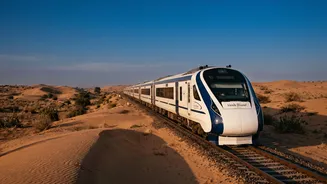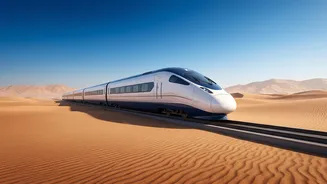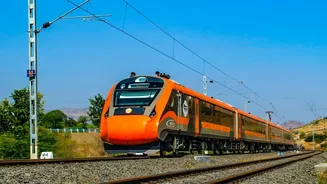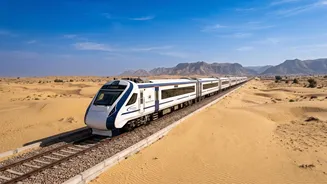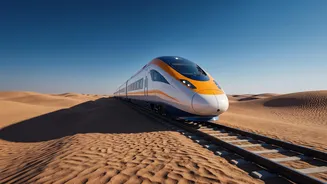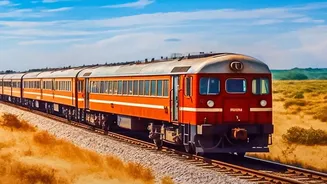


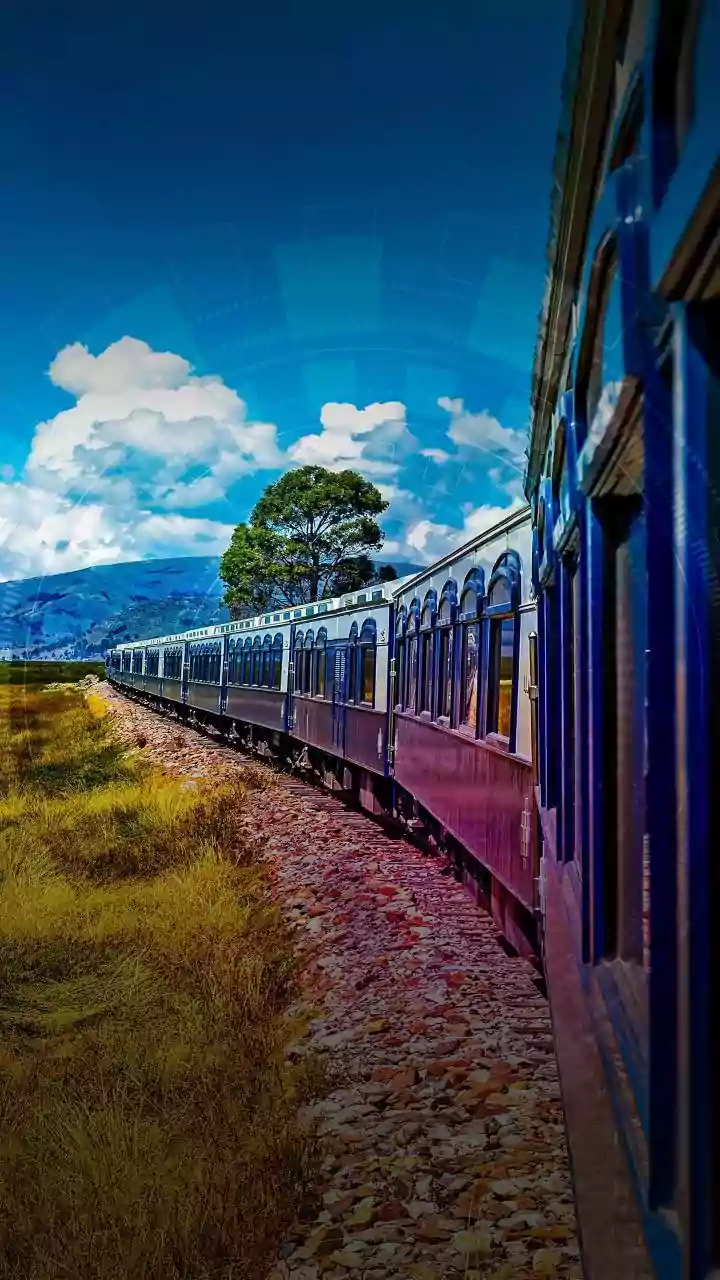

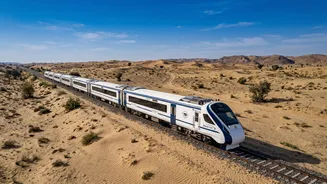

India's modern railway marvel, the Vande Bharat Express, is changing more than just travel times. In Rajasthan, it offers a unique journey, blending high-speed comfort with the timeless, arid beauty of the state's iconic desert landscapes.
A New Artery Through the Arid State
The Vande Bharat
Express has firmly established a crucial link in western India, connecting Jodhpur in Rajasthan to Sabarmati (Ahmedabad) in Gujarat. This service significantly bridges the gap between two of the region's most important commercial and cultural hubs. The train completes the approximately 450-kilometre journey in about six hours, a notable reduction compared to other rail options on the route. This particular line operates six days a week, excluding Tuesdays, making it a reliable option for both business travellers and tourists eager to explore the diverse offerings of both states.
The Journey is the Destination
What makes this route remarkable is the scenery unfolding outside the large, panoramic windows. As the train departs Jodhpur, the 'Blue City', it glides through the semi-arid terrain that characterises much of western Rajasthan. Passengers are treated to views of sparse scrubland, rolling dunes, and the rugged vistas of the Aravalli hills in the distance. Other Vande Bharat routes in the state, such as the one passing through the Sambhar Lake region, offer similarly unique sights of India's largest inland salt lake. The journey provides a moving tableau of life in the desert, a perspective previously enjoyed at a much slower pace.
More Than Just a Train
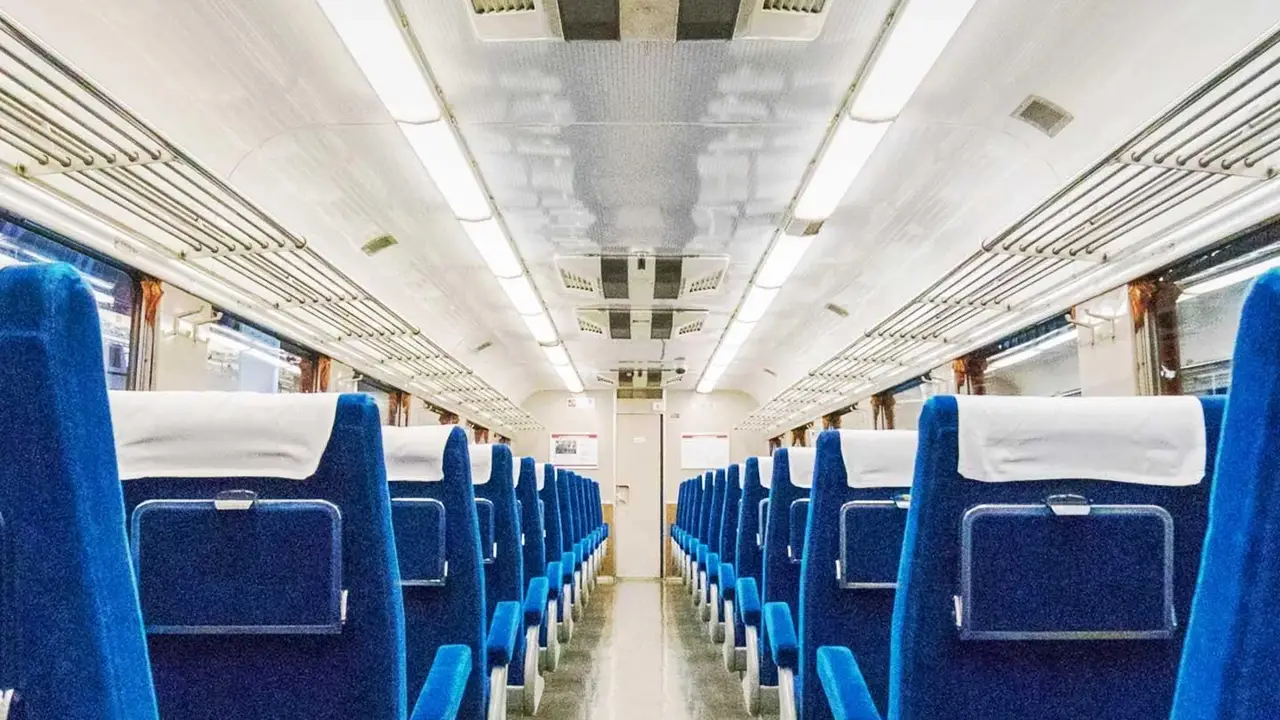
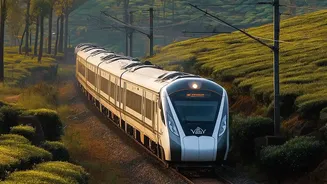
The Vande Bharat Express, often called Train 18, is a symbol of India's advancing engineering capabilities. Designed for passenger comfort, the fully air-conditioned coaches feature ergonomically designed seats, with some executive classes offering rotating chairs to better enjoy the view. Onboard amenities include Wi-Fi for infotainment, GPS-based passenger information systems, and bio-vacuum toilets. The train's aerodynamic design allows it to achieve higher speeds efficiently, while advanced safety features like the indigenous Kavach anti-collision system provide peace of mind. This focus on a superior travel experience transforms a simple commute into a comfortable and engaging journey.
Connecting Culture and Commerce
The route is strategically planned with key stops that enhance regional connectivity. Halts at Pali Marwar and Falna are significant; Falna, in particular, serves as a gateway for pilgrims and tourists heading to the world-renowned Ranakpur Jain Temple. Further along, the stop at Abu Road provides easy access to Mount Abu, Rajasthan's only hill station. By linking these destinations with a high-speed service, the train is a boon for tourism, allowing for faster and more comfortable travel. It also facilitates smoother transit for traders and professionals commuting between the industrial hubs of Gujarat and the vibrant markets of Rajasthan.