



The Air Up There
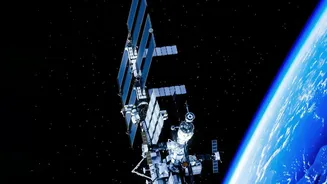
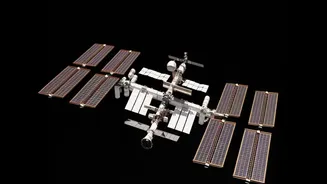
On Earth, a vast ecosystem of plants naturally recycles the carbon dioxide we exhale into the oxygen we need to live. In the vacuum of space, however, there is no such luxury. Inside a spacecraft like the International Space Station (ISS), carbon dioxide is a constant
and dangerous waste product. Without a system to remove it, it would quickly build up to toxic levels. For short missions, spacecraft could simply carry tanks of oxygen and filters for CO2. But for long-term habitation in orbit, or for future multi-year missions to Mars, launching with all the necessary air is impossibly heavy and expensive. The only viable solution is to build a miniature, mechanical ecosystem—a closed-loop system that recycles the air itself.
Scrubbing the Atmosphere Clean
The first step in this life-sustaining cycle is to capture the carbon dioxide. On the ISS, this is primarily handled by the Air Revitalization System. Cabin air is continuously passed through a series of filtration beds containing materials called molecular sieves. These materials, often a porous mineral named zeolite, are designed to trap CO2 molecules while letting oxygen and nitrogen pass through freely. Once a filter bed is saturated with carbon dioxide, it is isolated from the cabin air and heated. This process releases the captured CO2 as a concentrated gas, which can then be sent on to the next stage of the recycling process.
The Chemical Magic: The Sabatier Reaction
This is where the real transformation happens. The captured carbon dioxide is fed into a device called a Sabatier reactor. Here, it is mixed with hydrogen at high temperatures and pressures over a nickel catalyst. This triggers a chemical reaction, discovered by French chemist Paul Sabatier, that converts the CO2 and hydrogen into two new substances: water (H2O) and methane (CH4). The methane is considered a waste product on the ISS and is vented into space. The water, however, is the priceless output, containing the precious oxygen atoms that were once locked inside the carbon dioxide.
Making Oxygen Through Electrolysis
The water produced by the Sabatier reaction, along with water reclaimed from astronauts' breath, sweat, and even urine, is sent to the Oxygen Generation System. This system uses a process called electrolysis to split the water molecules (H2O) into their constituent parts. An electric current, powered by the station's vast solar arrays, is passed through the water. This breaks the chemical bonds, separating the water into breathable oxygen (O2) and hydrogen gas (H2). The oxygen is released directly into the cabin atmosphere for the crew to breathe.
Closing the Loop
The genius of the system is how it feeds into itself. The hydrogen gas produced during electrolysis isn't wasted. Instead, it is piped right back to the Sabatier reactor to be used in the next cycle of converting carbon dioxide into water. This creates a nearly closed loop, dramatically reducing the amount of supplies that need to be sent from Earth. The current system on the ISS recovers about 50% of the oxygen from exhaled CO2. While impressive, some hydrogen is lost in the vented methane, meaning the system is not perfectly efficient and still requires some water resupply. Future systems for missions to Mars and beyond aim to improve this efficiency, potentially by developing ways to extract hydrogen from the methane byproduct, closing the loop even further and enabling humanity to venture deeper into space.