







The Champions' Curse
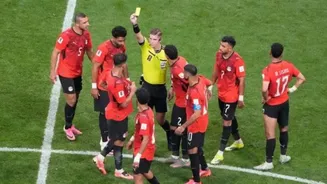
Winning the World Cup is the ultimate prize, but defending it is a near-impossible task. Only two nations have ever won back-to-back titles: Italy in 1938 and Brazil in 1962. Since then, a powerful jinx has taken hold, turning triumph into trauma four
years later. The most potent version of this curse struck between 2002 and 2018, when four consecutive European champions were eliminated in the very next group stage. It began with France's shocking 2002 exit without scoring a goal, followed by Italy in 2010, Spain in 2014, and Germany in 2018, all finishing bottom of their groups. Theories range from squad complacency and aging players to the immense pressure of being the team everyone wants to beat. France finally broke the group-stage exit streak in 2022 by reaching the final, but they still couldn't retain the trophy, losing to Argentina in a dramatic penalty shootout.
Mexico’s ‘Quinto Partido’ Nightmare
For decades, the entire footballing identity of Mexico was defined by a single phrase: 'El Quinto Partido' (The Fifth Game). The curse began after Mexico hosted the 1986 World Cup and reached the quarter-finals—their fifth game—before being knocked out. What followed was an almost unbelievable pattern of futility. From 1994 to 2018, across seven consecutive World Cups, Mexico consistently advanced from their group only to be eliminated in the Round of 16, the fourth match, every single time. This repeated failure at the same hurdle became a national obsession, a psychological barrier the team could not seem to overcome. However, all curses are made to be broken. At the 2026 World Cup, co-hosted on home soil, Mexico finally exorcised their demons, winning their first knockout match in 40 years to advance to the Round of 16, which, in the new expanded format, was their fifth game.
England's Penalty Shootout Heartbreak
For England, no two words have caused more collective dread than 'penalty shootout'. This national trauma began at the 1990 World Cup semi-final, when they lost to West Germany from the spot. It created a psychological scar that seemed to deepen with each tournament. England suffered the same fate against Argentina in 1998 and Portugal in 2006, losing all three of their first World Cup shootouts. The misses became infamous, defining the careers of the players who stepped up and faltered under the immense pressure. For nearly three decades, a shootout was seen as an almost certain exit for the Three Lions. The curse was finally broken at the 2018 World Cup in Russia, when England defeated Colombia on penalties in the Round of 16. While they lost the Euro 2020 final on penalties, their improved record in recent years suggests the deep-seated fear may finally be fading.
The Ballon d'Or Jinx
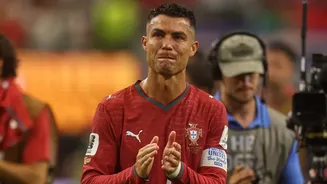
Receiving the Ballon d'Or marks a player as the best in the world. But if you win it right before a World Cup, history suggests it's a bad omen. In a bizarre statistical anomaly, no reigning Ballon d'Or winner has ever gone on to win the World Cup in the following tournament. The list of victims reads like a who's who of football legends. Johan Cruyff in 1974, Karl-Heinz Rummenigge in 1982, Michel Platini in 1986, and Ronaldo Nazario in 1998 all fell short. More recently, Lionel Messi (2010), Cristiano Ronaldo (2014, 2018), and Karim Benzema (2022) all saw their teams fail to lift the trophy after they were crowned the world's best player. Whether it’s the added pressure or pure coincidence, this curse has remained unbroken for over 60 years, turning the sport's highest individual honour into a potential team jinx on the world's biggest stage.
The Socceroos and the Witch Doctor
Perhaps the most colourful curse in World Cup history belongs to Australia. In 1969, during a World Cup qualification playoff against Rhodesia (now Zimbabwe) in Mozambique, the Australian team, known as the Socceroos, allegedly enlisted a local witch doctor to curse their opponents. Australia won the match, but the story goes that they failed to pay the witch doctor his £1,000 fee. In response, he reversed the hex and placed it on the Socceroos, dooming them to never qualify for the World Cup again. What followed was 32 years of heartbreaking near-misses and qualification failures. The curse became a famous part of Australian football folklore until 2004, when comedian John Safran travelled to Mozambique with a new witch doctor to have it lifted. A year later, Australia famously qualified for the 2006 World Cup, and they haven't missed one since.