
Your Planetarium in Your Pocket
The secret weapon for any modern urban astronomer is a stargazing app. These applications use your phone's GPS and compass to create a real-time map of the sky. By simply pointing your phone towards the stars, the app uses augmented reality (AR) to overlay
the names of stars, constellations, and planets on your screen. This technology transforms a confusing sea of dots into a navigable cosmos, making it possible to identify celestial objects even if you can't tell the North Star from a satellite.
Choosing Your Digital Guide
There are numerous stargazing apps available, but a few stand out for their user-friendly interfaces and powerful features. For beginners, Star Walk 2 offers a polished design and an excellent AR mode that makes identification seamless. Another great free option is Stellarium Mobile, which provides a clean, accurate map and a massive database of celestial objects. SkyView Lite is also a strong contender, known for working well even without a Wi-Fi or GPS signal. Most of these apps have free versions that are more than sufficient for finding bright planets like Jupiter and Saturn.
Setting Up for Success
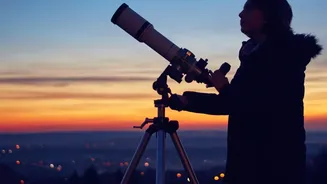
Before you head to the roof, a little preparation goes a long way. First, fully charge your phone. Next, download your chosen app and any offline maps it offers, just in case your rooftop has a weak signal. Give your eyes at least 15-20 minutes to adjust to the darkness once you're outside; avoid looking at your bright phone screen during this time. Many apps feature a red-light mode to help preserve your night vision. If you have a pair of binoculars, even a basic set, bring them along. They can dramatically enhance your view.
Battling the Urban Glow
Light pollution is the biggest challenge for city stargazers, as stray light from buildings and streets washes out fainter stars. However, planets are typically bright enough to punch through the glow. To improve your chances, find the darkest spot on your roof, away from direct streetlights or security lamps. You can even cup your hands around your eyes to block out peripheral light. The best viewing nights will have clear, haze-free skies. The period around a new moon is ideal, as the sky will be at its darkest without moonlight.
Locating the Gas Giants
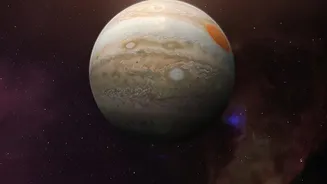
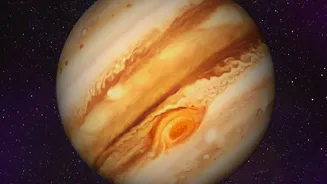
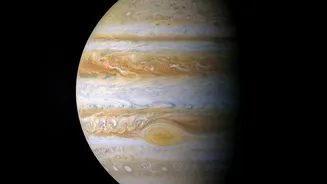
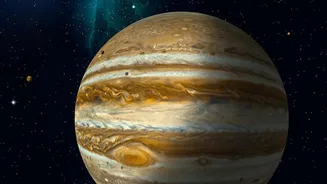
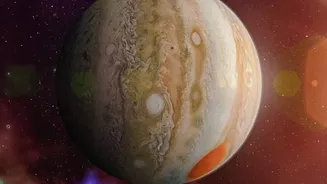
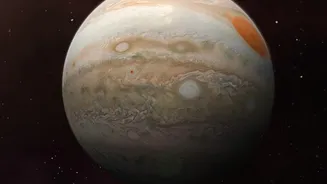
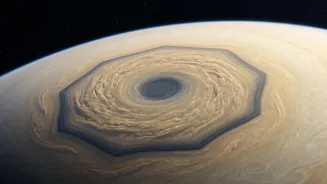
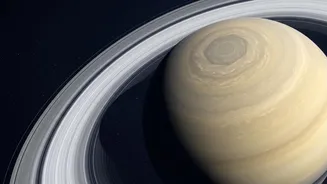
In September 2026, both Jupiter and Saturn are well-placed for viewing. Saturn, appearing as a steady, yellowish-white point of light, rises in the east shortly after sunset and is visible for most of the night. Jupiter, a much brighter white light, rises a few hours before sunrise in the eastern sky. To find them, simply open your app and use its search function to select Jupiter or Saturn. The app will display an arrow guiding you to pan your phone across the sky. When you're pointed in the right direction, you'll see the planet's label on your screen, perfectly aligned with the bright 'star' in the real sky.
What to Expect at the Eyepiece
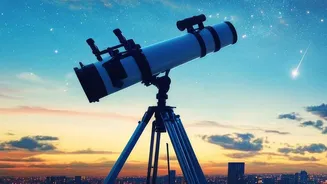
To the naked eye, Jupiter will appear as a brilliantly bright, star-like object that doesn't twinkle as much as actual stars. Saturn will be noticeably fainter but still distinct. This is where binoculars make a huge difference. Point them at Jupiter, and you might be able to spot its four largest moons—the Galilean moons—as tiny pinpricks of light flanking the planet. When looking at Saturn through binoculars, you won't see the rings as separate from the planet, but it may appear as a slightly elongated, oval-shaped object rather than a perfect point. It's a subtle but rewarding confirmation that you are, in fact, looking at the famous ringed planet.