








The Fact That Broke the Internet
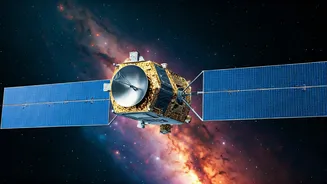
The fact is simple, staggering, and has been proudly highlighted by everyone from prime ministers to social media users: India’s Mars Orbiter Mission (Mangalyaan) cost less than the Hollywood blockbuster 'Gravity'. The 2013 mission cost approximately
$74 million, while the film, released the same year, had a budget of around $100 million. This isn't just a fun piece of trivia; it's the anchor of a powerful narrative about India's unique approach to space exploration. This single comparison has done more to communicate the ethos of the Indian Space Research Organisation (ISRO) than any technical document ever could. It’s a story of achieving the impossible, not just in space, but on a budget that seems impossibly small to the rest of the world.
More Than Just a Bargain
The obsession with this fact goes beyond a simple price comparison. For many Indians, it’s a powerful David-versus-Goliath story. While other space agencies operate with multi-billion dollar budgets, ISRO has consistently delivered world-class results with a fraction of the resources. For context, NASA's MAVEN Mars orbiter, which reached the red planet just before Mangalyaan, had a price tag of roughly $671 million—nearly ten times higher. The cost-effectiveness demonstrates a different path to success, one that doesn't rely on brute financial force but on precision, planning, and intellectual rigor. This approach democratises space, proving that ambitious celestial goals are achievable without galactic-sized budgets, a message that resonates deeply in a developing nation that is also a rising global power.
The Power of Frugal Innovation
At its heart, the obsession is a celebration of 'jugaad' on a cosmic scale. 'Jugaad' is a Hindi word that describes a flexible, resourceful, and innovative approach to problem-solving with limited resources. ISRO’s model is the ultimate embodiment of this spirit, often referred to as frugal innovation. This mindset was born of necessity. Decades of sanctions forced Indian scientists to develop technologies indigenously, fostering a culture of self-reliance and creative workarounds. Engineers at ISRO are known for their dedication, working to maximise every rupee. This includes reusing proven technologies from previous missions, designing lighter payloads, and choosing longer, more fuel-efficient trajectories to save costs, as seen with Mangalyaan's extended journey to Mars.
A Legacy of Low-Cost Success
The Mangalyaan-versus-Hollywood comparison is not an isolated case. The theme of high achievement at low cost is a recurring one for ISRO. The Chandrayaan-3 mission, which made India the first and only nation to soft-land on the lunar south pole, cost around $75 million. This is significantly less than Russia’s failed Luna-25 mission to the same region, which cost an estimated $200 million, and less than the budget for sci-fi films like 'Interstellar'. This consistent pattern of success reinforces the narrative that ISRO's model is not a fluke but a sustainable and replicable strategy. It has cemented India’s reputation as a reliable and cost-effective partner in the global space industry.