





Beyond the Buzz: From Sci-Fi to Teacher's Aide
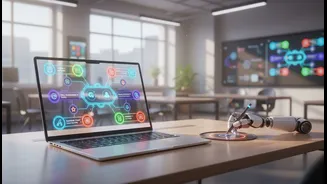
The conversation around AI in education is maturing rapidly. What once sounded like science fiction is now becoming a tangible tool on teachers' laptops. The new wave of AI for educators isn't about creating robot teachers; it's about smart software designed
to handle the repetitive, time-consuming aspects of lesson preparation. These tools act as a starting point, a brainstorming partner that can generate a draft outline, suggest activities, or find relevant resources in minutes, not hours. The focus is on augmentation, giving teachers a powerful assistant to streamline their workflow so they can dedicate more energy to high-impact teaching. With the CBSE making AI a compulsory subject in lower grades, its integration into the teaching process itself is a natural and necessary next step for Indian education.
The Gift of Time: Automating the Grunty Work
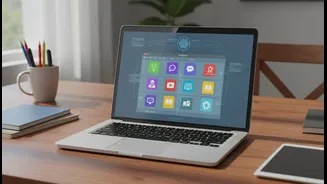
The single most significant benefit educators report is time savings. A teacher's day is filled with administrative tasks that eat into valuable planning and instruction time. AI tools are proving adept at automating this 'grunty work'. Platforms like MagicSchool.ai, Eduaide.AI, and Curipod can draft lesson outlines aligned to specific curriculum standards, create differentiated reading passages for varying skill levels, and even generate quizzes or assessment rubrics. This automation doesn't just shorten the time spent on planning; it allows for more thoughtful and refined preparation. Instead of starting with a blank page, a teacher can edit, adapt, and enhance an AI-generated draft, applying their own expertise and creativity where it matters most.
Personalised Learning at Scale
In a country like India, where classrooms are often large and diverse, providing personalised attention to every student is a significant challenge. AI offers a promising solution. By inputting specific learning objectives, teachers can use AI to generate varied activities and resources tailored to different learning styles and paces. For example, an AI tool can create a simplified version of a text for a student who is struggling, while generating more complex extension questions for advanced learners. This ability to differentiate instruction quickly and efficiently is a game-changer. It allows a single teacher to cater to a wider range of needs within one classroom, making learning more inclusive and effective for every child.
The Irreplaceable Human in the Loop
Despite the impressive capabilities of these tools, experts and educators agree that AI is a co-pilot, not the pilot. The teacher's professional judgment remains paramount. AI-generated content needs to be critically reviewed for accuracy, bias, and appropriateness for a specific group of students. Concerns about data privacy, algorithmic bias, and the potential for over-reliance are valid and require careful management. The goal is not for teachers to blindly accept what the AI produces, but to use it as a powerful resource. The human touch—the empathy, the ability to read a classroom's mood, and the personal connection with students—is something technology cannot replicate. The true art lies in blending AI's efficiency with a teacher's irreplaceable insight and experience.