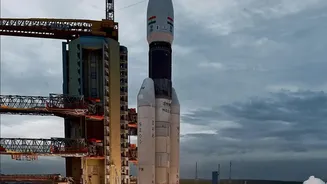





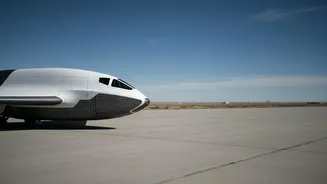


Meet 'Pushpak', India's Space Shuttle
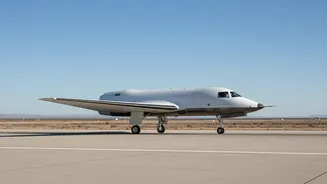
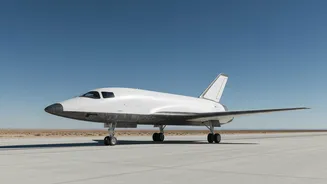
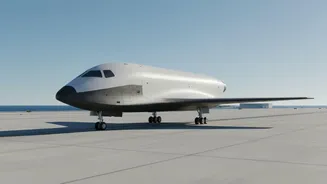
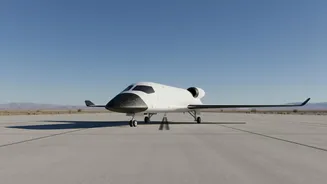
At the heart of ISRO's cost-cutting strategy is the Reusable Launch Vehicle-Technology Demonstrator (RLV-TD), affectionately named 'Pushpak'. This is not a traditional rocket but a winged space plane designed to be a workhorse for future missions. Unlike
expendable rockets like the PSLV and GSLV, which are used only once, the entire point of Pushpak is to fly to space, deploy its payload, and then return to Earth, landing horizontally on a runway just like an airplane. This capability is the holy grail for space agencies worldwide because it promises to fundamentally change the economics of launching satellites. ISRO's recent focus has been on perfecting one of the most difficult parts of this process: the autonomous landing.
The Crucial Landing Experiments (LEX)
In a series of three successful Landing Experiments (LEX) conducted at the Aeronautical Test Range in Chitradurga, Karnataka, ISRO has proven its mastery over autonomous landing technology. In these tests, a prototype of Pushpak was carried to an altitude of 4.5 km by an Indian Air Force Chinook helicopter and released. From there, the vehicle had to navigate its own way to the runway, manage high speeds, and perform a perfect, unmanned landing. The final test in June 2024 was the most challenging, as Pushpak had to correct its course from a greater distance and in more severe wind conditions. The vehicle autonomously executed complex manoeuvres, approached the runway at over 320 kmph—faster than a commercial jetliner—and came to a safe stop using a brake parachute and its landing gear brakes.
The Core Question: How Reusability Slashes Costs
So, how do these successful landings translate to cheaper satellite launches? The answer lies in the simple economics of 'use and throw' versus 'use and reuse'. Traditional rockets are incredibly expensive, single-use machines. The most valuable and technologically complex parts—the engines, guidance systems, and electronics—are discarded after every mission, either burning up in the atmosphere or falling into the ocean. This is like building a brand-new car for every single road trip you take. Reusable launch vehicles like Pushpak are designed to recover these high-value components. By safely landing the vehicle back on a runway, ISRO can refurbish it and fly it again. Experts estimate that this approach could slash the cost of placing a kilogram of payload into orbit by up to 80%, potentially bringing it down from around $20,000 to $2,000.
A Step-by-Step Path to Orbit
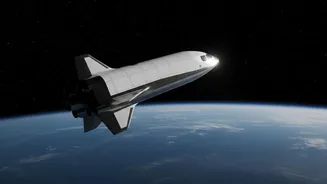
ISRO's approach has been characteristically methodical. The successful LEX series, which focused solely on landing, followed an earlier Hypersonic Flight Experiment (HEX) in 2016 that tested the vehicle's ability to withstand re-entry into the atmosphere. With the landing phase now validated, ISRO is setting its sights on the next major milestone: an Orbital Re-entry Experiment (ORE). This future mission will see Pushpak launched into orbit on a conventional rocket, after which it will autonomously de-orbit, re-enter the atmosphere, and glide back to a runway landing in India. This will be the ultimate test, combining all the technologies from previous experiments into one complete mission profile and paving the way for an operational, fully Indian reusable launch system.
India’s Place in the Global Launch Market
Mastering reusable launch technology is not just a scientific achievement; it's a strategic business imperative. The global satellite launch market is a multi-billion dollar industry, and cost is a huge factor for companies and countries looking to send their satellites into space. By developing a cost-effective RLV, ISRO aims to significantly enhance India's competitiveness, attracting more international customers for its commercial arm, NewSpace India Limited (NSIL). This technology ensures India can compete with international players who are also heavily invested in reusability. An affordable, on-demand launch capability also strengthens national sovereignty, allowing India to deploy satellites for communication, disaster management, and security whenever needed, without relying on foreign providers.