





A Doctor in a Spaceship
Anil Menon is not just any astronaut; his unique background makes him perfectly suited for this health-focused mission. Born in Minneapolis to an Indian father from Kerala and a Ukrainian mother, Menon is a Colonel in the U.S. Space Force and a practicing
emergency medicine physician. Before being selected as a NASA astronaut in 2021, he served as a flight surgeon for previous ISS expeditions and was even the first-ever flight surgeon for SpaceX, where he helped establish medical protocols for commercial spaceflights. His extensive experience includes serving on the front lines in Afghanistan, providing medical care to climbers on Mount Everest, and even spending a year in India as a Rotary Scholar supporting polio vaccination efforts. This diverse background in extreme environment medicine gives him a rare perspective on the challenges of keeping humans healthy far from Earth.
The Hazards of Weightlessness
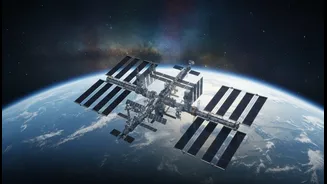
An eight-month stay in orbit is significantly longer than a typical mission and provides a vital window into the long-term effects of microgravity on the human body. Without the constant pull of Earth's gravity, astronauts face a barrage of health challenges. Their bones can lose mineral density at a rate of 1% to 1.5% per month, muscles begin to weaken and atrophy, and fluids shift upwards into the head. This fluid shift can cause vision problems, a condition known as Space-Associated Neuro-ocular Syndrome (SANS), and even alter the shape and position of the brain. Furthermore, astronauts are exposed to significantly higher levels of space radiation, which increases the long-term risk of cancers and degenerative diseases. These physiological changes are similar to an accelerated aging process, making space a unique laboratory to study human health.
A Laboratory in Orbit
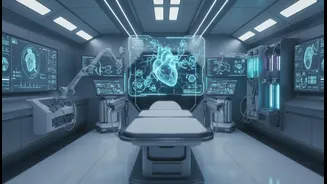
Menon's mission is packed with experiments designed to understand and mitigate these risks. A key focus is on autonomous medicine—developing technologies that allow astronauts to diagnose and treat health issues without real-time support from Earth. He will be testing AI-guided ultrasound systems that use augmented reality, which could empower astronauts on future missions to Mars to perform their own medical imaging. Other experiments include studying how blood circulation is affected in weightlessness, bioprinting vascular tissue to better understand aging, and even exploring how to manufacture sterile IV fluids on demand from the station's water supply. This research is not only about protecting astronauts; it has direct applications on Earth, advancing treatments for everything from osteoporosis to cardiovascular disease.
Paving the Way for the Moon and Mars
Ultimately, the research conducted by Menon and his crewmates is about enabling humanity's next giant leap. As NASA's Artemis program aims to establish a sustained human presence on the Moon and eventually send astronauts to Mars, understanding how to keep crews healthy for missions lasting months or even years is paramount. A trip to Mars could take around three years, making it impossible to quickly return to Earth for medical emergencies. The data gathered during this eight-month mission will be crucial for developing effective countermeasures, from exercise regimes and nutritional plans to advanced medical technologies. By serving as both a researcher and a test subject, Menon is helping to write the medical playbook for the next generation of deep-space explorers, ensuring they can not only survive but thrive on their journeys into the cosmos.