

Why Yoga Works for Flexibility
Many people believe flexibility is something you either have or you don't, but the truth is it can be cultivated. Yoga is exceptionally effective because it works on multiple levels. Physiologically, holding a yoga pose sends signals to your muscles to lengthen
and release tension. It also targets the body's connective tissues, like fascia, which can become stiff over time, especially with a sedentary lifestyle. Beyond just stretching, yoga integrates conscious breathing. When you exhale deeply into a pose, it helps calm your nervous system, which in turn allows your muscles to relax and stretch more effectively. This mind-body connection is yoga's secret weapon for unlocking a greater range of motion safely.
Consistency Trumps Intensity
The promise of getting flexible 'fast' often leads people to push too hard, risking injury. However, the key to sustainable progress is consistency. Practicing for 15 minutes every day will yield far better and safer results than one intense, hour-long session per week. You may start to notice a difference in your body within a few weeks of regular practice. The goal isn't to force yourself into a pretzel shape overnight, but to create a daily ritual that gently encourages your muscles and joints to open up over time. This approach respects your body's limits while steadily building a more limber and resilient physique.
Cat-Cow Pose (Marjaryasana-Bitilasana)
This is the perfect dynamic movement to begin any flexibility routine. It gently warms up the spine and stretches the muscles of the back and abdomen. Start on your hands and knees in a tabletop position. As you inhale, drop your belly, lift your chest and tailbone, and look forward into Cow Pose. As you exhale, round your spine toward the ceiling, tuck your chin to your chest, and press into your hands for Cat Pose. Flowing between these two positions for five to ten breaths improves spinal mobility and eases tension in the neck and shoulders.
Downward-Facing Dog (Adho Mukha Svanasana)
A cornerstone of modern yoga, Downward-Facing Dog is a full-body stretch that lengthens the hamstrings, calves, and shoulders while strengthening the arms. From your tabletop position, tuck your toes, lift your hips up and back, forming an inverted 'V' shape. For beginners, it's essential to keep the knees generously bent to focus on lengthening the spine. Don't worry about getting your heels to the floor. Instead, 'pedal' your feet by bending one knee and then the other to gently stretch each calf. This pose decompresses the spine and provides a fantastic stretch for the entire back of the body.
Low Lunge (Anjaneyasana)
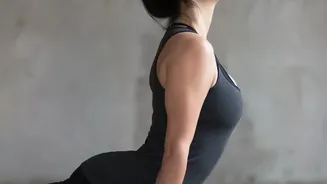
Hours spent sitting can lead to incredibly tight hip flexors, causing lower back discomfort. The Low Lunge is a powerful antidote. From Downward-Facing Dog, step one foot forward between your hands and lower your back knee to the mat. With your front knee stacked over your ankle, you can keep your hands on the floor or lift your torso and rest them on your front thigh. You should feel a deep stretch in the front of your back hip and thigh. This pose is crucial for improving posture and relieving tension built up from daily life.
Seated Forward Bend (Paschimottanasana)
This classic pose targets the hamstrings and lower back. Sit on the floor with your legs extended in front of you. You can sit on the edge of a folded blanket to help tilt your pelvis forward. Inhale to lengthen your spine, and as you exhale, begin to hinge forward from your hips, not your waist. The goal is not to touch your toes but to maintain a long spine as you fold. If your hamstrings are tight, you can loop a towel or yoga strap around your feet to assist the stretch. Breathe deeply, and with each exhale, allow yourself to release a little more into the pose.
Butterfly Pose (Baddha Konasana)
An excellent pose for opening the hips and stretching the inner thighs and groin muscles. Sit on the floor and bring the soles of your feet together, letting your knees fall out to the sides. Hold onto your ankles or feet. Sit up tall to lengthen your spine, and if you feel comfortable, you can gently fold forward. Avoid forcing your knees down; instead, let gravity do the work. This pose improves hip mobility, which is vital for overall ease of movement and can help alleviate knee and back strain.