




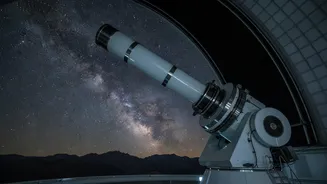
A Needle in a Cosmic Haystack
A Near-Earth Object (NEO) is an asteroid or comet that comes within 30 million miles of Earth's orbit. While movies often depict giant, easily spotted threats, the reality is far more challenging. Many of these objects are small, dark, and incredibly
distant. The basic method of detection involves taking multiple images of the same patch of sky minutes apart. Against a fixed background of stars, a moving point of light betrays an asteroid. But the sky is vast, and finding these moving specks requires a systematic and persistent search. The U.S. Congress has tasked NASA with finding 90 percent of all NEOs larger than 140 meters in diameter—big enough to cause significant regional damage.
The Need for a 24/7 Global Watch
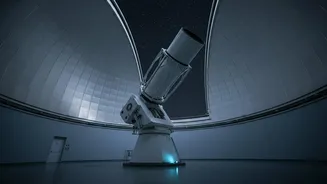
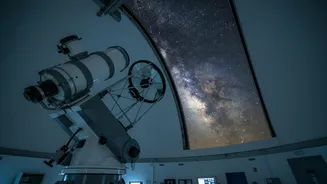
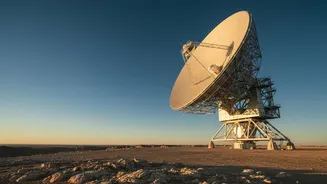
Earth is a moving target, and an asteroid can approach from any direction. A telescope in one location can only see a small fraction of the sky at night, and is useless during the day or in poor weather. This is why a single observatory is not enough. A coordinated worldwide network of observatories ensures that as the Earth rotates, another telescope is always ready to take over, providing continuous vigilance. This global collaboration is formalized through the International Asteroid Warning Network (IAWN), which links institutions around the world to discover, monitor, and physically characterize potentially hazardous NEOs. This network includes observatories in both the northern and southern hemispheres to ensure full sky coverage.
Ground-Based Surveys: The First Line of Defense
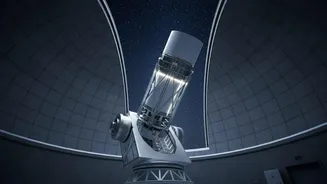
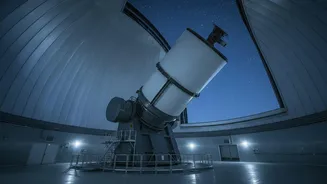
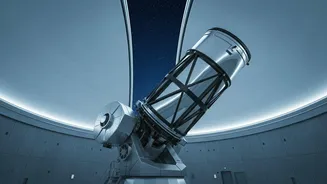
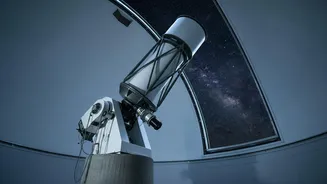
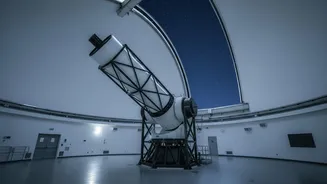
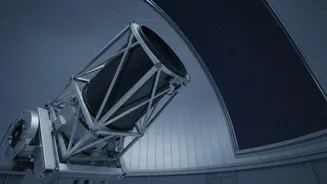
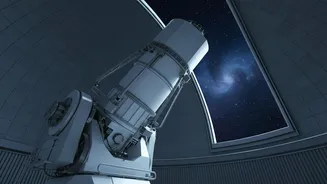
The workhorses of asteroid hunting are powerful ground-based survey telescopes. Projects like the Catalina Sky Survey in Arizona and Pan-STARRS in Hawaii automatically scan the heavens every clear night. These systems are designed to cover wide swathes of the sky, identifying new moving objects and reporting them to the Minor Planet Center (MPC), the international clearinghouse for all NEO observations. Once a new potential NEO is flagged, the call goes out for reinforcements. Other telescopes around the world, including those operated by amateur astronomers, perform follow-up observations. Each new data point helps scientists refine the object's orbit and determine if it poses any future risk.
Space Telescopes: Seeing the Unseen
Ground-based telescopes have a significant blind spot: the Sun. It is incredibly difficult to detect asteroids that approach from the direction of the Sun, as its glare overwhelms them. This is where space telescopes become indispensable. Missions like NASA's NEOWISE have used infrared detectors to find hundreds of asteroids. Dark asteroids reflect very little sunlight, making them hard for optical telescopes to see, but they do absorb solar heat and glow in infrared light. The upcoming NEO Surveyor mission, set to launch no earlier than 2027, is specifically designed to hunt for these elusive threats. By operating in space at the Sun-Earth L1 Lagrange point, it will be able to spot asteroids that are typically obscured by sunlight, drastically accelerating our ability to find potentially hazardous objects.
From Detection to Deflection
Finding an asteroid is only the first step. The network then works to characterize it—determining its size, shape, composition, and precise trajectory. This requires multiple observations from different telescopes over time. If an object is deemed a credible threat, organizations like NASA's Planetary Defense Coordination Office (PDCO) are responsible for notifying government agencies. The good news is that for the first time in history, we have the ability to act. NASA's DART (Double Asteroid Redirection Test) mission in 2022 successfully demonstrated that crashing a spacecraft into an asteroid could alter its path. This proves that with enough warning—an advance notice that only a robust, worldwide network of telescopes can provide—we can protect our planet.