



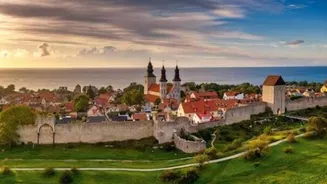
Visby: The Walled City of Roses and Ruins
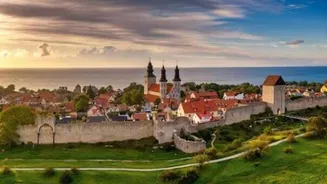
On the island of Gotland, the UNESCO World Heritage site of Visby stands as a spectacular monument to medieval times. This former Hanseatic League stronghold is encased by a formidable 3.5-kilometer stone wall, punctuated by over 30 intact towers. During
the summer, daylight can last for 17 to 19 hours, giving you ample time to wander through the city's labyrinth of narrow streets, discover its many church ruins, and admire the blooming roses that climb the walls of timbered houses. As evening approaches, the low-angled sun casts a golden glow on the ruins of St. Karin and St. Nicolai, creating a truly unforgettable atmosphere. You can walk the entire city wall for panoramic views of the Baltic Sea and the historic town below, an experience made all the more special when the sun is still shining at 9 PM.
Sigtuna: Where Sweden Began
Founded in the late 10th century, Sigtuna is Sweden's very first town and a treasure trove of Viking and early Christian history. Located on the shores of Lake Mälaren, north of Stockholm, its main street, Stora Gatan, is thought to be the oldest in the country, retaining its original layout for over a thousand years. The extended summer daylight is perfect for exploring the town's rich collection of runestones, the most concentrated in the world. You can spend the long afternoon visiting the ruins of St. Per, once Sweden's first cathedral, and the still-active 13th-century St. Mary's Church (Mariakyrkan). The lingering light invites leisurely strolls along the lake's boardwalk, picnics in waterfront parks, and browsing the small shops and cafes housed in charming wooden buildings that line the historic street.
Lund: A City of Scholars and Ancient Stones
In the southern region of Skåne, Lund offers a captivating blend of academic vibrancy and deep history. Founded around 990 AD by the Danish king Sweyn Forkbeard, Lund was once the religious capital of Scandinavia. Its crowning glory is the magnificent Lund Cathedral, a Romanesque masterpiece consecrated in 1145. Summer brings a lively atmosphere to the city as students and locals take advantage of the long, bright evenings. The cobblestone streets, half-timbered houses, and the lush Lundagård park become social hubs. The extended daylight provides the perfect opportunity to explore the open-air museum Kulturen, which showcases historic buildings from the region, or to simply enjoy a late-night coffee in Stortorget, the main square, soaking in the city's timeless intellectual charm under a twilight sky.
Ystad: Cobblestone Charm and Coastal Scenery
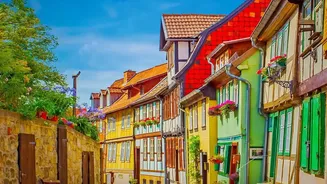
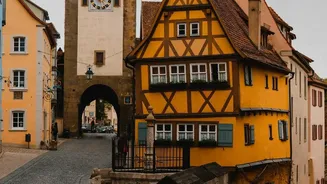
Famous as the setting for Henning Mankell's 'Wallander' novels, Ystad is a picturesque medieval town on Sweden's southern coast. Its old town is a beautifully preserved collection of over 300 half-timbered houses, cobblestone streets, and historic squares. During the long summer days, you can explore landmarks like the 13th-century Greyfriars Abbey, one of Sweden's best-preserved monasteries, and St. Mary's Church (Mariakyrkan). The town's coastal location means you can combine historical exploration with a late-evening walk along sandy beaches. The persistent light of a Swedish summer allows you to wander through the quiet streets long after traditional closing times, imagining yourself in a different era, with the only sounds being the distant call of gulls and the gentle breeze from the Baltic Sea.