



What Exactly Is El Niño?
El Niño, which means "Little Boy" in Spanish, is a naturally occurring climate pattern defined by the unusual warming of sea surface temperatures in the central and eastern equatorial Pacific Ocean. It is one phase of a larger cycle called the El Niño-Southern
Oscillation (ENSO). Under normal conditions, strong trade winds blow from east to west, piling up warm water in the western Pacific near Asia. During an El Niño event, these trade winds weaken or even reverse. This allows the massive pool of warm water to slosh back eastward, toward the coast of South America, changing ocean temperatures and, critically, the atmospheric circulation above it.
The Pacific-to-India Connection
While El Niño unfolds thousands of kilometres away, its influence is global. The changes in ocean temperature and wind patterns disrupt a major atmospheric circulation pattern known as the Walker Circulation, which affects weather worldwide. For India, this disruption is crucial. The warming of the central and eastern Pacific pulls rainfall towards that part of the ocean, effectively stealing moisture and energy that would otherwise feed India's southwest monsoon. This connection often results in a weaker monsoon, leading to below-average rainfall across large parts of the subcontinent.
A History of Disruption
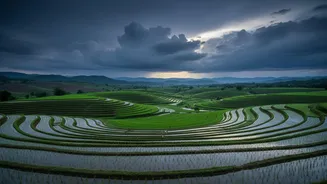
History shows a strong correlation between El Niño years and deficient monsoon rainfall in India. Many of India's most severe droughts have occurred during strong El Niño events. These are not just statistics; they represent years of significant hardship. A weak monsoon can lead to widespread crop failure, particularly for rain-fed crops like rice, sugarcane, and oilseeds, which are central to the Kharif sowing season. This direct hit to agriculture has historically led to food shortages, price spikes, and a severe impact on the livelihoods of millions of farmers who depend on seasonal rains.
It’s Not Always a Guarantee
The link between El Niño and a poor monsoon is a strong probability, not a certainty. Other climate phenomena can play a significant role. The most important of these is the Indian Ocean Dipole (IOD), sometimes called the "Indian Niño". The IOD is a climate pattern specific to the Indian Ocean. A 'positive' IOD, marked by warmer waters in the western Indian Ocean and cooler waters in the east, can actually help the Indian monsoon. In some years, a strong positive IOD has been known to counteract the negative effects of an El Niño, resulting in normal or even above-normal rainfall. Therefore, forecasters must monitor both the Pacific and Indian Oceans to get a clearer picture.
The Ripple Effect on India's Economy
The consequences of an El Niño-induced weak monsoon extend far beyond the fields. Reduced agricultural output can fuel food inflation, impacting household budgets across the country. It also means lower rural incomes, which can dampen demand for goods and services, from tractors to consumer products. Water reservoirs may not be fully replenished, straining drinking water supplies and reducing hydropower generation. This, combined with hotter temperatures that often accompany El Niño, can increase the demand for electricity for cooling, putting further pressure on the power grid. Some economic models predict that a significant El Niño event could result in substantial long-term economic losses for India.