
A Boxer's Keen Eye in Glasgow
The Indian boxing contingent was celebrating a historic haul of medals from the 2026 Commonwealth Games at Mister Singh's India, a popular Glaswegian restaurant. Amid the festivities, Olympic medallist Lovlina Borgohain noticed a disturbing detail on the restaurant's
branding, including the napkins and an external display: a map of India with the entire Northeast region missing. Hailing from Assam, the omission was personal for Borgohain. The silver medallist didn't let the moment pass.
A Polite but Firm Correction
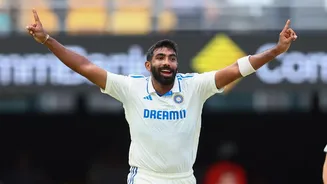
In a video that has since circulated widely, Borgohain calmly took to a microphone to address the restaurant's management and fellow diners. "Please don't take this the wrong way. I felt a little hurt by this," she began. "In the map of India, our North East is missing... As someone from the North East, that really hurts us. That's all I wanted to say. Please keep this in mind next time." Her graceful yet firm intervention immediately highlighted an issue far bigger than a simple design flaw. Boxing Federation of India (BFI) President Ajay Singh, also present, supported her, noting that the depiction of Jammu and Kashmir was also incorrect.
More Than Just Lines on a Napkin
For many, the incident in Glasgow is not an isolated mistake but a painful symptom of a long-standing issue. The erasure of the Northeast from maps, whether intentional or through sheer ignorance, taps into a deep-seated feeling of alienation and marginalization felt by many from the region. It reinforces the troubling narrative of a 'mainland' India that often seems to forget the eight states connected by the slender Siliguri Corridor, colloquially known as the 'chicken's neck'. This casual geographic amnesia, seen in textbooks, media, and now on restaurant napkins thousands of miles away, is a constant and painful reminder of a psychological distance that geography alone cannot explain.
A Pattern of Being Overlooked
This is not the first time an inaccurate map has sparked concern. Similar incidents have occurred in various contexts over the years, from official government publications of other countries to social media posts by international bodies. Each instance, regardless of intent, is a microaggression that chips away at the sense of belonging for millions of Indians. When a national icon like Lovlina Borgohain, who brings glory to the country, has to point out that her home region is missing from its map, it underscores a profound disconnect. It poses the uncomfortable question: if the nation celebrates her victories, why does it so often forget where she comes from?
Apology and a Learning Moment
The restaurant's management reportedly acknowledged the mistake and apologised for the oversight, assuring the Indian contingent that the map would be corrected. According to Lovlina, the owners explained it was a 'British map' and that they would change it. The issue was resolved amicably, with BFI President Ajay Singh terming it an 'aberration'. However, the incident serves as a powerful learning moment. It demonstrates how symbols matter immensely, and the responsibility that comes with representing a nation as diverse and expansive as India.