


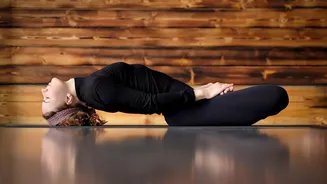
In yoga, the Apanasana pose, or Knees-to-Chest, is a gentle yet powerful tool for release. But its true potential is unlocked through the breath. This guide will help you master the slow, comfortable breathing that transforms this simple stretch.
Understanding Apanasana: The Wind-Relieving Pose
Apanasana,
often called the Wind-Relieving Pose, is a foundational reclining posture in yoga. In Sanskrit, 'Apana' refers to the downward flow of life force energy, responsible for elimination. The pose is aptly named, as it gently massages the abdominal organs, which can aid digestion and help release trapped gas. Lying on your back and hugging your knees to your chest creates a sense of safety and comfort, making it a restorative posture that releases tension in the lower back and hips. It’s a simple, accessible pose for practitioners of all levels, often used at the beginning of a class to warm up the body or at the end to cool down before final relaxation.
The Power of Slow, Diaphragmatic Breathing
The way we breathe has a profound effect on our nervous system. Short, shallow chest breathing is often associated with the 'fight or flight' stress response. In contrast, slow, deep diaphragmatic (or belly) breathing activates the parasympathetic nervous system, which is responsible for the 'rest and digest' response. This type of breathing lowers your heart rate, reduces blood pressure, and promotes a state of calm. By focusing on making your breath slow and comfortable, you signal to your body that it is safe to relax. In Apanasana, this conscious breathing enhances the physical benefits of the pose, turning a simple stretch into a deeply therapeutic practice for both body and mind.
Step-by-Step Guide to Apanasana
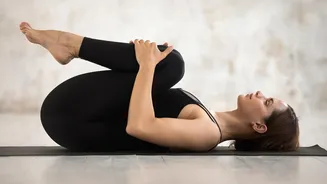
Finding the correct alignment is key to a comfortable and effective pose. Follow these simple steps to get into Apanasana. First, lie flat on your back on your yoga mat. You can keep your legs extended initially. Take a moment to let your body settle, relaxing your shoulders and allowing your back to rest evenly on the floor. Next, on an exhalation, gently bend your knees and draw them in towards your chest. Place your hands on your shins, just below your knees, or wrap your arms around the backs of your thighs if that is more comfortable. Avoid gripping too tightly; your hands are there to guide, not to force. Keep your head and neck relaxed on the mat, tucking your chin slightly to lengthen the back of the neck. Your entire spine, from your tailbone to your skull, should feel supported by the floor.
Integrating Breath with Movement
The magic of Apanasana happens when you coordinate your breath with gentle movement. Once you are holding your knees, begin to focus on your breath. On an inhalation, focus on sending the breath deep into your belly, allowing it to expand. As your belly rises, let your knees drift slightly away from your chest, straightening your arms a little. This creates space in the abdomen. On a slow, complete exhalation, gently use your hands to guide your knees back in towards your chest, feeling the soft compression in your abdomen. The key is to make this movement fluid and controlled by the rhythm of your breath. The motion should be gentle and nurturing, not forceful. Repeat this cycle for 5 to 10 breaths, focusing on the sensation of release in your lower back and the gentle massage in your belly.
Tips for a Deeper Practice
To get the most out of your Apanasana, keep a few things in mind. Ensure your shoulders and neck remain relaxed throughout the pose; tension often creeps into these areas. If your head tilts back uncomfortably, place a folded blanket underneath it for support. For an added lower back massage, you can gently rock from side to side. If holding both knees creates too much compression, you can practice with one leg at a time, keeping the other leg extended on the mat or bent with the foot on the floor. When practicing with one leg, it is often recommended to start with the right knee to stimulate the ascending colon, then switch to the left to stimulate the descending colon. Above all, listen to your body. The breath should always be 'slow and comfortable', never forced or strained.