
The Grand Vision for Waterways
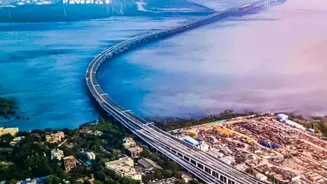
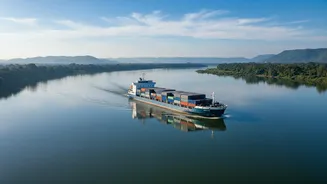
India has an extensive network of rivers, but their potential for freight and passenger movement has remained largely untapped, with waterways accounting for a small fraction of the nation's cargo transport. To change this, the government enacted the National
Waterways Act in 2016, identifying over 100 rivers and canals for development into national waterways. This initiative, part of broader strategies like the Sagarmala Programme and PM Gati Shakti, aims to reduce logistics costs, ease the burden on congested roads and railways, and provide a more environmentally friendly mode of transport. The goal is to significantly increase the share of water-based transport in India's logistics mix, with cargo volumes projected to grow substantially by 2030 and beyond.
What Makes a Terminal More Than a Dock?
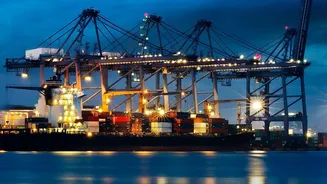
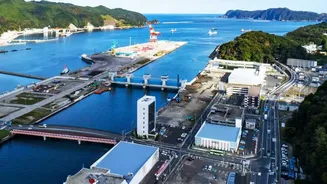
A modern waterway terminal is far more than a simple jetty for boats to dock. It is a sophisticated multi-modal logistics hub. These terminals are designed to facilitate the seamless transfer of goods between water, road, and rail transport. Key features include large berths for vessels, mechanized cranes for efficient loading and unloading, vast storage areas and warehouses, and transit sheds. Some are also equipped with facilities for Ro-Ro (Roll-on/Roll-off) services, which allow trucks and other wheeled cargo to be driven directly onto and off vessels. The terminals at Varanasi, Sahibganj, and Haldia on National Waterway-1 serve as prime examples of this integrated approach, built to handle millions of tonnes of cargo annually.
The Linchpin of the Logistics Chain
Without effective terminals, a waterway is just a river. The true economic benefit of water transport is only realised when there is efficient first- and last-mile connectivity. Terminals are the critical nodes that connect the hinterland to the waterway. They solve the problem of how to get goods from a factory onto a barge, and from the barge to its final destination. A lack of this integrated infrastructure is a primary reason why inland water transport has struggled to gain traction in the past. By creating points where different modes of transport converge, multi-modal terminals reduce handling time, minimise delays, and ultimately lower overall logistics costs, making water transport a viable and competitive option for businesses.
Catalysts for Economic Growth
The impact of these terminals extends far beyond logistics. They are designed to become engines of regional economic development. By providing efficient and low-cost transport options, they attract industrial investment in the surrounding areas, leading to the creation of port-led industrial clusters and coastal economic zones. The development of National Waterway-1, for instance, is expected to generate significant employment and drive economic activity across Uttar Pradesh, Bihar, Jharkhand, and West Bengal. The government is also developing dozens of smaller community jetties along rivers like the Ganga to help farmers and local businesses move their produce more easily, boosting local economies.
Overcoming On-the-Ground Challenges
Despite the clear importance of terminals, their development is not without challenges. One of the biggest hurdles is ensuring their commercial viability. Some terminals have seen lower-than-projected cargo traffic, hampered by issues like the lack of cargo for return journeys and insufficient private sector participation in vessel operations. Other challenges include seasonal variations in river water levels, the need for continuous dredging to maintain navigability, and acquiring land for development. To address these issues, the government is actively encouraging private investment through Public-Private Partnership (PPP) models and offering incentives to boost cargo movement, aiming to make the operation of these crucial terminals more sustainable and successful.