





The Pacific's Powerful Influence
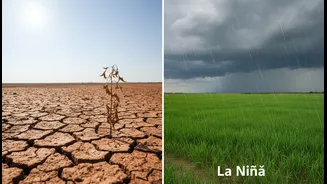
Thousands of kilometres away in the Pacific Ocean, a climate pattern called the El Niño-Southern Oscillation (ENSO) holds significant sway over India's weather. ENSO alternates between three phases: El Niño, La Niña, and a neutral phase. During an El Niño, sea
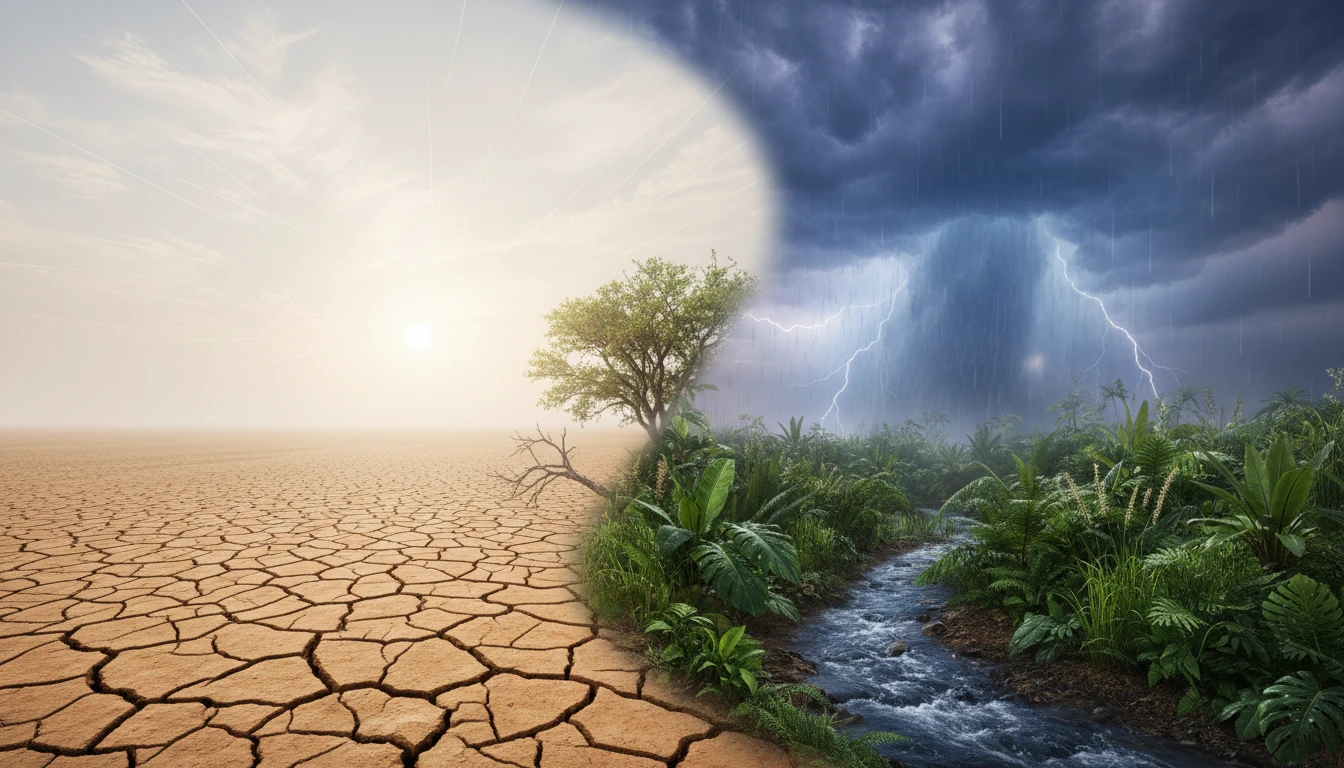
surface temperatures in the central and eastern Pacific become unusually warm. This seemingly distant warming disrupts global atmospheric circulation, often weakening the trade winds connected to India's monsoon winds. The result is a tendency for suppressed monsoon rainfall and a higher probability of drought conditions across the subcontinent. Conversely, La Niña involves the cooling of the same Pacific waters. This phase typically has the opposite effect, often enhancing the Indian monsoon and bringing above-average rainfall.
India's Own Climate Seesaw: The IOD
Closer to home, the Indian Ocean has its own powerful climate driver, often called the 'Indian El Niño': the Indian Ocean Dipole (IOD). The IOD refers to the difference in sea surface temperatures between the western Indian Ocean (near the Arabian Sea) and the eastern Indian Ocean (near Indonesia). When the IOD is in a 'positive' phase, the western Indian Ocean becomes warmer than the east. This condition helps push moisture-laden winds towards India, often boosting the monsoon, especially in the latter half of the season, and can even counteract the drying effects of an El Niño. A 'negative' phase sees the opposite: warmer waters in the east pull moisture away from India, weakening the monsoon and increasing the risk of drought. In a 'neutral' phase, ocean temperatures are near average, and the monsoon proceeds without this extra influence.
Warmer Seas and Fiercer Cyclones
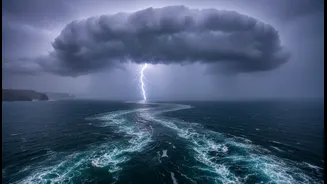
Beyond these cyclical patterns, the overall warming of the oceans due to climate change is having a direct and dangerous impact. The Indian Ocean is warming faster than other tropical oceans. The Arabian Sea, in particular, has seen a significant rise in surface temperatures, increasing by as much as 1.2 to 1.4°C in recent decades. Warm ocean waters are the fuel for cyclones. This increased heat potential means more energy is available for storms to form and intensify. Consequently, the Arabian Sea has experienced a notable increase in the frequency, duration, and intensity of cyclones, making India's western coast more vulnerable than ever before. These warmer seas also hold more moisture, leading to extremely heavy rainfall events and cloudbursts when conditions are right.
The New Reality: Erratic and Intense Seasons
The combination of natural cycles like ENSO and IOD with the overarching trend of global warming is making India's seasons more chaotic and extreme. The monsoon, which over 80% of India's annual rainfall depends on, is becoming more volatile. We now see patterns where the monsoon onset might be delayed, followed by long dry spells, and then punctuated by short, intense bursts of extreme rainfall that can lead to flooding. This unpredictability poses a massive threat to Indian agriculture, which relies on the timely arrival and steady distribution of monsoon rains. Heatwaves are becoming more frequent and severe, and even winters are being affected, with some years reporting unusually warm temperatures. Essentially, the consistent rhythm of India's seasons is being fundamentally altered, with significant consequences for food security, water management, and the economy.