



What Exactly Is Nordic Walking?
At first glance, it looks like walking with ski poles. But Nordic walking is a specific fitness technique with a unique origin. Developed in Finland as a summer training method for cross-country skiers, it has evolved into a popular exercise worldwide.
It involves using specially designed poles to propel yourself forward as you walk. This isn't just about using poles for balance like a hiker might; it’s an active process. With each step, you plant the pole and push off, engaging your upper body in a way that transforms a simple walk into a comprehensive workout. The correct technique involves an opposite arm-and-leg motion, similar to your natural swing but amplified, creating a smooth, rhythmic, and powerful stride.
More Than Just a Walk in the Park
The simple addition of poles has a profound impact on the intensity and benefits of walking. While a regular walk primarily works your lower body, Nordic walking engages up to 90% of your body's muscles. Your arms, shoulders, chest, and core have to work with every push of the poles. This increased muscle activation leads to burning significantly more calories — studies suggest an increase of 18% to over 60% compared to regular walking at the same pace. Moreover, this activity can improve cardiovascular health, reduce 'bad' LDL cholesterol, and increase 'good' HDL cholesterol. A Canadian study even found it to be highly effective for cardiac rehabilitation patients.
The Rise of an Accessible Workout
So why is this once-niche activity becoming an everyday fitness staple? Part of its growing appeal lies in its incredible accessibility. It’s a low-impact exercise, meaning it’s gentle on the joints. By distributing some of the body's weight onto the poles, it reduces stress on the knees, hips, and ankles. This makes it an ideal workout for older adults, those recovering from injuries, people with chronic pain conditions, or anyone who finds high-impact activities like running to be too jarring. It provides a robust cardiovascular workout without the associated strain, making fitness sustainable for a much broader range of people. As more people seek outdoor and affordable ways to stay active, Nordic walking presents a perfect solution.
The Beauty of Simple Equipment
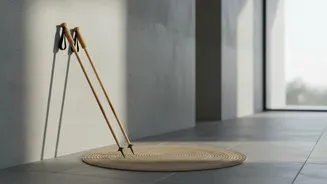
The core of Nordic walking is its elegant simplicity, embodied by its single piece of equipment: the poles. These aren't the same as trekking poles used for hiking. Nordic walking poles are typically lighter and feature a special glove-like strap system that allows you to apply force correctly and perform the 'push-off' motion. This design is crucial for achieving the full-body benefits. While high-end poles exist, a quality, adjustable pair can be purchased for a reasonable one-time cost, making it far more economical than a monthly gym membership. The lesson here is powerful: fitness doesn't always require expensive subscriptions or complex gadgets. The right simple tool can unlock a more effective and enjoyable way to move your body.
How to Get Started
Starting with Nordic walking is straightforward. The most important step is learning the proper technique to maximize benefits and avoid forming bad habits. Many communities now have instructor-led groups, or you can find tutorials online. When choosing poles, look for ones that are the correct height; a common guideline is to multiply your height in centimetres by 0.68 to get a reliable pole length. Adjustable poles are a great option for beginners as you can fine-tune the length. Start on flat terrain to get comfortable with the rhythm: plant the pole, push off, and let your body flow into a longer, more powerful stride. Remember to keep your posture upright and your shoulders relaxed.