



The Anatomy of a Perfect Puttu
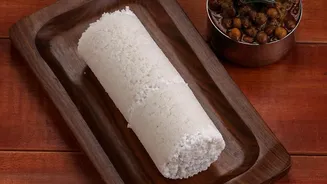
At its heart, puttu is a humble dish made from just a few core ingredients: coarsely ground rice flour, freshly grated coconut, water, and a pinch of salt. The magic lies in the preparation. The rice flour is carefully moistened with water until it reaches
a crumbly, sand-like texture. This mixture is then layered with grated coconut inside a special utensil called a 'puttu kutti' or 'puttu kudam', a cylindrical steamer that was traditionally made from bamboo logs. As steam rises through the perforated base, it cooks the layers into a soft, crumbly log that is both delicate and filling. The resulting dish is wonderfully fragrant, with the mild taste of rice perfectly balanced by the subtle sweetness of coconut.
The Classic Pairing: Kadala Curry
Ask anyone in Kerala what to serve with puttu, and the most common answer will undoubtedly be 'kadala curry'. This robust and spicy curry is made from black chickpeas (kala chana) simmered in a flavourful gravy of roasted coconut, onions, tomatoes, and a blend of aromatic spices. The rich, thick gravy of the curry provides the perfect amount of moisture and flavour to complement the soft, absorbent texture of the puttu. It's a combination that hits all the right notes—spicy, savoury, and deeply satisfying, making it the quintessential breakfast experience in the region.
A Sweet and Simple Delight
For those who prefer a sweeter start to their day, the combination of puttu with ripe banana is a timeless favourite. Often, a small, sweet variety of banana like 'nendran pazham' is used. The puttu is crumbled onto a plate, and a ripe banana is mashed into it, sometimes with a spoonful of sugar for extra sweetness. This creates a soft, sweet, and comforting mash that is especially popular with children. The simplicity of this pairing allows the core flavours of the coconut and banana to shine through, offering a gentle and delicious alternative to its spicy counterpart.
Adding a Satisfying Crunch
Texture is key in Keralan cuisine, and another essential accompaniment to the puttu and kadala curry combination is the pappadam. These thin, crispy discs, made from lentil flour, are fried until they puff up into golden, brittle wafers. They are then crushed over the puttu and curry just before eating. This adds a delightful crunch and a savoury, salty note that contrasts beautifully with the soft puttu and the rich gravy. For many, a plate of puttu and curry is incomplete without the satisfying shatter of a pappadam.
Beyond the Usual Suspects
While kadala curry holds the top spot, puttu’s versatility means it pairs well with a wide range of other dishes. Green gram curry, known as 'cherupayar curry', is another popular and nutritious vegetarian option. For non-vegetarians, the possibilities expand even further. Puttu is frequently served with spicy fish curry, chicken curry, or even beef fry, where the mild rice cake becomes a perfect vehicle for soaking up the rich, meaty gravies. Some modern variations even incorporate spiced minced meat, known as 'irachi puttu', directly into the layers of the steam cake itself.
Modern Twists on a Classic
While the traditional rice and coconut formula remains a classic, puttu continues to evolve. Creative cooks now experiment with different types of flour, leading to variations like wheat puttu and ragi (finger millet) puttu, which offer different nutritional profiles and earthier flavours. You might also find puttu being used as a base for savoury 'biryanis' or other fusion dishes in modern restaurants. These innovations demonstrate the enduring appeal of this simple steamed cake, proving it can adapt to contemporary tastes while retaining its traditional soul.