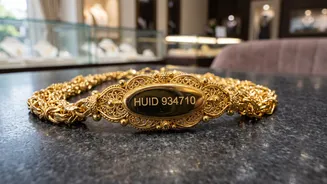







Your Gold's New Digital Fingerprint
At the heart of this change is the Hallmark Unique ID, or HUID. Think of it as an Aadhaar card for your jewellery. It is a six-character alphanumeric code that is unique to every single piece of gold jewellery hallmarked in India. No two items, not even
two earrings in a single pair, will have the same HUID. This code is laser-engraved onto the item at a government-approved Assaying and Hallmarking Centre (AHC), not by the jeweller. Along with the HUID, you will see two other marks: the triangular Bureau of Indian Standards (BIS) logo and the purity grade (like 22K916, which means 91.6% pure gold). Together, these three marks form the modern, mandatory hallmark for all new gold jewellery sold in India.
Why This System Was Needed
For years, hallmarking was voluntary, and the system had loopholes. The older, four-mark system indicated purity but lacked traceability, leaving room for fraudulent stamping and disputes over purity. To tackle this and bring transparency, the government made hallmarking mandatory in 2021 and introduced the HUID system. Since April 1, 2023, it has been compulsory for registered jewellers to sell only HUID-hallmarked gold articles. The HUID creates a digital trail for each piece of jewellery, linking it back to the jeweller who sold it and the AHC that certified its purity. This traceability is the system’s biggest strength, making it much harder for anyone in the supply chain to misrepresent the gold's value.
How the New Fineness Checks Work
The headline refers to the crucial next phase of this initiative: market surveillance. Officials from the Bureau of Indian Standards are now conducting surprise checks by picking up HUID-stamped jewellery directly from showrooms across the country. These samples are then sent for independent re-testing to verify if their purity matches the hallmarked grade. This process ensures that the hallmarking system itself is working correctly and that the AHCs and jewellers are adhering to the standards. It's a proactive step to build a self-regulating and accountable ecosystem, moving beyond just stamping items to actively verifying their authenticity in the marketplace.
How to Verify Your Gold Yourself
The best part of the HUID system is that it empowers you, the consumer. You can verify any HUID-marked jewellery in under a minute using the official 'BIS CARE' app, available for both Android and iOS. Simply open the app, select the 'Verify HUID' option, and enter the six-character code engraved on your jewellery. The app will display the details logged in the BIS database: the purity, article type (e.g., ring, chain), the jeweller's registration, and the AHC that tested it. Before you pay, you can cross-reference these details with the item in your hand and the information on the bill. If the details don't match, or if the HUID isn't found, it's a major red flag.
What This Means for Jewellers and the Industry
For jewellers, the HUID system introduces a higher degree of accountability. While it adds a layer of compliance, it also levels the playing field, rewarding organised and transparent players while weeding out those who relied on under-carating. The digital trail means any discrepancies can be traced back to the source, fostering more professionalism and credibility. Ultimately, this shift towards a more organised and transparent market is expected to boost consumer confidence, strengthen the reputation of the Indian jewellery industry, and potentially even increase exports.