





The Heart of the Confusion: What Is Changing?
Recent headlines stem from two main developments: a government bill amending payment laws and a pre-existing, often misunderstood, circular from the National Payments Corporation of India (NPCI). The bill empowers the government to allow charges on certain
electronic payments to ensure the system's long-term health. However, the government has explicitly stated that consumers will not face charges for their UPI payments. The more immediate rule, which often causes alarm, involves an 'interchange fee' on specific transactions. This is not a new charge for customers. Instead, it’s a fee paid between payment companies on the backend.
The Transaction That's Actually Affected
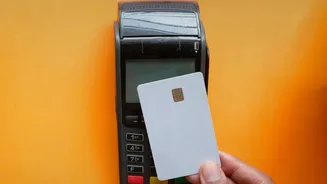
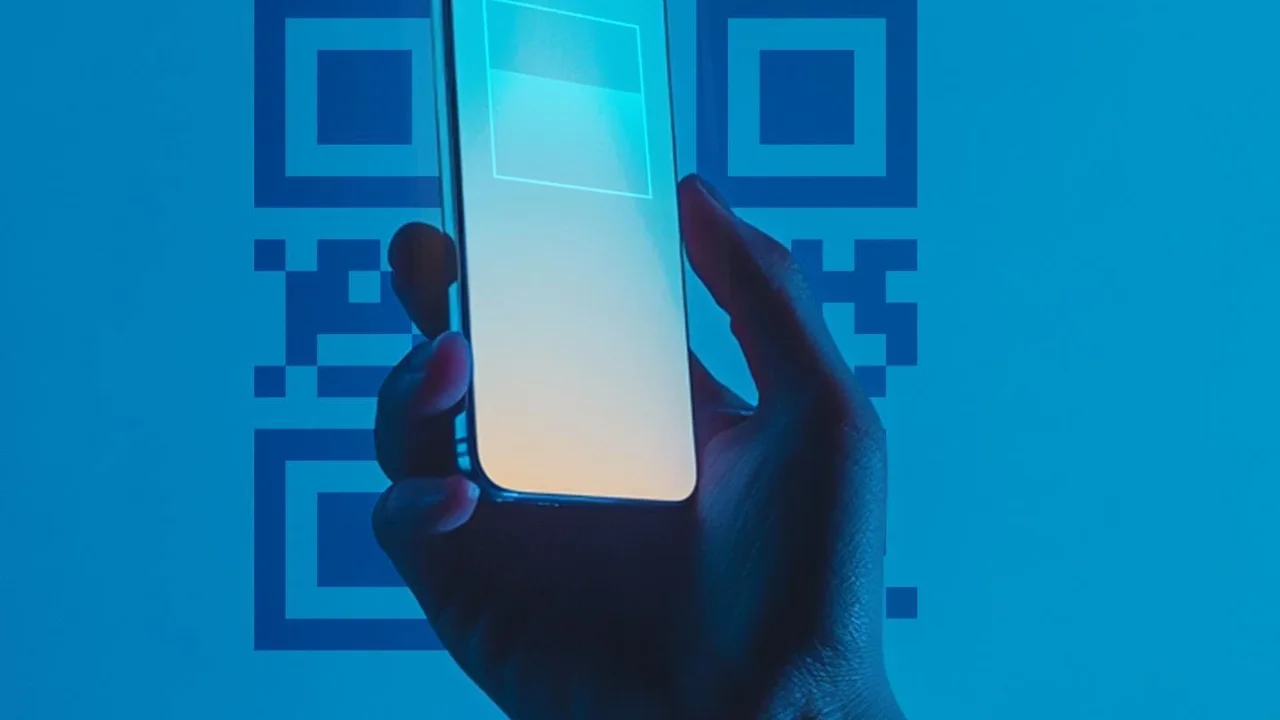
The interchange fee applies only to a specific type of payment: a merchant transaction of over ₹2,000 made using a Prepaid Payment Instrument (PPI) through UPI. A PPI is essentially a digital wallet or a prepaid gift card where you load money beforehand. Think of wallets like Paytm Wallet or Amazon Pay Wallet. So, if you pay a large merchant more than ₹2,000 by scanning a QR code, but the money comes from your pre-loaded wallet balance instead of your bank account directly, this fee applies. Regular bank-to-bank UPI transfers, which make up over 99% of all UPI transactions, remain completely free for both customers and merchants.
So, Who Pays This Fee?
You, the customer, do not pay this fee. The interchange fee is a charge that the merchant's bank or payment processor pays to the wallet issuer (the company whose wallet you used). For example, if you pay ₹2,500 at a supermarket using your wallet's UPI, the supermarket's payment gateway pays a small percentage (between 0.5% and 1.1%, depending on the merchant category) to your wallet provider. The merchant might see this cost as part of their overall fees for accepting digital payments, but it is not an extra charge passed on to you at the checkout counter.
Why Introduce These Fees at All?
Running the massive UPI infrastructure costs money. Banks, wallet companies, and payment gateways invest heavily in technology, security, and operations to ensure your transactions are instant and safe. When UPI transactions were made free for everyone in 2020 to boost adoption, these companies lost a key revenue stream known as the Merchant Discount Rate (MDR). The government has provided some subsidies to help, but there's a large gap between those funds and the actual operating costs. The interchange fee on PPI transactions is seen as a way to create a sustainable business model for payment companies, allowing them to keep investing in and maintaining the ecosystem without directly charging users.
What Does This Mean for Merchants?
For the vast majority of merchants, especially small ones, nothing changes. The interchange fee is not applicable for peer-to-peer-merchant (P2PM) transactions to small businesses. The government has also clarified that any potential future charges (MDR) would likely be limited to large merchants with high turnover, and only for high-value transactions. The goal is to balance the sustainability of the payment network with the need to protect small businesses and encourage digital payments. Medium to large merchants who accept wallet-based UPI payments might see a minor increase in their payment processing costs, but this is not a blanket rule for all UPI payments they accept.
The Official Word: No Need to Worry
Both the Ministry of Finance and the NPCI have repeatedly issued clarifications to calm public fears. They have confirmed that person-to-person (P2P) UPI payments will remain free. They have also stressed that any discussion around a Merchant Discount Rate (MDR) is aimed at the backend business model and does not involve charging customers. The recent legal amendment is an enabling provision, giving the government flexibility for the future, not an immediate new tax on your payments. For now, and for the foreseeable future, your daily UPI transactions from your bank account are safe and free.