


The Daily Gridlock Dilemma
India's major urban centres are infamous for their traffic congestion. Cities like Bengaluru, Pune, and Mumbai regularly top global charts for slow-moving traffic, where a simple 10-kilometre trip can take over half an hour. For young professionals and students,
this translates into hours of lost productivity and personal time every week. The sheer unpredictability of commute times, caused by an overwhelming volume of vehicles and inadequate road infrastructure, makes planning a day nearly impossible. Public transport, while essential, often struggles to provide reliable last-mile connectivity, pushing commuters towards personal mobility solutions. In Bengaluru alone, over 4.4 lakh two-wheelers were added in the first nine months of 2026, a clear indicator that people are seeking ways to reclaim their time from the clutches of traffic.
A Smart Calculation of Time and Money
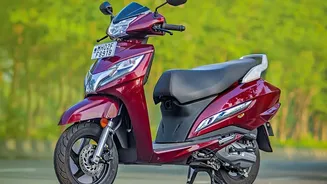
When you break down the numbers, the appeal of a two-wheeler becomes even clearer. Compared to the soaring costs of app-based cabs, which can run into thousands of rupees monthly for a daily commute, a motorcycle or scooter offers a far more economical alternative. While public transport like buses might seem cheaper per trip, the time cost and inconvenience often outweigh the savings for many. Some analyses have even shown that the running cost of a motorbike can be significantly cheaper per kilometre than metro rail for longer commutes. With rising fuel prices, a fuel-efficient two-wheeler strikes a crucial balance, offering a personal vehicle's freedom without a car's financial burden. This cost-benefit analysis is a major driver for a generation that is financially savvy and time-poor.
The Freedom of Unscheduled Stops
Beyond the daily commute to an office or college, a two-wheeler represents something more profound: independence. For city youth, it’s the freedom to make an impromptu plan with friends after work, run errands without waiting for a bus, or explore a new part of the city on a weekend. This flexibility is something that rigid public transport schedules or expensive, high-demand cabs cannot offer. Owning a two-wheeler puts the rider in complete control of their schedule. In sprawling urban landscapes where social and professional opportunities are spread out, this ability to be mobile and spontaneous is not just a convenience—it's a critical tool for building a life.
Fueling the Gig Economy
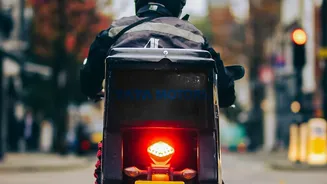
The explosive growth of India's gig economy is intrinsically linked to the rise of two-wheelers. Services like food delivery, e-commerce, and bike taxis are built on the back of a nimble, on-demand workforce, and the two-wheeler is their essential tool. According to Niti Aayog, the sector is projected to provide 23.5 million jobs by 2030, with a significant portion requiring a vehicle for delivery. For many young people, a scooter or motorcycle is not just a mode of transport but an asset that generates income. It provides a low-barrier entry into earning a livelihood, offering flexible work hours that can be managed alongside studies or other commitments. This economic driver has significantly contributed to two-wheeler sales, particularly in urban and semi-urban areas.
The Electric Wave
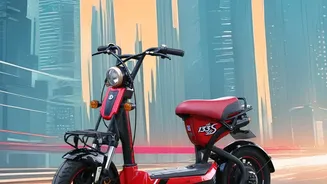
The conversation around two-wheelers is also getting a modern, green makeover. The Indian electric two-wheeler (e2W) market is experiencing strong growth, with sales rebounding significantly in 2026. Driven by government incentives, rising environmental awareness, and technological advancements, electric scooters are becoming an increasingly popular choice. For young, tech-savvy consumers, the appeal lies in lower running costs (no petrol), quieter operation, and modern features like digital displays and smartphone connectivity. As concerns about urban pollution grow, and charging infrastructure expands, e2Ws offer a vision of mobility that is both practical and sustainable, aligning perfectly with the values of a new generation of riders.