

The Journey's End Begins
The period from September to November 2026 marks the official "arrival phase" for the joint European Space Agency (ESA) and Japan Aerospace Exploration Agency (JAXA) BepiColombo mission. After launching in 2018 and performing a complex series of nine
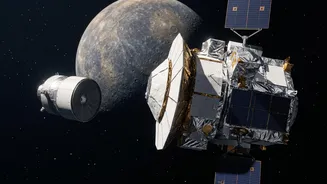
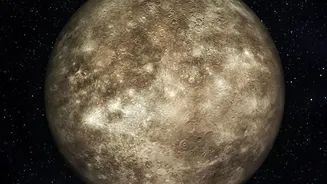
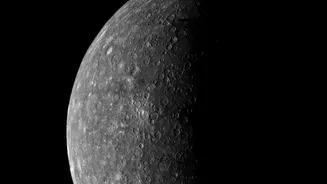
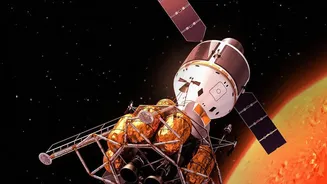
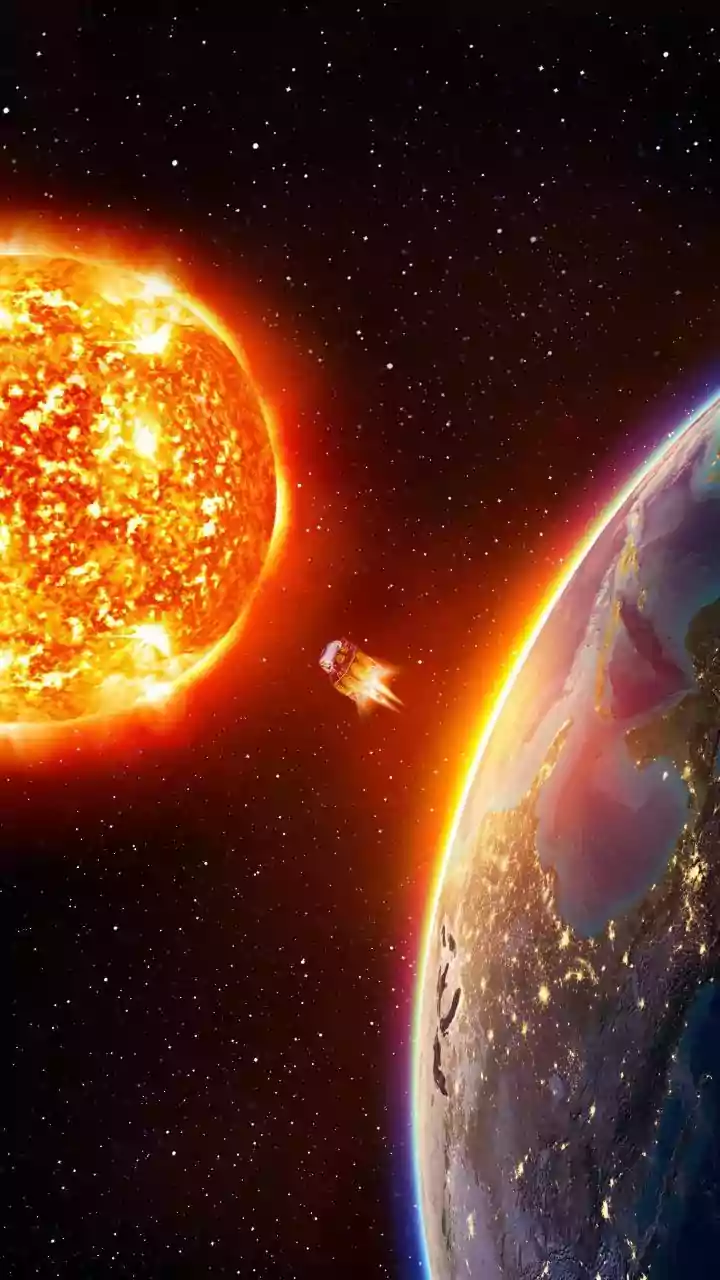
planetary flybys to slow itself down against the Sun's immense gravity, the spacecraft is finally ready to call Mercury its home. The first major step happens right at the start of this period. On September 3, 2026, the mission says goodbye to a crucial component: the Mercury Transfer Module (MTM). This module, which provided the solar-electric propulsion for the long cruise, will separate, leaving the two science orbiters to face the final leg of their journey alone. This event kicks off a six-month process of continuous activity to settle in at the solar system's least-explored rocky planet.
A Delicate Dance into Orbit
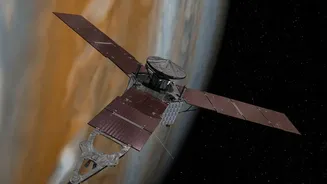
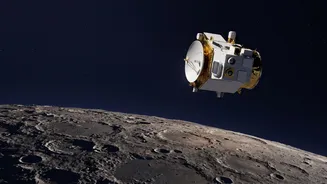
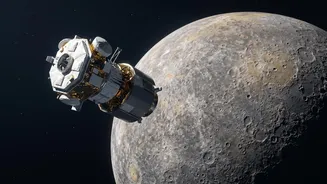
Getting into orbit around Mercury is incredibly difficult. Unlike missions to outer planets, BepiColombo has spent years braking to avoid being pulled past Mercury and into the Sun. The main event of this period is the orbital insertion itself, slated for November 21, 2026. On this date, the stacked pair of orbiters—ESA's Mercury Planetary Orbiter (MPO) and JAXA's Mercury Magnetospheric Orbiter (Mio)—will be gently captured by Mercury's gravity. This won't be a single, powerful engine burn but a series of 16 delicate maneuvers designed to progressively lower and shape the spacecraft's path into a stable polar orbit around the planet. This phase is considered one of the most operationally challenging arrival sequences ever attempted by ESA, requiring immense precision more than 200 million kilometers from Earth.
Still Together, For Now
Throughout September, October, and November 2026, the two science spacecraft, MPO and Mio, will remain attached. After the MTM separates in September, ESA's MPO takes over, providing power and propulsion for the duo. They will enter Mercury's gravity as a single unit. Although they are at their destination, their scientific work can't begin just yet. The separation of the two orbiters is the next major milestone, but it is scheduled to occur just after this period, around December 9-10, 2026. Until then, mission controllers will be focused entirely on navigating the complex orbital insertion process and ensuring both spacecraft are healthy and perfectly positioned for the next steps.
Setting the Stage for Science
While this three-month window is dominated by engineering and orbital mechanics, it's all in service of a groundbreaking science mission. The entire purpose of this careful arrival is to place the two orbiters into their unique, complementary orbits. Once they separate in December and reach their final orbits in early 2027, the main science phase can begin. ESA's MPO will enter a low orbit to map Mercury's surface and analyze its composition in unprecedented detail. Meanwhile, JAXA's Mio will enter a more elliptical orbit to study the planet's mysterious magnetic field and its interaction with the harsh solar wind. This dual-spacecraft approach is a first for Mercury exploration and promises to solve long-standing questions about the planet's formation, its oversized iron core, and the strange ice deposits in its polar craters.