






Beyond the Daily Forecast
For most of us, the monsoon is about the daily weather report: will it rain today? But for meteorologists, predicting the monsoon’s true behaviour—its onset, intensity, and breaks—requires a much wider view. It’s less about a single snapshot and more
like watching a massive, slow-moving dance between the ocean and atmosphere. This is where satellites become indispensable. They allow scientists to see beyond the clouds and track continent-spanning patterns that a ground-based weather station never could. These vast systems determine not just if it will rain in your city this week, but the fate of the entire four-month season across the subcontinent.
System One: The Fast-Moving Pulse
The first of these giants is the Madden-Julian Oscillation, or MJO. Think of it as a massive, eastward-moving pulse of clouds, wind, and heavy rainfall that travels along the equator, circling the entire globe every 30 to 60 days. It’s not a permanent fixture like a mountain range but a transient wave of weather. When the MJO’s active, rainy phase is over the Indian Ocean, it acts like a turbocharger for the monsoon, enhancing convection and boosting rainfall across India. This can lead to a timely onset or periods of intense downpours. Conversely, when the MJO moves on and its suppressed, dry phase takes over, it can cause those frustrating 'breaks' in the monsoon, where the rains suddenly weaken for weeks at a time. Its shorter cycle makes it a key factor in the monsoon’s intra-seasonal rhythm—the ebb and flow of rainfall within the season itself.
System Two: The Slow, Pacific Pull
The second major player is a more familiar name: the El Niño-Southern Oscillation (ENSO). This is a much slower, long-term phenomenon playing out in the vast Pacific Ocean. ENSO has two opposing phases: El Niño, the warming of sea surface temperatures in the central and eastern Pacific, and La Niña, the cooling of those same waters. This isn't just a local event; it affects global weather patterns. For India, the connection is critical. Historically, El Niño years have been strongly linked with weaker monsoon winds and below-average rainfall, sometimes leading to drought. La Niña, on the other hand, often correlates with a stronger monsoon and plentiful rain. Because ENSO unfolds over many months to years, it doesn't dictate daily weather but sets the background conditions for the entire monsoon season, acting as a powerful push or pull on its overall performance.
The Eye in the Sky
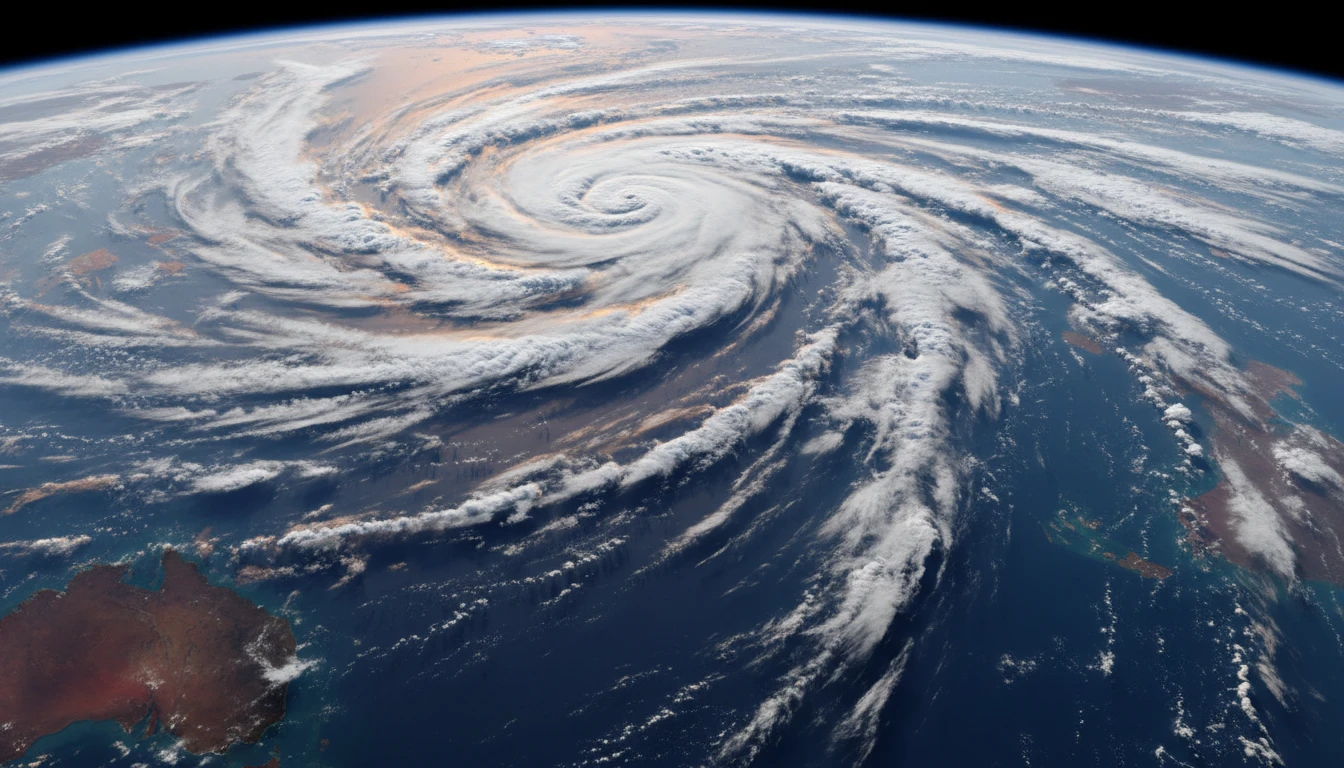
So, how do we watch these invisible giants? Through satellites. These systems are far too large and occur over oceans, making them impossible to track comprehensively from the ground. Satellites equipped with infrared sensors can measure the temperature of the sea surface, detecting the subtle warming of an El Niño thousands of kilometres away. They can also track patterns of cloudiness and outgoing radiation to pinpoint the location and strength of the MJO's active phase. The India Meteorological Department (IMD) relies heavily on data from its own satellites, like the INSAT series, alongside global data. This constant stream of information on everything from cloud formations to atmospheric moisture is fed into powerful computer models, allowing for more accurate, long-range forecasts.
From Global Data to Local Impact
Understanding the interplay between the MJO and ENSO is the key to modern monsoon forecasting. A strong MJO pulse can temporarily counteract a weak El Niño, bringing a burst of rain even in a potentially dry year. Conversely, a powerful El Niño can suppress the monsoon even if the MJO is in a favourable position. Recent advancements even allow agencies like the IMD to use this satellite data, combined with AI, to provide hyperlocal forecasts weeks in advance, right down to the block level. This satellite-driven knowledge moves the monsoon from being a force of nature we simply endure to one we can better understand and anticipate, helping everyone from farmers planning their crops to officials managing water resources and disaster response.