






An Uncomfortable Truth
It sounds counterintuitive, but it's true. On sunny afternoons, grid operators in India are sometimes forced to tell solar power plants to stop generating electricity. This deliberate reduction is called 'curtailment', and it’s becoming an increasingly
common feature of India’s green energy transition. In just the three months from April to June 2026, India curtailed over 8,000 million units (or 8 terawatt-hours) of solar power. Over the last 15 months, the total wasted solar energy approached 11 terawatt-hours — enough to power roughly 10 million Indian homes for a year. This isn't happening because of faulty equipment or a lack of sunshine. It's happening because our electricity grid is struggling to cope with the massive influx of cheap, clean power.
A Victim of Its Own Success
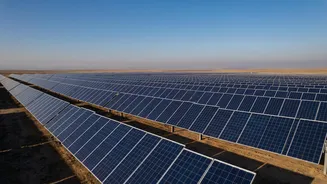
The root of the problem is that India has been incredibly successful at building solar farms, especially in sun-drenched states like Rajasthan and Gujarat. However, building power plants is only half the battle. That electricity needs to be transported to homes and factories through a vast network of transmission lines. Unfortunately, building new transmission infrastructure is a slower, more complex process than setting up a solar park. As a result, our generation capacity has outpaced our grid's ability to carry the power. It's like having a giant new water tank but connecting it to old, narrow pipes; during peak flow, the system gets overwhelmed, and you have to turn off the tap.
The Midday Traffic Jam
The nature of solar power creates another challenge. Solar panels generate the most electricity around noon, when the sun is at its peak. But this is often not when electricity demand is highest; that usually comes in the evening when people return home and switch on lights and air conditioners. This mismatch between peak supply and peak demand creates a massive power surplus in the middle of the day. Our grid was primarily designed for a steady supply from coal power plants, which are like large ships that can't turn or slow down quickly. When a flood of solar power enters the grid, these inflexible coal plants can't reduce their output fast enough to make room, leading to a system-wide traffic jam that forces grid operators to curtail the cheapest and cleanest power available: solar.
The Missing Piece: Storage
The most obvious solution to this problem is to save the excess midday solar power for when it's needed in the evening. This is where grid-scale batteries come in. These massive battery installations can soak up surplus electricity and release it back into the grid hours later, smoothing out the peaks and troughs. However, while the technology exists, it is still relatively expensive, and India's current deployment is a drop in the ocean compared to what is needed. Against a projected requirement of nearly 74 gigawatts of battery storage by 2032, India currently has only around 3 GW installed. Without adequate storage, the electricity generated during peak solar hours must be used instantly or it's lost forever.