





What is the Bharatiya Antariksha Station?
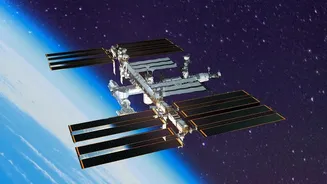
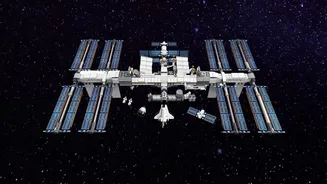
The Bharatiya Antariksha Station (BAS) is India's planned modular space station, set to orbit Earth at an altitude of about 400-450 kilometres. Unlike short-term missions, the station will allow Indian astronauts to live and work in space for extended
periods of three to six months. ISRO envisions the BAS as a 52-tonne orbital laboratory assembled in space, piece by piece. This permanent address in low-Earth orbit will solidify India's position as a major spacefaring nation, moving from individual missions to a sustained human presence in space. Recent announcements from ISRO Chairman Dr. V. Narayanan have confirmed that the project is moving from proposal to reality, with the first module already approved by the government.
The Timeline: A Phased Approach to the Cosmos
Building a space station is a marathon, not a sprint. ISRO has laid out a clear, phased timeline. The first module, known as BAS-01, is targeted for launch in 2028. This foundational component will be a technology demonstrator, paving the way for the rest of the station. Following this, other modules will be launched and docked in orbit over several years. The goal is to have the complete, five-module space station fully assembled and operational by 2035. This timeline aligns with India's broader space vision, which includes sending an astronaut to the Moon by 2040, making the BAS a critical stepping stone for future deep-space ambitions.
Building on the Gaganyaan Foundation
The Bharatiya Antariksha Station is a natural and necessary extension of the Gaganyaan programme, India’s first human spaceflight mission. Gaganyaan, which aims to send a crew of three astronauts into orbit for three days, is the testbed for all the critical technologies needed for long-duration space habitation. Technologies like life-support systems, rendezvous and docking procedures, and crew safety protocols developed for Gaganyaan will be directly applied and scaled up for the space station. The first uncrewed Gaganyaan flight is slated for late 2026, with the first crewed mission targeted for 2027. The lessons learned from these flights will be invaluable, ensuring the space station is built on a foundation of proven, reliable, and indigenously developed systems.
A Laboratory in the Sky: Scientific Goals
The primary purpose of the Bharatiya Antariksha Station is to serve as a world-class scientific laboratory in microgravity. This unique environment allows for research impossible to conduct on Earth. Scientists will be able to study the long-term effects of microgravity on the human body, which is crucial for planning future missions to the Moon and Mars. The station will host experiments in a wide range of fields, including pharmaceuticals, materials science, biotechnology, and space manufacturing. This could lead to breakthroughs in medicine, the development of new materials, and a deeper understanding of fundamental physics. The research conducted aboard the BAS has the potential to deliver direct benefits back to Earth, from creating new drugs to improving climate monitoring.
What It Means for India
Establishing a space station is about more than just scientific discovery; it's a powerful statement of a nation's technological prowess and strategic autonomy. For India, the BAS represents a significant leap in its capabilities, reducing reliance on foreign space stations and enhancing its role in the global space sector. The project will be a massive driver for the domestic industry, creating high-tech jobs and fostering a new ecosystem of startups focused on space technology. It strengthens India's self-reliance in critical human spaceflight technologies and opens up possibilities for international collaborations on India's own terms. By building this orbital outpost, India is not just exploring space but is also building a new engine for innovation, economic growth, and national pride.