


A Panoramic New Window on the Cosmos
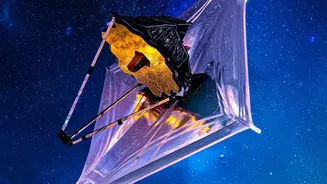
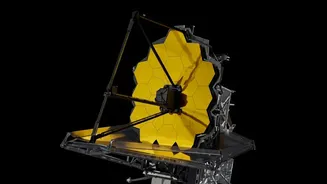
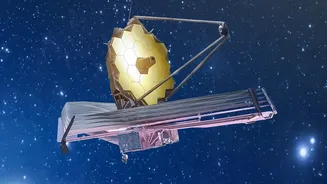
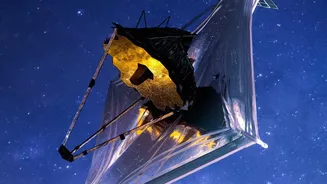
While the headline suggests it is already operational, the Roman Space Telescope is currently in its commissioning phase after a successful launch aboard a SpaceX Falcon Heavy rocket. It's now travelling to its observation point a million miles from Earth.
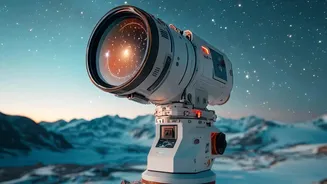
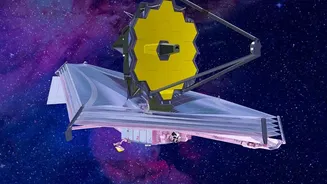
Named after Nancy Grace Roman, NASA’s first chief of astronomy and the “mother of Hubble,” this new observatory brings a revolutionary capability to space science: a vast, panoramic field of view. While it has the same size primary mirror as the Hubble Space Telescope—2.4 meters (7.9 feet)—its Wide Field Instrument can capture an image at least 100 times larger than Hubble's infrared camera, with the same stunning resolution. Think of it as trading a keyhole for a giant picture window on the universe. This allows Roman to map huge areas of the sky with incredible speed, doing in weeks what would have taken other telescopes decades to complete.
The Great Cosmic Mystery: Hunting Dark Energy
One of Roman’s primary objectives is to confront one of the most profound puzzles in physics: dark energy. Scientists discovered in the late 1990s that the expansion of the universe is not slowing down, but accelerating. Dark energy is the name given to the mysterious force responsible for this cosmic acceleration, and it is believed to make up about 68% of the universe. However, we know almost nothing about it. Roman will tackle this mystery by conducting the largest survey of the cosmos ever attempted. It will measure the light from over a billion galaxies and thousands of exploding stars called supernovae. By using three distinct methods—observing distant supernovae, mapping the subtle distortions of galaxies caused by weak gravitational lensing, and charting the large-scale structure of the universe through baryon acoustic oscillations—Roman will create a 3D map of the cosmos across billions of years, allowing scientists to track the history of cosmic expansion with unprecedented precision. These measurements will help determine if dark energy is a constant force or if it has changed over time, a discovery that could rewrite our understanding of physics.
A Census of a Billion Stars for New Worlds
Beyond the grand scale of cosmology, Roman will conduct a revolutionary search for planets outside our solar system. Its Galactic Bulge Time-Domain Survey will monitor hundreds of millions of stars toward the dense, central hub of our Milky Way galaxy. It will primarily use a technique called gravitational microlensing. This phenomenon, predicted by Einstein's theory of relativity, occurs when a star and its planets pass in front of a more distant star. The gravity of the foreground star acts like a magnifying glass, briefly brightening the background star's light. A planet orbiting the foreground star creates a secondary, much fainter blip in this brightness. While difficult to detect, Roman's stability and wide view make it perfectly suited for this work. This method is especially powerful for finding planets that are harder to spot with other techniques, such as planets on wide orbits like Jupiter and Saturn, or even free-floating “rogue” planets that wander the galaxy unbound to any star. During its mission, astronomers expect Roman to discover thousands of new exoplanets, providing a statistical census of planetary systems across the galaxy.
More Than a Two-Trick Pony
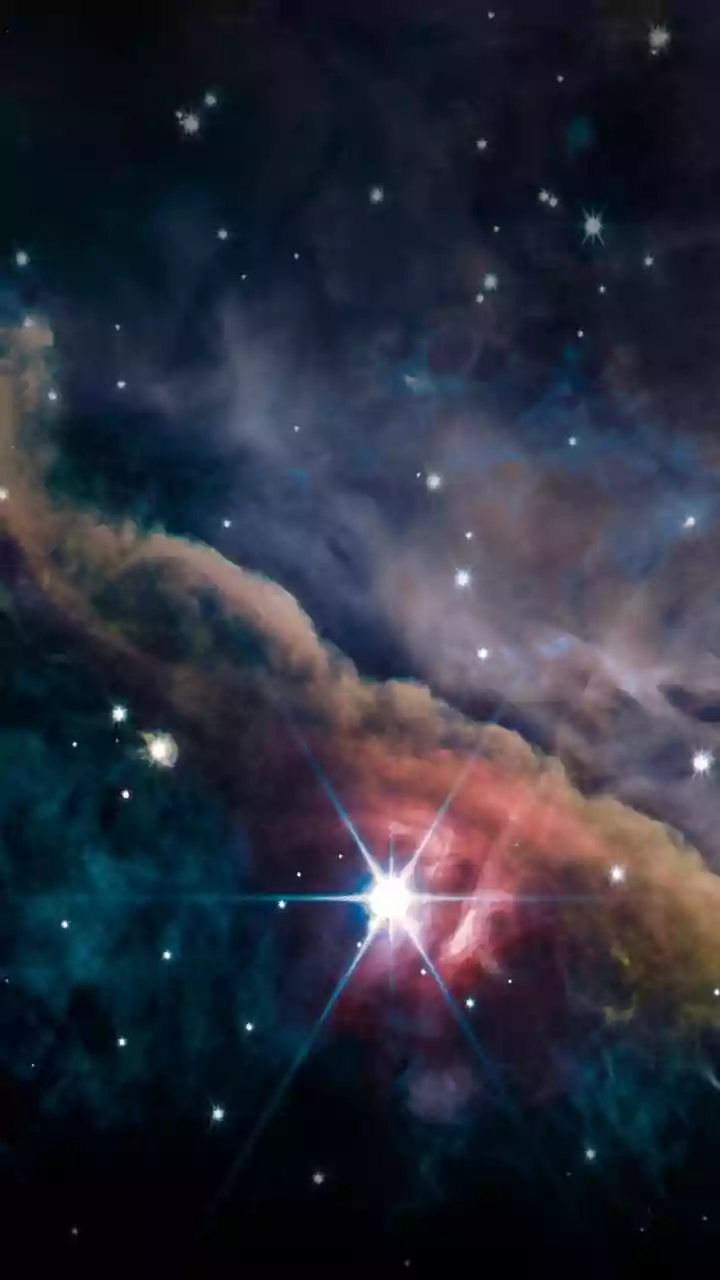
While dark energy and exoplanets are the headline goals, Roman is designed as a versatile observatory for the entire astronomical community. At least 25% of its observing time will be dedicated to a General Astrophysics program, allowing scientists from around the world to propose investigations into a wide array of cosmic phenomena. It will study the structure of our own Milky Way, find distant black holes as they shred passing stars, and explore the dusty nurseries where new stars are born. The telescope also carries a technology demonstrator called the Coronagraph Instrument. This device is designed to block the overwhelming glare from a nearby star to directly image the much fainter planets orbiting it. While experimental, the coronagraph will test crucial technologies for future missions, like the Habitable Worlds Observatory, which will aim to directly image Earth-like planets and search their atmospheres for signs of life.