








Understanding the Bharat Brand Initiative
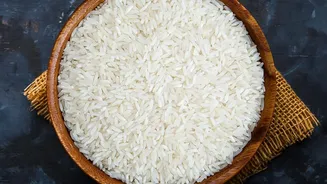
To help households manage rising costs, the government has brought back the 'Bharat' brand of essential commodities. This initiative makes key staples available to all consumers at subsidised rates through designated cooperative outlets and mobile vans.
As of early August 2026, Bharat Atta is priced at a fixed ₹32 per kilogram, while Bharat Rice is available at ₹35 per kilogram for 5kg and 10kg bags. The program, first launched in 2023, aims to use the government's buffer stocks to provide relief from food inflation, which has been a persistent concern for families across India. This move is timed ahead of the festive season, a period when household expenses typically rise.
The Supermarket Trap: Why MRP Can Be Misleading
While a low Maximum Retail Price (MRP) seems like a great deal, it doesn't always tell the whole story. The real value of a product is best understood through its unit price—that is, the cost per kilogram, per 100 grams, or per litre. Manufacturers often package goods in non-standard sizes, like 900g packs of atta or 450g boxes of tea. This can make direct price comparisons between brands difficult. A ₹250 pack might seem cheaper than a ₹270 pack, but if the first contains 850g and the second a full kilogram, the seemingly more expensive option is actually better value. This is where calculating the per-kilo price becomes a shopper's most powerful tool for cutting through marketing noise.
How to Calculate Per-Kilo Price in Seconds
You don't need to be a math whiz to figure out unit pricing; your phone’s calculator is all you need. The formula is simple: divide the total price by the weight in kilograms. For example, if a bag of dal costs ₹120 for 900 grams, you first convert the weight to kilograms (900g = 0.9kg). Then, divide the price by the weight: ₹120 ÷ 0.9kg = ₹133.33 per kg. Comparing this to Bharat Dal or another brand sold in a standard 1kg pack at ₹130 makes your choice clear. Some stores are starting to display the unit price on shelf labels, as mandated by amendments to India's Packaged Commodities Rules, but this is not yet universal or always prominently displayed. Until it is, this quick calculation is your best defence.
Applying the Logic: Bharat Atta vs. The Market
Let's put this into practice. The government's Bharat Atta is set at a straightforward ₹32 per kg. In the supermarket, you might see a popular brand offering a 'family pack' of atta for ₹300. It looks like a bulk saving, but the package weight is 8.5 kg. To compare, we calculate its per-kilo price: ₹300 ÷ 8.5 kg = ₹35.29 per kg. In this case, the government's subsidised offering provides better value. Another brand might be on a special offer: a 950g pack for just ₹31. While the MRP is lower than Bharat Atta's, the unit price tells a different story: ₹31 ÷ 0.95 kg = ₹32.63 per kg. The Bharat Atta is still the more economical choice. These small differences add up to significant savings over a year of grocery shopping.
Beyond Atta and Rice: A Skill for All Shopping
Mastering unit price calculation is a skill that extends far beyond the staples aisle. It's crucial for comparing cooking oils, pulses, sugar, tea, coffee, and even detergents and toiletries. This awareness also helps you spot 'shrinkflation'—the practice where manufacturers reduce the quantity of a product while keeping the price the same. By making a habit of checking the net weight and calculating the per-unit cost, you become an empowered consumer. The Consumer Protection Act gives you the right to be clearly informed about quantity and price, and understanding unit price is how you exercise that right effectively.