




A Rare European Spectacle
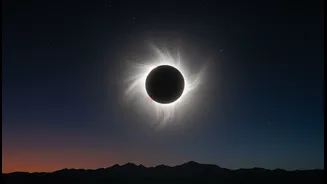
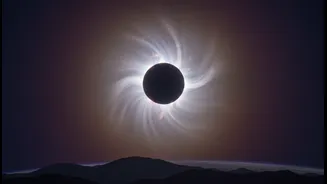
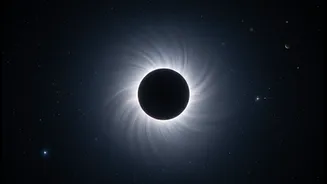
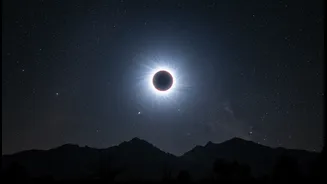
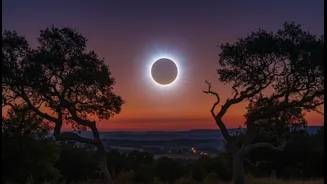
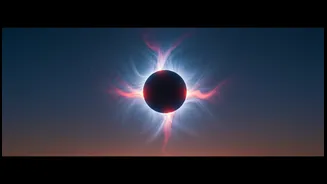
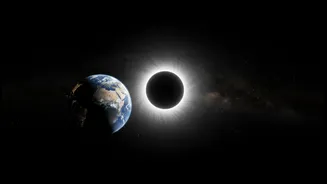
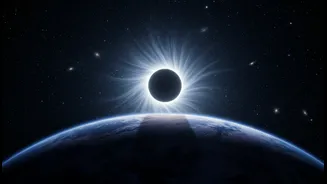
Scientifically, a total solar eclipse occurs when the Moon passes directly between the Sun and Earth, completely blocking the Sun's face. The event on August 12, 2026, is particularly notable because it will be the first total solar eclipse visible from
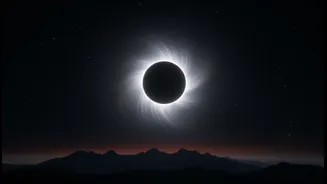
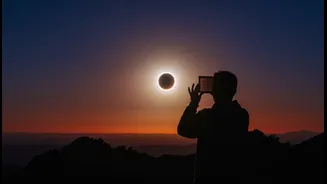
mainland Europe since 1999. The path of totality—the narrow track where the full eclipse can be viewed—will begin over the Arctic, sweeping across Greenland, Iceland, and northern Spain. For those in its path, daytime will briefly turn to twilight, revealing the Sun's ethereal outer atmosphere, the corona. Cities like Bilbao and Palma will witness this rare phenomenon, which for some parts of Spain, will happen dramatically close to sunset.
Visibility from India
For sky-gazers in India, the question is simple: can we see it? The answer, for almost the entire country, is no. The path of totality is thousands of kilometres away, confined to the Arctic and parts of Europe. NASA's official maps confirm the eclipse will not be visible from the Indian subcontinent. While some highly specific eclipse calculators suggest a minuscule partial eclipse might be theoretically visible from the extreme northern tips of Ladakh, it would be a very minor and likely unnoticeable event for the general public. So, while social media will be flooded with images from Spain and Iceland, India's skies will remain unchanged.
Significance Beyond Sight
If the eclipse isn't visible, why does it matter? For many in India, the influence of a solar eclipse, or Surya Grahan, is not tied to its visibility. According to Vedic astrology, its impact is energetic and global. Eclipses are seen as powerful but disruptive cosmic events. The mythology involves the shadow planets, Rahu and Ketu, who are said to swallow the Sun, temporarily plunging the world into darkness and disrupting the flow of divine energy. This disturbance is considered inauscitious regardless of whether the physical shadow of the eclipse falls on your location.
The Caution Before Your Next Step
This brings us to the headline's warning: 'Before the Next Step'. In astrological traditions, the chaotic energy during an eclipse makes it an unfavorable time for new beginnings. Major life decisions—such as starting a new job, getting married, signing a major contract, or buying a house—are traditionally avoided. The belief is that projects initiated under the obscured light of an eclipse may face unexpected challenges or develop in strange ways, as the clarity and positive energy of the Sun are temporarily veiled. It's considered a time when the cosmic signals are scrambled, making it wise to pause rather than push forward.
A Time for Introspection, Not Action
However, this period of caution is not meant to be one of fear. Instead, it is viewed as a powerful opportunity for spiritual activities and inner work. The disruptive external energies are said to thin the veil between the material and spiritual worlds, making it an ideal time for meditation, prayer, and reflection. Traditional practices during a Surya Grahan often include fasting (abstaining from food and drink), taking a ritual bath before and after the eclipse, and chanting protective mantras like the Mahamrityunjaya Mantra. Many temples may close their doors during the eclipse period, and it is advised to spend the time in quiet contemplation rather than engaging in material pursuits.