



The Science of Monsoon Hair
To understand why monsoon is so tough on hair, we need to look at its structure. Hair is porous and made of keratin proteins held together by bonds. The most important ones here are hydrogen bonds, which are weak and break when they get wet. During the monsoon,
the air is saturated with moisture. Your hair, like a sponge, absorbs this excess water, causing the hair shaft to swell. This swelling lifts the outer layer of your hair, known as the cuticle, making it rough and prone to frizz. More importantly, this waterlogged state makes the hair strand weak and stretchy. Research shows wet hair can stretch up to 30% more than dry hair, but this elasticity is deceptive; it’s a sign of vulnerability, making it much easier to snap and break.
Rethink Your Washing Routine
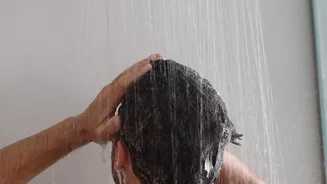
While a greasy scalp might tempt you to wash your hair daily, over-washing can strip away natural oils that protect your hair. This can either dry out your scalp or cause it to produce even more oil to compensate. Instead, wash your hair two to three times a week with a mild, sulphate-free shampoo. This cleanses the scalp of sweat and pollutant buildup from rainwater without being harsh. Always use conditioner, but apply it only from the mid-lengths to the ends. Conditioner helps to smooth and seal the swollen hair cuticle, locking out humidity and reducing frizz. A final rinse with cool water can also help flatten the cuticle for extra smoothness.
The Art of Gentle Drying
How you dry your hair is perhaps the most critical step. Vigorously rubbing your hair with a regular coarse towel is one of the biggest mistakes, as the friction roughs up the vulnerable wet cuticles, causing immediate frizz and breakage. Instead, gently squeeze or press the excess water out using a soft cotton T-shirt or a microfiber towel. While air-drying seems like a gentle option, it can be problematic during the monsoon. Due to high humidity, hair can take hours to dry, leaving the scalp damp for a prolonged period, which can create a breeding ground for fungal and bacterial infections. The best approach is a hybrid one: let your hair air-dry until it's about 70-80% dry, then use a blow-dryer on a low or cool setting to finish the job, focusing on the roots.
Detangle with Care
Since wet hair is so prone to snapping, never try to detangle it when it's soaking wet and unprotected. The best time to comb is when you have conditioner in your hair during the wash, as it provides slip and reduces friction. Always use a wide-toothed comb, not a brush. Start detangling from the ends and gradually work your way up to the roots. This gentle method prevents you from creating a large knot and yanking on it, which is a primary cause of breakage. If you must detangle after your shower, wait until your hair is semi-dry and has been treated with a leave-in conditioner or serum.
Protect and Seal Your Strands
After washing and partially drying, the final step is to create a barrier against humidity. This is where anti-frizz serums and lightweight leave-in conditioners become essential. These products work by coating the hair shaft, smoothing the cuticle, and preventing it from absorbing excess moisture from the air. Look for lightweight, non-greasy formulas to avoid weighing your hair down. Another crucial tip is to avoid tying your hair up tightly when it’s wet. This puts immense tension on the already weakened strands and traps moisture against the scalp. Opt for loose braids or buns only after your hair is completely dry.