






Decoding the IMD's Colour Alerts
The first sign of escalating weather is a colour-coded alert from the India Meteorological Department (IMD). A 'Green' alert means no significant rainfall is expected. A 'Yellow' alert is a call to 'Be Aware', signaling the possibility of heavy rain and
asking citizens to stay updated. The situation becomes more serious with an 'Orange' alert, which means 'Be Prepared'. This is issued when heavy to very heavy rainfall is likely, and it warns of potential disruptions to traffic and advises authorities to be ready. The highest level is a 'Red' alert, which means 'Take Action'. This is a warning for extremely heavy rainfall (over 204.5 mm in 24 hours) that poses a significant threat to life and property, often leading to widespread flooding and major disruptions to essential services. During a red alert, authorities strongly advise citizens to stay indoors and avoid unnecessary travel.
The Lifeline Under Strain: Local Trains
Mumbai's local train network, the city's lifeline, is one of the first services to feel the impact of severe rain. Waterlogging on tracks is a primary concern. Even with minor flooding, services on the Central, Western, and Harbour lines often run late, with delays typically ranging from 10 to 30 minutes. As conditions worsen, especially during a red alert, these delays can become more significant. In severe cases, services may be suspended on certain sections, particularly low-lying areas prone to flooding like the Kurla-Vidyavihar stretch or the Vasai-Virar corridor. Railway authorities often impose speed restrictions as a safety precaution, contributing to the delays. Commuters are advised to check real-time updates from railway authorities before starting their journey.
Navigating Waterlogged Roads
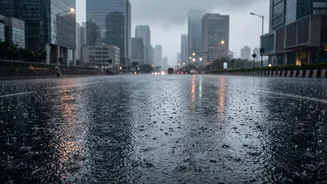
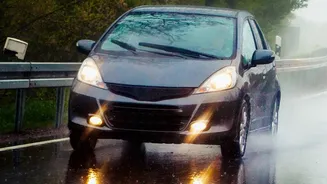
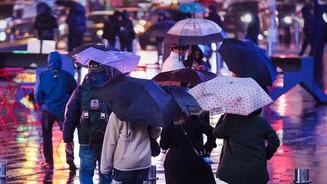
On the roads, severe rain leads to inevitable traffic congestion and diversions. The Mumbai Traffic Police and the Brihanmumbai Municipal Corporation (BMC) work in tandem to manage the situation. Chronic waterlogging spots, such as the Andheri subway, are often closed to traffic, with vehicles diverted to other routes. Traffic slows to a crawl in many areas due to submerged roads and poor visibility. The traffic police deploy personnel to critical junctions and use social media to provide real-time updates on road closures and alternative routes. Citizens are generally advised to avoid non-essential travel to reduce congestion and stay safe.
The Civic Response System
When a severe alert is issued, the BMC's disaster management cell activates its response plan. Ahead of the monsoon, the BMC undertakes pre-monsoon work like desilting drains and readying pumping stations. During a downpour, over 550 dewatering pumps are deployed across the city to clear water from submerged areas. All 26 city wards are placed on high alert, with nearly 10,000 civic staff on standby. For public safety, authorities may declare holidays for schools and colleges. The BMC also carries out pre-monsoon inspections of old and dilapidated buildings, issuing evacuation notices for structures deemed too dangerous to inhabit during heavy rains. An emergency helpline, 1916, is available for citizens to report issues.
Impact on Air Travel
Mumbai's Chhatrapati Shivaji Maharaj International Airport (CSMIA) is also affected by severe weather. Heavy rain, combined with strong winds and poor visibility, can make take-offs and landings unsafe. In such conditions, runway operations may be temporarily suspended, a decision made to ensure the safety of passengers and aircraft. These suspensions lead to a cascade of delays for both departing and arriving flights. Airlines may also be forced to divert incoming flights to nearby airports until conditions improve, or cancel services altogether. Passengers are always advised to check with their airlines for the latest flight status before heading to the airport during a severe rain alert.