


A Cosmic Age Debate
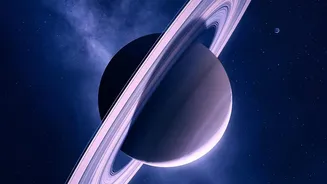
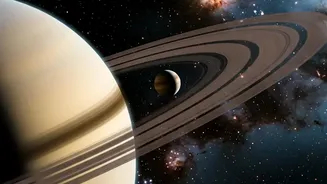
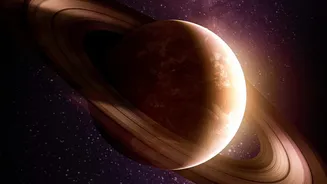
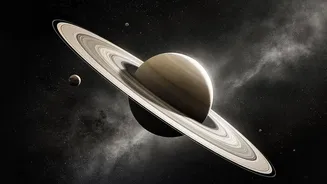
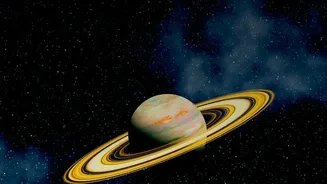
For decades, scientists debated the age of Saturn’s rings. The prevailing assumption was that they were ancient, having formed alongside the planet itself around 4.5 billion years ago. It seemed logical that these grand structures were a primordial part
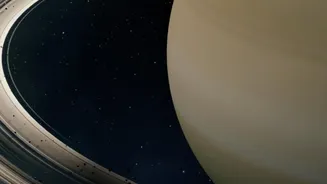
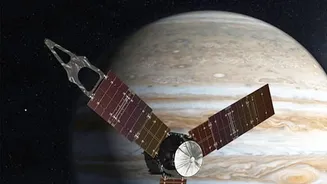
of Saturn's identity. However, data from NASA's Cassini spacecraft, which studied Saturn for 13 years before its mission ended in 2017, began to tell a different story. The mission's findings have sparked a major scientific rethink, suggesting that the rings might be startlingly young, cosmically speaking. This has turned a long-settled picture into a live and fascinating debate, forcing us to ask whether we are simply living in a very lucky era to see Saturn in its full glory.
The Case for Young Rings
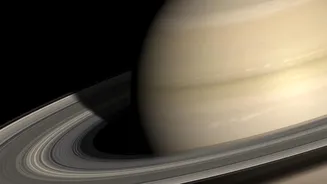
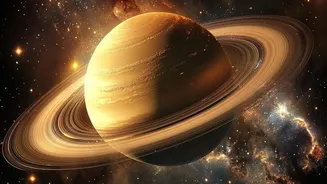
The evidence for 'young' rings comes down to two main factors: purity and pollution. The rings are made of 99% pure water ice, which makes them incredibly bright. Scientists argue that if the rings were billions of years old, they should be much dirtier and darker. Over eons, they would have been constantly bombarded by micrometeoroids—tiny bits of rock and dust—which would have acted like a steady stream of cosmic pollution, dulling their shine. Cassini’s instruments were able to measure this influx of dusty material and found it was significant. Based on how clean the rings are, researchers calculated they could be no more than a few hundred million years old. This theory places their birth sometime during the age of dinosaurs on Earth, a mere blip in the solar system’s long history.
A Violent and Recent Birth
If the rings are indeed young, they can’t have been formed with the planet. So, where did they come from? The most popular theories point to a cataclysmic event in the relatively recent past. One leading hypothesis suggests that an icy moon of Saturn, nicknamed 'Chrysalis', wandered too close to the planet. Caught in Saturn's immense gravity, the moon would have been torn apart in a process known as tidal disruption. While much of the moon may have been swallowed by Saturn, its icy remnants would have spread out to form the intricate ring system we see today. Another similar theory suggests a violent collision between two of Saturn’s icy moons shattered them, with the resulting debris creating the rings and some of the planet’s smaller, inner moons.
The Disappearing Act
Perhaps the most shocking discovery from the Cassini mission is that the rings are actively disappearing. Scientists found that icy particles from the rings are being pulled in by the planet's gravity and magnetic field in a process dubbed 'ring rain'. Material is constantly draining from the inner rings and falling into Saturn's upper atmosphere. The rate of loss is staggering; researchers estimate that an amount of water that could fill an Olympic-sized swimming pool is lost from the rings every half an hour. This confirms that the rings are not a static, stable structure but a dynamic and ephemeral system that is slowly eroding away.
A Limited Cosmic Lifespan
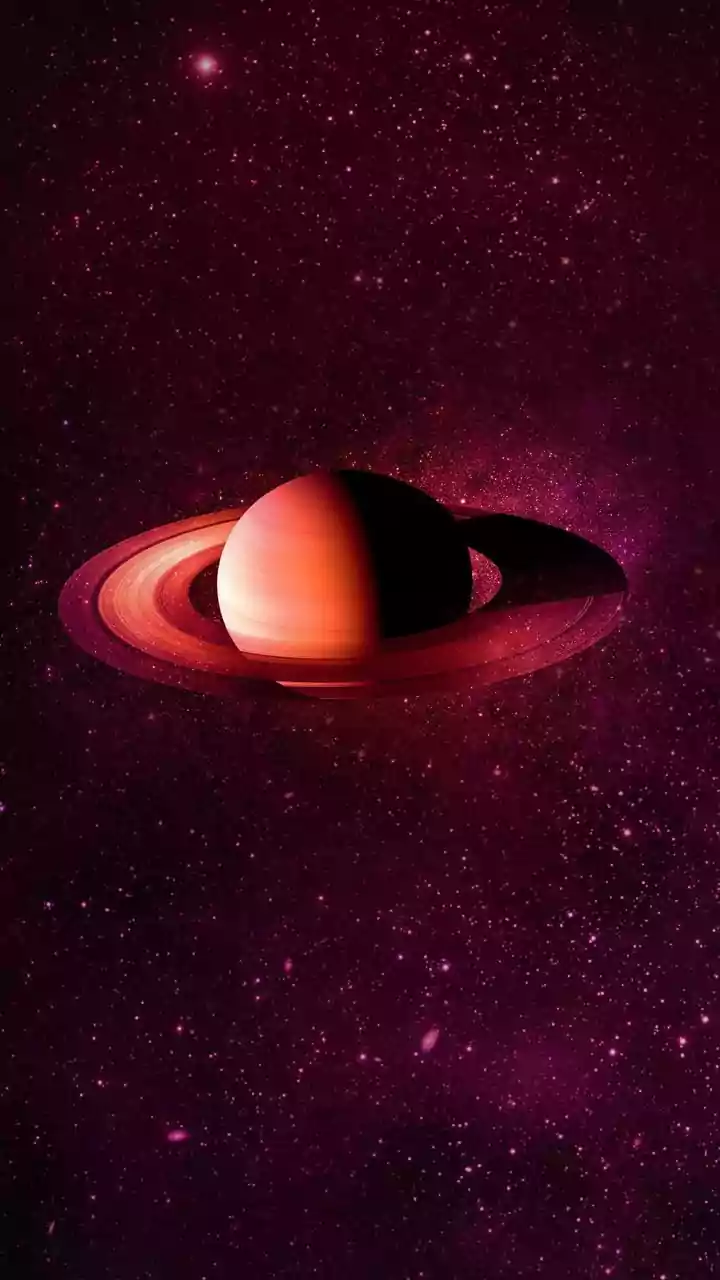
The discovery of ring rain puts a definitive expiration date on Saturn’s most famous feature. Based on the measured rate of material loss, scientists project that the entire ring system could be gone in as little as 100 million years. While that sounds like a long time by human standards, it is incredibly short in astronomical terms. This finding reinforces the idea that we are living in a special moment in the solar system's history. Future inhabitants of Earth, billions of years from now, may look up at a Saturn that is as plain as its gas-giant neighbours. The rings, it turns out, are a fleeting spectacle, not a permanent fixture.
New Questions Challenge the Narrative
Just when the 'young, disappearing rings' theory seemed to be settling in, new research has once again stirred the pot. Some recent computer models challenge the very foundation of the age estimate. These new simulations suggest that a 'ring cleaning' mechanism could be at play, where micrometeoroid impacts vaporise and eject debris rather than just dirtying the ice. This would keep the rings looking pristine and young even if they are, in fact, billions of years old. This doesn't disprove the ring rain or their eventual demise, but it re-opens the fundamental mystery of their origin. It highlights a key aspect of science: new data can answer old questions while simultaneously creating brand new ones.