






The Moon’s Most Valuable Resource
For any long-term outpost beyond Earth, water is the ultimate currency. Launching every gallon of water from Earth is incredibly expensive, making the prospect of a self-sustaining lunar base almost impossible. But if water can be found and extracted
on the Moon, everything changes. This concept, known as In-Situ Resource Utilization (ISRU), is the cornerstone of NASA's Artemis program. Lunar water ice could be melted for drinking, split into hydrogen and oxygen for breathable air, and, most critically, converted into rocket propellant. This would not only sustain a moon base but could also turn the Moon into a refueling station for deeper space missions, including voyages to Mars.
From 'If' to 'How Much'
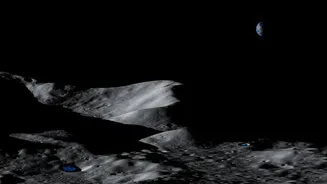
Previous missions have already confirmed that water ice exists on the Moon, particularly in permanently shadowed regions near the poles where temperatures are cold enough for it to remain frozen. The question is no longer 'if' there is water, but rather 'how much' and in what form. Is it concentrated in thick, accessible sheets, or is it mixed into the lunar soil (regolith) like a fine frost? Is it buried deep or is it near the surface? The answers to these questions are vital for designing the technology needed to extract it. This critical need for better evidence is the driving force behind a new wave of scientific reconnaissance missions.
A New Trio of Investigations
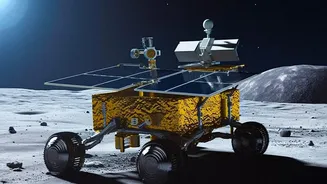
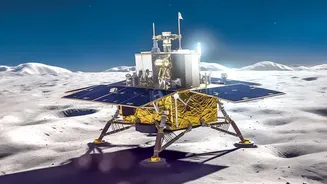
To get these answers, NASA recently selected three new scientific investigations through its Payloads and Research Investigations on the Surface of the Moon (PRISM) program. These payloads will be delivered to the lunar surface by commercial partners under the Commercial Lunar Payload Services (CLPS) initiative. One of the key instruments, the Depth Imager with Spectral and Color Optics (DISCO), is specifically designed to find and measure ice. It will provide the first-ever direct, on-the-ground measurements of ice hidden within the Moon's 'micro-cold traps'—small, perpetually dark areas where ice is thought to survive. This mission goes beyond just discovery; it aims to quantify the resource, providing the hard data engineers need.
More Than Just an Ice Hunt
The new investigations will do more than just prospect for water. The DISCO payload will also study the stability of the lunar surface for rovers and analyze how rocket exhaust kicks up dust and debris—a major hazard for nearby equipment and habitats. Another selected investigation, the Lunar Environment Monitoring Station (LEMS-SP), will act as a long-term weather station, monitoring for micrometeoroid impacts and tracking gases, providing crucial safety data for future astronaut crews. The third payload, a geophysical instrument, will search for underground lava tubes, which could one day serve as natural radiation shelters for astronauts. Together, these missions form a comprehensive survival guide for living on the Moon.
Paving the Way for Artemis
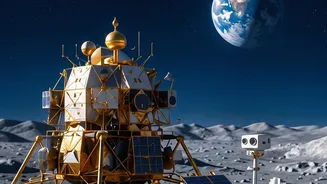
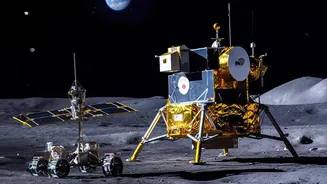
These investigations are not just abstract science; they are practical, necessary steps for the success of the Artemis program. The data they gather will directly inform where NASA establishes its Artemis Base Camp and how it designs the equipment needed to live and work there. The CLPS program, despite a history of mixed success with some failed and lopsided landings, remains central to NASA's strategy. By funding commercial companies to deliver these payloads, NASA can get more science to the Moon more frequently, accelerating the learning process. Each successful mission, and even the lessons from failures, builds the experience necessary to support a sustained human presence on the Moon and prepare for the eventual journey to Mars.