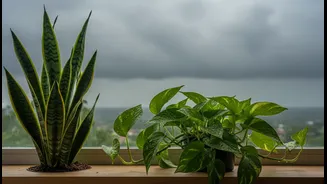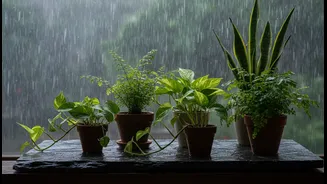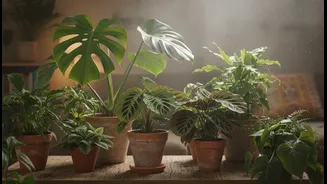

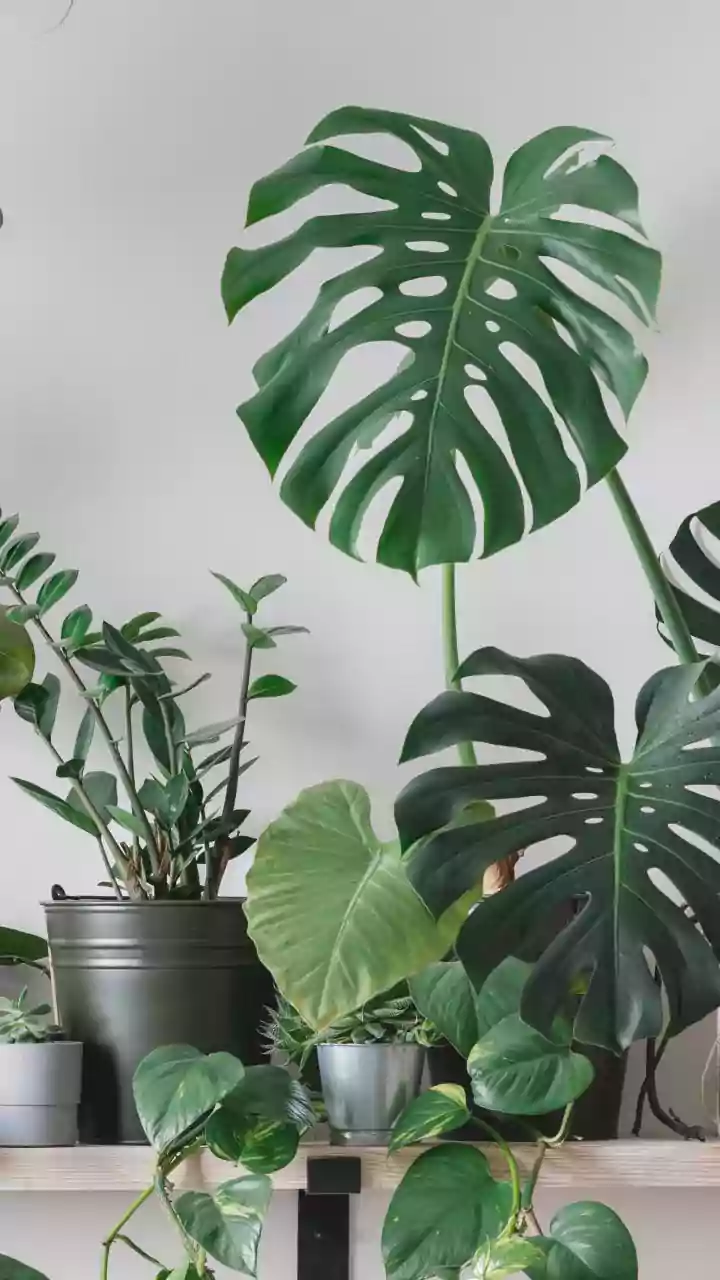




Money Plant (Epipremnum aureum)
A staple in many Indian households, the Money Plant is famously easy to grow and loves the humid conditions of the monsoon. Its fast-growing vines respond positively to the moisture in the air, often showing new growth and richer green leaves during this
time. It's also tolerant of the lower, indirect light that characterises rainy days. As a tropical plant, it appreciates the climate of the rainy season, which mimics its native rainforest environment. Monsoon Care: Despite its love for humidity, overwatering is a real danger. The soil stays wet for longer, so you should only water when the top inch of soil feels dry to the touch. Ensure the pot has excellent drainage to prevent the roots from sitting in water, which can lead to root rot. Its trailing nature makes it a great hanging plant, which also helps improve air circulation around it.
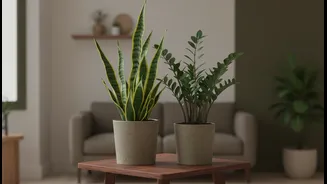
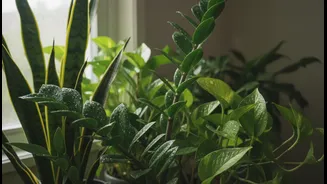
Snake Plant (Dracaena trifasciata)
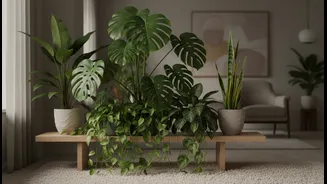
Known for being nearly indestructible, the Snake Plant is another excellent choice for the monsoon. It tolerates high humidity well and is exceptionally good at surviving in low-light conditions, a common scenario during overcast rainy months. Its ability to purify the air by removing toxins is an added bonus, especially when windows are kept closed. Because it's a succulent, its water needs are minimal, making it resilient to some of the biggest monsoon gardening challenges. Monsoon Care: The number one rule for Snake Plants during the monsoon is to avoid overwatering. These plants are prone to root rot if the soil remains waterlogged. With high ambient humidity, they need even less water than usual. Wait for the soil to dry out completely before watering again. Placing it near a window can help it get whatever indirect sunlight is available.
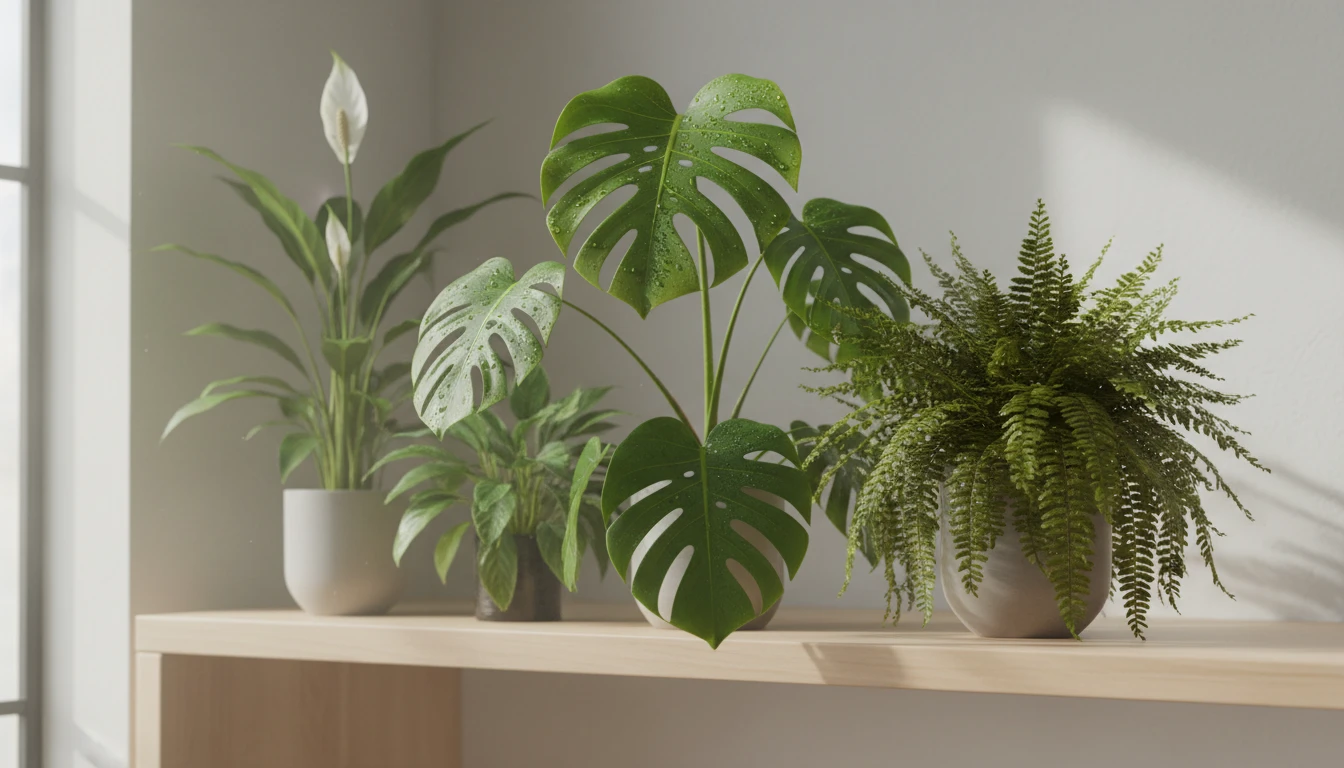
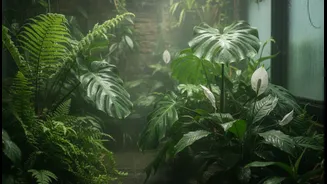
Peace Lily (Spathiphyllum)
Peace Lilies are renowned for their beautiful white blooms and their ability to thrive in humid environments. They are great at absorbing excess moisture from the air, which can even help reduce mould growth indoors. They are also tolerant of lower light levels, though they need bright, indirect light to produce their signature flowers. Tropical in origin, the Indian monsoon creates a climate they naturally enjoy. Monsoon Care: Peace Lilies will visibly droop when they need water, which is a helpful indicator. However, during the monsoon, always check the soil first. The damp air means they require less frequent watering. Wipe the leaves with a damp cloth weekly; this removes dust and helps prevent fungal growth, which is common in humid weather. Ensure good air circulation to keep the plant healthy.
Ferns (Nephrolepis exaltata)
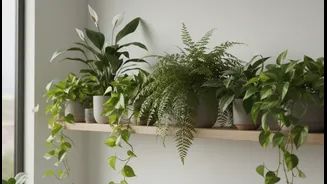
Ferns, especially the Boston Fern, are the quintessential humidity-loving plants. They adore the moisture-laden air of the monsoon, and their lush, feathery fronds can add a vibrant, tropical feel to any room. They naturally grow in shaded, damp areas, so the lower light and high humidity of the rainy season are perfect for them. They are particularly well-suited for bathrooms or shaded balconies where moisture levels are consistently high. Monsoon Care: While ferns love moisture, they don't like to be waterlogged. Use a well-draining potting mix and a pot with drainage holes. Keep the soil consistently moist but not soggy. Misting the fronds can be beneficial, especially if the plant is kept in a room with a fan or air conditioning. Good air circulation is crucial to prevent fungal issues on their dense foliage.
ZZ Plant (Zamioculcas zamiifolia)
The ZZ Plant is a favourite for both beginners and experienced gardeners due to its low-maintenance nature. It is extremely tolerant of low-light conditions and handles high humidity without any issues, making it a star performer during the monsoon. Its waxy, glossy leaves are not only beautiful but also efficient at storing water, meaning it can go for long periods without a drink. Monsoon Care: Similar to the Snake Plant, the ZZ Plant is susceptible to root rot from overwatering. During the monsoon, you should water it very sparingly. Let the soil dry out completely between waterings. Its resilience makes it a worry-free option for the greyest, rainiest days, as it can survive even in bathrooms with no natural light as long as watering is carefully managed.
Essential Monsoon Care Tips
The rainy season brings unique challenges like fungal infections and pests. High humidity means you must reduce watering frequency for almost all indoor plants. Always check the top layer of soil before watering; if it's moist, wait. Ensure every pot has drainage holes and empty any excess water from saucers promptly. Improve air circulation by spacing plants out or using a small fan to prevent fungal diseases like powdery mildew. Regularly inspect leaves for common monsoon pests like mealybugs, aphids, and fungus gnats, and wipe them away or use a neem oil solution to keep them under control.