






A Spectacle Unlike Any Other
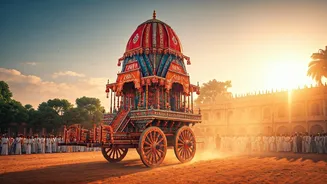
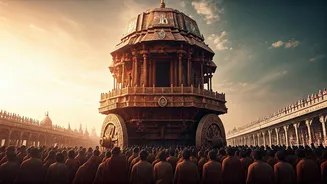
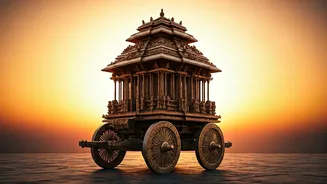
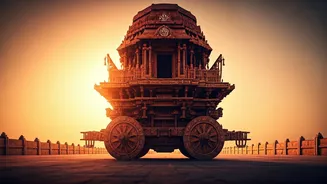
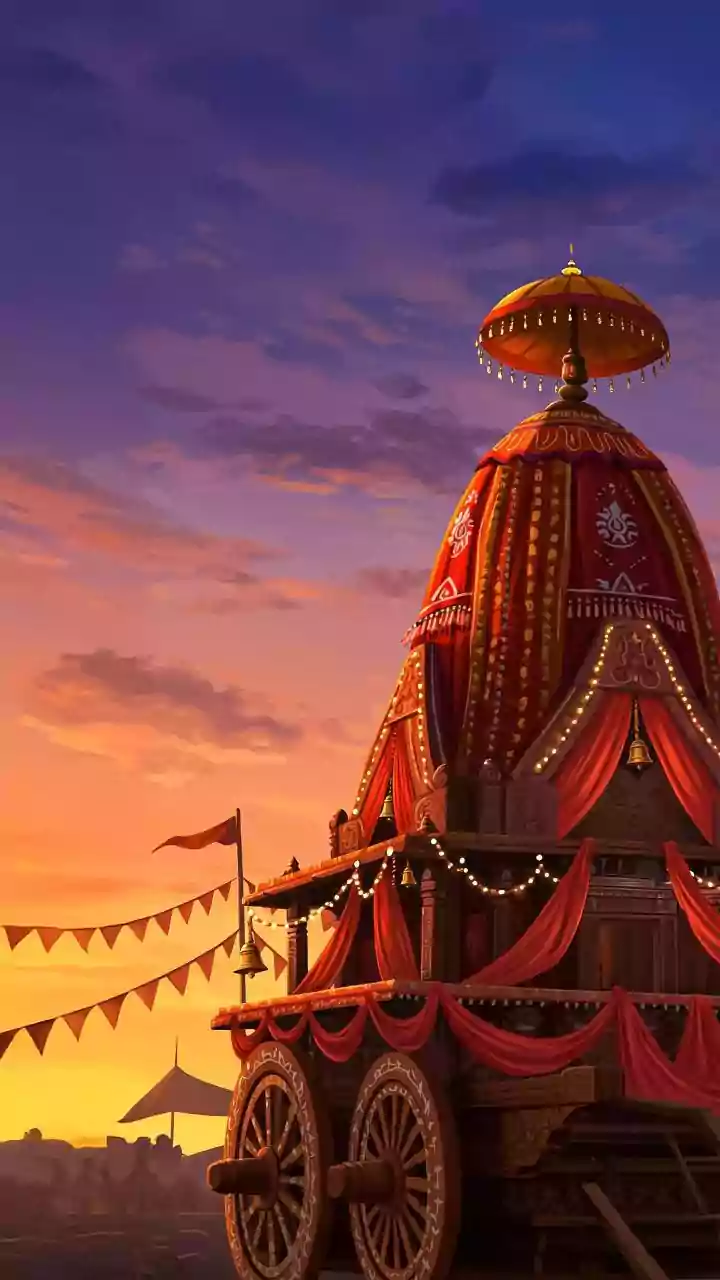
To say the Rath Yatra of Puri is a large festival is an understatement. It is a breathtaking spectacle of human devotion. Imagine three colossal chariots, towering over 45 feet high, intricately carved and draped in vibrant fabrics. These are not mere
vehicles; they are temporary mobile temples for Lord Jagannath, his brother Balabhadra, and sister Subhadra. Millions of people converge on the coastal town of Puri in Odisha, their voices rising in a unified chant of 'Jai Jagannath!'. The air is thick with the scent of incense, the sound of gongs and conches, and an overwhelming sense of collective purpose. It’s a sensory overload in the most spiritual way, a pilgrimage that one doesn't just observe but becomes a part of.
The Divine Journey Home
At its heart, Rath Yatra is the story of a journey. The deities leave the sanctum sanctorum of the main Jagannath Temple to travel to the Gundicha Temple, believed to be their aunt's home. This annual vacation is deeply symbolic. Lord Jagannath, the 'Lord of the Universe', breaks down the barriers of the temple walls to come out onto the streets, making himself visible to everyone, regardless of caste, creed, or even faith. For nine days, the gods are not distant idols confined to a shrine; they are among their people. This act of divine accessibility is what makes Rath Yatra so emotionally resonant. Devotees believe that even a glimpse of the Lord on his chariot can grant salvation, turning the streets of Puri into a grand theatre of grace.
Rituals of Humility and Unity
The festival is steeped in rituals that reinforce profound messages of humility and equality. One of the most significant is the 'Chhera Panhara'. Before the chariots begin their journey, the Gajapati King of Puri, the foremost royal of the land, arrives not as a ruler but as a humble servant. He sweeps the platforms of the chariots with a golden broom and sprinkles them with sandalwood-scented water. This act symbolises that in the eyes of the divine, all are equal, and even a king’s highest duty is service. Another key ritual is the 'Pahandi Bije', the ceremonial procession where the massive wooden idols are rocked and swayed out of the temple and onto the chariots, a process that requires immense coordination and strength, embodying the community effort that underpins the entire festival.
Beyond the Borders of Puri
While Puri is the epicentre, the spirit of Rath Yatra reverberates across the globe, solidifying its claim on the month. From the bustling streets of Ahmedabad and Kolkata to the avenues of Delhi and Mumbai, countless smaller-scale Rath Yatras are organised, each drawing enthusiastic crowds. Thanks to organisations like ISKCON (International Society for Krishna Consciousness), the sight of a chariot procession is now a familiar and celebrated event in major world cities like London, New York, and Toronto. This global participation transforms a regional festival into a worldwide phenomenon. It ensures that for millions of Hindus in the diaspora, June is synonymously linked with the rumbling wheels of Lord Jagannath’s chariot, connecting them back to their cultural and spiritual roots.
Why It Defines the Month
Many Indian festivals are celebrated within the home or the temple complex. Rath Yatra is different. Its very nature is public, processional, and participatory. It takes over the public square in a way few other events do. The building of the chariots begins months in advance, building anticipation. The live telecasts draw in tens of millions of viewers who can't be there in person. In a month that often serves as a quiet transition between seasons, Rath Yatra is a loud, joyful, and unifying declaration of faith that captures the national imagination. It’s not just a date on the calendar; it is a cultural and spiritual tide that lifts the entire country, making June a month that truly belongs to the Lord of the Universe and his magnificent journey.